
Reviewed · HISTORICAL TOURS
Jerusalem Yad Vashem Holocaust History Museum Tour
Yad Vashem does not ease you into the Holocaust. Its prism-shaped museum cuts through Jerusalem’s Mount of Remembrance, and inside, the story unfolds through nine galleries filled with documents, photographs, film, objects, and personal testimony. You follow the rise of Nazi persecution, the destruction of Jewish communities, and the consequences of a world that allowed the crime to grow.
I like two things about this tour in particular. First, an official Yad Vashem guide gives the chronology a clear human shape instead of leaving you to piece together a huge amount of material alone. Second, the included headset lets you hear the guide without losing your place in the galleries. The main drawback is time: two hours is enough for an introduction, but not enough for careful study of everything here.
In This Review
- Key points at a glance
- Entering Moshe Safdie’s angular museum
- Nine galleries that build the chronology
- Leszno Street and the Warsaw Ghetto
- The Auschwitz Album and Schindler’s List
- Survivor testimony and the human scale
- The Hall of Names and memorial spaces
- Why the guided format helps
- Allow more than two hours if you can
- Who should book this tour?
- Booking, timing, and cancellation
- Should you book the Yad Vashem tour?
- FAQ
- Where does the tour take place?
- What is the tour start time?
- How long does the tour last?
- How much does the tour cost?
- Is the tour private or shared?
- Is a guide included?
- Are headsets provided?
- What can I see during the tour?
- Is parking included?
- Can I cancel for a full refund?
Key points at a glance
- Nine galleries trace the story in order, from antisemitic propaganda in 1930s Germany to the Holocaust and its aftermath.
- The official Yad Vashem guide keeps the visit focused, which matters in a museum large enough to occupy several hours or more.
- The Auschwitz Album and a copy of Schindler’s List provide direct links to people, places, and events you may know from books or films.
- A reconstructed Warsaw Ghetto street gives the history a physical setting, not just a series of dates and labels.
- The Hall of Names and survivor testimonies shift attention from statistics to individual lives.
- The $12 price is strong value, especially if you want guidance, a headset, and the option to continue on your own afterward.
Entering Moshe Safdie’s angular museum
The approach to Yad Vashem is part of the experience. You reach the museum through a peaceful area lined with cypress and olive trees, then encounter a stark structure that feels very different from the greenery outside. Architect Moshe Safdie designed the building as a triangular prism that cuts through the mountain, with both ends projecting into open air.
That shape is not just a piece of modern architecture to admire before going inside. It creates a long, controlled route through the building. The galleries sit along this central path, so the museum guides you forward through time rather than asking you to wander among unrelated rooms.
The contrast between the quiet approach and the difficult material inside can be sharp. I would not plan this as a casual stop between lunch and shopping. You need enough attention for the subject, and you may want a quieter activity afterward.
The building is easy to navigate, but the amount of material can make a short visit feel rushed. If you usually read every label, watch each film, or stop to study photographs, two hours will pass quickly.
A few more Jerusalem trips to weigh up
- Israel Museum Must See High-Lights
★ 5.0 · 17 reviews
Nine galleries that build the chronology
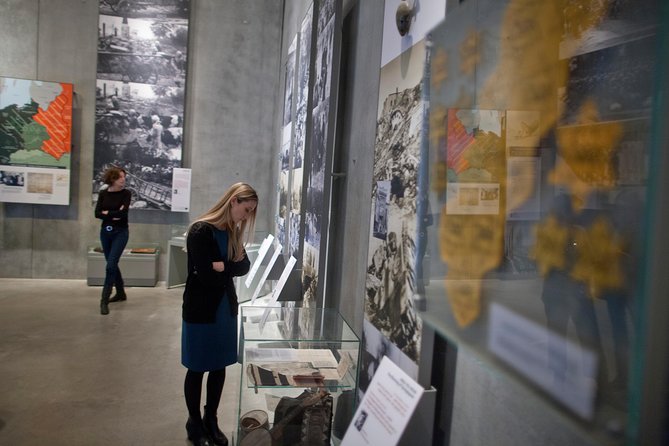
The official guide leads you through nine galleries, each covering a different chapter of the Holocaust. This sequence is one of the tour’s greatest strengths. You are not dropped into the worst images without context. Instead, you see how prejudice was promoted, how rights were removed, how persecution became organized violence, and how mass murder was carried out.
The opening material includes authentic posters, Nazi propaganda, and antisemitic board games from the 1930s. These items show how hatred was presented as ordinary public messaging and even entertainment. That detail matters because it explains how ideology entered daily life. The museum does not treat propaganda as harmless background decoration. It shows how repeated messages can prepare people to accept discrimination and exclusion.
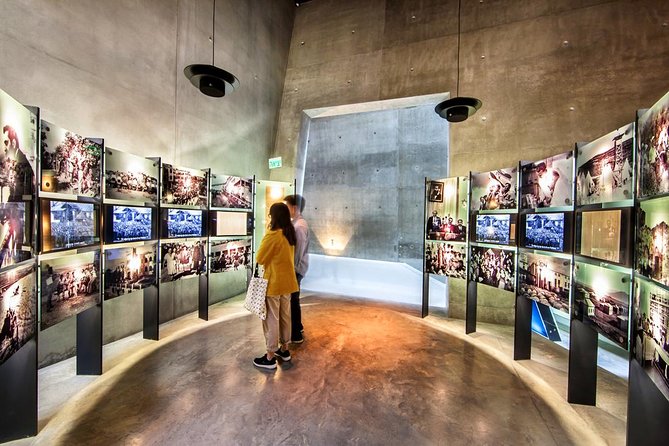
As you move through the museum, you encounter photographs, documents, personal objects, and recorded testimony. The material is carefully arranged, but it is also emotionally demanding. You may find yourself stopping more often than expected, especially when a small object carries the story of an entire family or community.
The guide helps by selecting the main points and explaining connections between them. That is useful if you have studied the Holocaust before, visited another museum, or watched films about the period. Yad Vashem covers a large subject, and a clear route helps you recognize what is distinctive here rather than simply comparing it with another institution.
Leszno Street and the Warsaw Ghetto
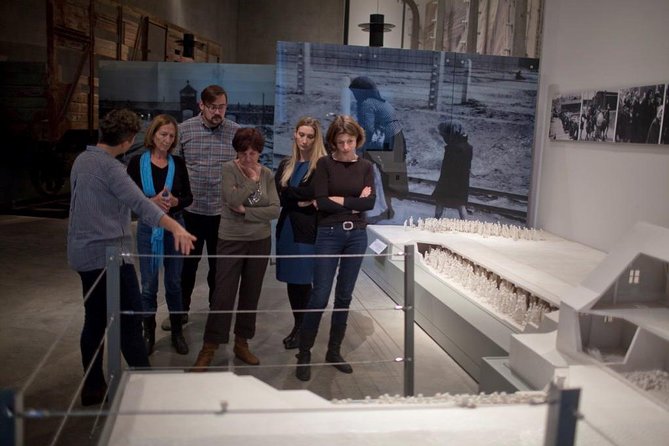
One of the more memorable sections is Leszno Street, a reconstruction of a cobblestone street from the Warsaw Ghetto. This changes the scale of the visit. Instead of looking only at a wall label or display case, you walk across a physical setting connected to the history of the ghetto.
The reconstructed street cannot reproduce the reality of the people who lived there, but it gives you a better sense of place. The Holocaust happened in homes, streets, schools, shops, stations, and neighborhoods. A setting like this helps correct the idea that the story took place only in camps far away from ordinary life.
Your guide provides the historical frame, while the street gives you a moment to absorb it. If you are moving quickly, this section is easy to pass through without enough thought. I would slow down here and listen closely.
The Auschwitz Album and Schindler’s List
The museum includes the Auschwitz Album and a copy of Schindler’s List. These are powerful because they connect the wider story to specific records and names.
The Auschwitz Album contains photographs documenting the arrival of Hungarian Jews at Auschwitz-Birkenau. In a museum filled with vast numbers and terrible statistics, photographs like these make the process more immediate. You see people arriving, waiting, and being sorted, rather than encountering the camp only as an abstract location.
The copy of Schindler’s List connects to the story of Oskar Schindler and the people he helped save. If you know the film, seeing the list in a museum setting can add historical weight. If you do not know the film, the guide can provide the context needed to understand why this document matters.
These displays are not included as famous props. Their value comes from the way they fit into the larger chronology. The guide can explain where they belong in the history, which prevents the visit from becoming a collection of recognizable objects without a clear story.
Same coast, a completely different kind of day:
- From Jerusalem: Masada & Dead Sea Full Day Tour with Pick Up
★ 4.5 · 815 reviews - Masada and the Dead Sea Day Trip from Jerusalem
★ 4.5 · 757 reviews - From Jerusalem: Nazareth and Sea of Galilee Tour
★ 4.5 · 588 reviews - Nazareth and the Sea of Galilee Day Trip from Jerusalem
★ 4.5 · 446 reviews
Survivor testimony and the human scale
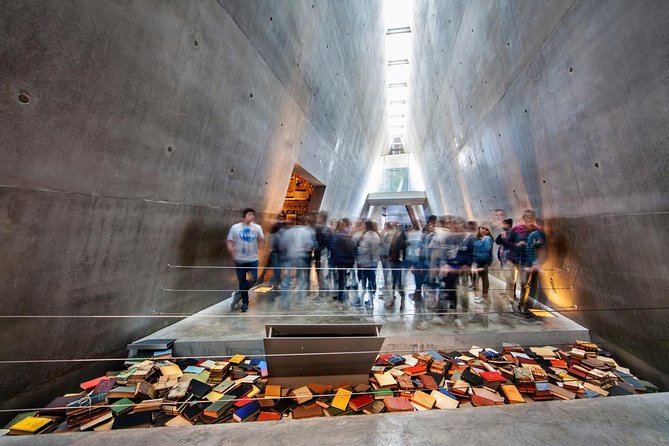
Video testimonies from survivors appear throughout the museum. These accounts are among the most important parts of the visit because they bring individual voices into a subject that can otherwise feel too large to grasp.
You may be familiar with the major dates and events, but testimony shows how those events affected families, friendships, faith, work, childhood, and ordinary decisions. A recorded voice can make a display feel less distant. Give yourself time to listen instead of treating each screen as something to pass on the way to the next gallery.
The material is upsetting. Graphic images and descriptions are part of the museum experience, and you should not assume that prior visits to Holocaust museums or concentration camps will make this easy. Some people who have already visited places such as Dachau or other Holocaust museums still find Yad Vashem physically and emotionally difficult.
That is not a reason to avoid it, but it is a reason to plan sensibly. You may feel sad, angry, numb, or simply tired afterward. All are normal responses to a museum designed to confront you with cruelty and loss.
The Hall of Names and memorial spaces
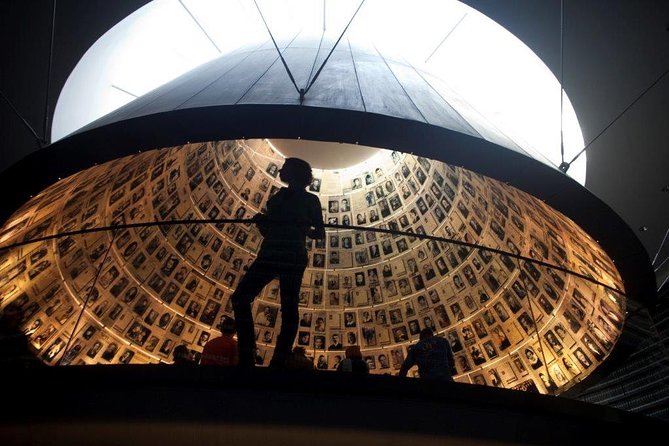
The Hall of Names is the museum’s memorial to the victims. Its purpose is different from the chronological galleries. The galleries explain how the Holocaust developed and what happened. The Hall of Names turns toward remembrance and the individual people behind the numbers.
This change in tone is important. Six million is an almost impossible figure to picture. Names, records, photographs, and family details help restore identity to people who were targeted for destruction. The memorial asks you to think about lives, not only death.
Yad Vashem also includes other memorial spaces, including the Children’s Memorial noted in the museum experience. It is especially difficult, and you should not treat it as a quick add-on. If you are visiting with family, check the age guidance before booking. One supplied account specifically notes that children under 10 are not allowed, so confirm the current rule with Yad Vashem before you go.
The center also includes a research center where you may be able to seek information about your own family. Research assistance is available, but this tour is not presented as a dedicated genealogy appointment. If family history is your main reason for visiting, allow separate time rather than expecting the two-hour guided route to cover it.
Why the guided format helps
The shared tour costs $12 per person and includes an official Yad Vashem guide, headset, taxes, fees, and gratuities. For a museum this large, that is a useful price point. You are paying less for luxury and more for a clear introduction that keeps the visit moving.
The headset is a small but practical detail. Groups can spread out in galleries, and the subject requires concentration. Being able to hear the guide clearly means you do not have to crowd around or miss an explanation while looking at an exhibit.
A guide also helps you manage the museum’s scale. Without direction, you could spend too long on the opening displays and then rush the final galleries. The tour gives you a framework, but you can continue exploring after the guided portion.
That last point makes the tour better value than a tightly closed two-hour excursion. Use the guided time to learn the structure and identify the sections you want to revisit. Then stay longer if your schedule allows.
Still, the shared format has limits. You will not control every stop or spend as long as you want with each object. If you already know the subject well and prefer a completely independent visit, the guide may feel restrictive at times. The tour is best for orientation and context, not for detailed research.
Allow more than two hours if you can
The advertised duration is about two hours. Treat that as the guided portion or a brisk introduction, not as the amount of time needed to see the whole center properly.
Several parts of the museum deserve a slower pace: the propaganda material, the reconstructed Warsaw Ghetto street, the survivor testimonies, the Auschwitz Album, and the Hall of Names. If you stop to read, watch, and reflect, you can easily need several additional hours.
A useful plan is to keep the rest of your day flexible. Do not schedule a demanding activity immediately afterward. The museum is not physically complicated to navigate, but the emotional effort is real.
One practical suggestion is to place something calmer or more open-air after Yad Vashem. An account included the useful advice of visiting the Israel Museum or Jerusalem’s Old City later, rather than ending the entire day with this memorial. That is good planning, not an attempt to soften what you have seen.
The center is near public transportation, and most people can participate. Service animals are allowed. Parking is not included and is payable on site, so public transport may be the simpler choice if it suits your route.
Who should book this tour?
I would choose this tour if you are visiting Jerusalem for the first time, want historical guidance, or feel unsure how to approach a museum of this size. It is also a good choice if you have limited time and want a structured introduction before deciding what to see on your own.
It suits adults and older students who can handle graphic and painful material. The museum is not designed as light sightseeing, and it may be too intense for young children. Check the current age rules before bringing anyone under 10.
You may prefer an independent visit if you have already spent days studying Holocaust history or want to focus on genealogy, specific artifacts, or every available testimony. Even then, the official guide can provide a useful orientation before you continue alone.
The strongest praise for Yad Vashem centers on its seriousness, careful documentation, architecture, and emotional force. Those are also the reasons some people find it overwhelming. This is not an attraction to squeeze into a spare hour simply because it is close to another Jerusalem sight.
Booking, timing, and cancellation
The scheduled start time is 10:30 am. The tour uses a mobile ticket, and confirmation is received when you book. Because it is booked an average of 28 days ahead, reserve early if this time suits your Jerusalem plans.
Free cancellation is available up to 24 hours before the start time for a full refund. Changes or cancellations made less than 24 hours before the start time are not accepted for a refund, and the cut-off follows local time.
Food and drinks are not included. Parking is also separate. The tour does include gratuities, taxes, handling charges, a professional Yad Vashem guide, and the headset.
Should you book the Yad Vashem tour?
Book it if you want a focused, guided introduction to one of Jerusalem’s most important places. The $12 cost is modest, the official guide adds needed structure, and the headset makes the shared format practical.
Do not book it expecting to finish the museum in exactly two hours. Plan extra time, prepare for graphic material, and leave room afterward to process what you have seen. If you do that, this tour gives you a respectful starting point, plus the freedom to continue at your own pace.
FAQ
Where does the tour take place?
The tour takes place at Yad Vashem, the World Holocaust Remembrance Center in Jerusalem.
What is the tour start time?
The scheduled start time is 10:30 am.
How long does the tour last?
The tour lasts approximately two hours. You can continue exploring after the guided portion.
How much does the tour cost?
The listed price is $12 per person.
Is the tour private or shared?
It is a shared tour with an official Yad Vashem guide.
Is a guide included?
Yes. A professional Yad Vashem guide is included.
Are headsets provided?
Yes. Headsets are provided so you can hear the guide clearly.
What can I see during the tour?
The route includes nine galleries covering the Holocaust, the Auschwitz Album, a copy of Schindler’s List, survivor testimonies, the Hall of Names, and a reconstructed Warsaw Ghetto street.
Is parking included?
No. Parking is not included and must be paid for on site.
Can I cancel for a full refund?
Yes, if you cancel at least 24 hours before the experience start time. Cancellations made less than 24 hours before the start time are not refunded.
Just added around Jerusalem
- Tour of Jerusalem & Dead sea private tour★ 5.0 · 4 reviews
- full day tour Jerusalem price per van up to 6 people★ 5.0 · 8 reviews
- West Bank Tour from Jerusalem and Tel-Aviv – Bethlehem & Jericho★ 5.0 · 6 reviews
- jerusalem classic tour★ 5.0 · 3 reviews
- Privet Tour – FROM JERUSALEM TO JERICHO & THE DEAD SEA★ 5.0 · 8 reviews
- Experience Shabbat With Dinner In Jerusalem★ 5.0 · 5 reviews
- Private Tour: Old City of Jerusalem Christianity Tour★ 5.0 · 5 reviews
- Private Silk Painting Workshop in Jerusalem – Create a scarf –★ 5.0 · 4 reviews
Historical Tours, compared.


Browse the lists this tour appears in