
Reviewed · JERUSALEM TOURS
Israel Museum Must See High-Lights
The Israel Museum is big enough to swallow a half-day before you find your bearings. This private visit fixes that problem with a focused route through the Second Temple Jerusalem Model, the Shrine of the Book, biblical archaeology, and Jewish life. Uri Goldflam leads the tour, linking objects and places to the Bible, Jewish history, and the wider story of Jerusalem.
I like two things right away: you get a clear path through a sprawling museum, and the guide supplies the historical links that labels alone cannot provide. The private format also lets your group of up to six ask questions and set the pace. The main drawback is price: at $512.83 per group, it is a serious expense for one museum, and admission to one Israel Museum segment is listed separately.
In This Review
- Key points at a glance
- Why this museum visit needs a plan
- The Second Temple Jerusalem Model in 45 minutes
- The Shrine of the Book and the Dead Sea Scrolls
- Biblical archaeology in the Israel Museum
- Jewish culture and life-cycle traditions
- What Uri Goldflam adds to the visit
- Is $512.83 good value for up to six people?
- Who should book this private museum tour?
- Practical details to settle before you go
- Should you book it?
- FAQ
- How long does the tour last?
- How many people can join the private tour?
- Is pickup available in Jerusalem?
- Who guides the experience?
- Are museum admissions included?
- What can I see at the Shrine of the Book?
- What is the cancellation policy?
Key points at a glance
- The Second Temple model gives you a fast visual map of ancient Jerusalem, including the setting of the city in the time of Jesus.
- The Shrine of the Book displays the Dead Sea Scrolls, including a facsimile of the complete Book of Isaiah.
- The archaeology section follows the biblical story through physical evidence, rather than treating scripture and archaeology as separate subjects.
- The Jewish Culture and Life-Cycle galleries show shared traditions across centuries and continents, with attention to weekly, seasonal, and annual practices.
- Uri Goldflam is the guide to know by name, with a teaching style praised for warmth, broad knowledge, and respect for Jewish, Christian, and other perspectives.
- Pickup and drop-off can simplify the day, though you should confirm the exact meeting point, admission details, and available time before booking.
Why this museum visit needs a plan
The Israel Museum is not a small collection you can wander through in an hour. Its holdings cover archaeology, Jewish culture, art, and major documents from the history of the region. If you arrive without a plan, you may spend too much time figuring out where to go and too little time making sense of what you see.
This tour narrows the visit to four stops that work well together. You begin with a model of Jerusalem, move to the Dead Sea Scrolls, then enter the archaeological galleries and finish with Jewish culture and life-cycle displays. The order moves from city geography to ancient texts, then to material evidence and living tradition.
I find that sequence useful because it gives you several ways to understand the same broad story. The model shows the city. The scrolls show ancient writing. The archaeology gives you objects and evidence. The final galleries show how Jewish traditions continued and changed across many places and generations.
This is not the right choice if you want to see every room or spend hours studying individual objects. It is designed for a concentrated introduction. You should also treat the two-to-four-hour duration as an estimate. The supplied timing adds up to about three hours and 45 minutes, but the actual pace can change with questions, walking time, and the guide’s explanations.
A few more Jerusalem trips to weigh up
- Jerusalem Yad Vashem Holocaust History Museum Tour
★ 5.0 · 98 reviews
The Second Temple Jerusalem Model in 45 minutes
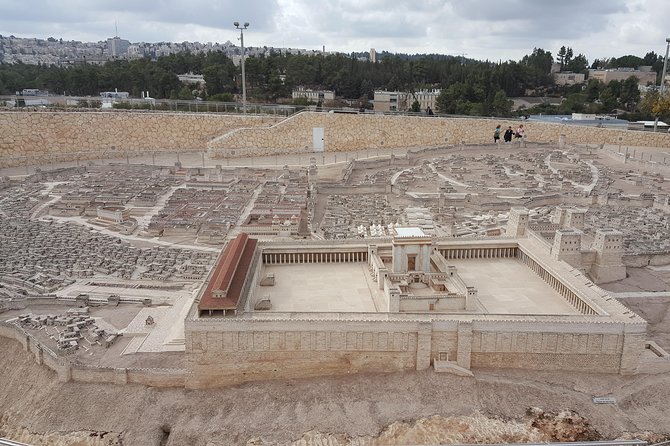
The opening stop is the Second Temple Jerusalem Model, also called the Holy-land Model. Built at a scale of 1 to 50, it presents Jerusalem as it appeared during the Second Temple period, around the time associated with Jesus.
The value here is visual. Ancient Jerusalem can be hard to picture from written descriptions alone. A model lets you see the city’s shape, its major areas, and the relationship between its buildings and surrounding geography. A short walk around it can give you a working map for the rest of your time in Jerusalem.
I especially like beginning here because the model creates a reference point for biblical stories. Instead of hearing about places as isolated names, you can start to understand how the old city fit together. That context also helps when you later see archaeological remains and hear about the development of Jerusalem over many centuries.
The model is not a substitute for the city itself, and it cannot answer every question about how ancient Jerusalem looked. Still, it is a smart first stop, especially if this is your first visit or if your group includes teenagers who need a clear visual way into the subject.
The planned visit lasts about 45 minutes, with admission included for this stop. That is enough time for an explanation and a close look without turning the model into a long technical study.
The Shrine of the Book and the Dead Sea Scrolls
The Shrine of the Book is one of the museum’s most distinctive buildings and houses the Dead Sea Scrolls. These ancient manuscripts, found through archaeological discoveries in the Judean Desert, include copies of biblical scripture that are about 2,000 to 2,200 years old.
The display is not only about seeing old parchment. The visit follows the story of how the scrolls were found, the objects connected with the excavations, and the significance of the texts themselves. You also see a facsimile of the entire Book of Isaiah, which gives you a sense of the scale and completeness of one of the central displays.
The architecture matters here. The Shrine of the Book was designed as a special setting for the scrolls, and its unusual form helps mark this part of the museum as something different from a standard gallery. You will want to give yourself time to look at the building as well as the manuscripts.
This stop works best with a guide because the meaning of the scrolls can get lost in a quick glance. Uri Goldflam’s background in biblical history and Jewish heritage fits the subject well. He can place the documents within the history of scripture, ancient communities, and the later development of Jewish tradition.
The planned time is another 45 minutes, and admission is included. If you have a particular interest in biblical texts, this may be the most important part of the visit. If manuscripts are not your main interest, the discovery story and the building still make the stop worthwhile.
Biblical archaeology in the Israel Museum
The archaeology portion is scheduled for about an hour and a half, making it the longest stop. It is also the section most likely to benefit from a guide who can connect objects to events, places, and texts.
The focus is on archaeological findings related to the biblical narrative. Rather than simply walking past cases of pottery, inscriptions, tools, and other ancient material, you follow a historical path and consider how physical evidence helps explain the world behind scripture.
That approach is useful, but you should expect interpretation as well as objects. Archaeology does not answer every biblical question, and the relationship between written tradition and material evidence can be complex. A good guide should explain what an object can show, what it cannot show, and where interpretation enters the picture.
The strongest feature here is the ability to connect separate parts of your Israel visit. The model has already shown you the shape of Jerusalem. The Shrine of the Book has introduced ancient biblical texts. The archaeology galleries then give you tangible evidence from the societies and periods connected with those stories.
Uri is praised for explaining Israeli history, geography, biblical relationships, and the region’s three major religions in a way that remains engaging. That broad range is useful in this gallery, where a single object may raise questions about politics, worship, daily life, and the changing control of the land.
You may also find this stop especially helpful if you are visiting Jerusalem with a Christian or Jewish focus. The tour presents Jewish history and heritage directly, while the guide’s approach is described as respectful toward Christianity and other religious traditions. That balance matters in a place where religious meaning and historical debate often sit side by side.
One practical point needs attention: admission for this Israel Museum segment is marked as not included, while admission is included at the other stops. The information does not explain why the treatment differs. Ask for the current admission arrangement before you pay so you know the true total cost.
Same coast, a completely different kind of day:
- From Jerusalem: Masada & Dead Sea Full Day Tour with Pick Up
★ 4.5 · 815 reviews - Masada and the Dead Sea Day Trip from Jerusalem
★ 4.5 · 757 reviews - From Jerusalem: Nazareth and Sea of Galilee Tour
★ 4.5 · 588 reviews - Nazareth and the Sea of Galilee Day Trip from Jerusalem
★ 4.5 · 446 reviews
Jewish culture and life-cycle traditions
The final stop lasts about 45 minutes and looks at Jewish Culture and Life-Cycle displays. This part shifts the focus from ancient Jerusalem and archaeological evidence to the traditions that Jewish communities have practiced across different continents and over many generations.
The galleries are organized around weekly, seasonal, and annual events, as well as stages of life. That structure helps you see Judaism not only as a set of historical texts or religious ideas, but also as a pattern of family customs, objects, celebrations, and shared practices.
I like ending here because it broadens the visit. The earlier stops focus heavily on ancient history and biblical connections. This gallery shows continuity, variation, and the way Jewish life developed in different communities. It can be particularly helpful if you want context for customs you may encounter elsewhere in Israel.
The display also gives Uri room to explain connections between heritage and modern identity. His tours are known for combining history, religion, geography, and present-day Israel, rather than placing each subject in a separate box. That wider view can make the objects feel connected to real communities instead of frozen in the past.
Admission is listed as included for this stop. The time is limited, so tell the guide what interests your group most. A family may want more explanation of life-cycle events. A student of religion may want to focus on objects tied to the calendar or weekly practice.
What Uri Goldflam adds to the visit
The guide is a major part of the value here. Uri Goldflam is repeatedly praised for his command of Israeli history, biblical connections, geography, religion, and current affairs. Just as important, the descriptions of his guiding style emphasize warmth, humor, accessibility, and the ability to make complex material understandable.
That combination matters in a museum. A guide can recite dates and names, but that does not always make a collection easier to grasp. Uri’s strength appears to be linking facts into a larger story and adjusting the explanation for different audiences. Families with teenagers, first-time visitors, and people returning to Israel after many years may all benefit from that approach.
His experience also seems suited to groups with different religious backgrounds. You can expect a strong Jewish and Israeli perspective, but the available information specifically describes respect for Christianity and other faiths. That does not make the tour neutral in every detail, nor should it. It does suggest a thoughtful setting for questions about biblical interpretation and religious history.
A private tour gives you more freedom than a large group visit. You can stop to ask why an object matters, request more detail about a period, or move on when your attention fades. The tradeoff is that you are paying for the guide’s time for your group alone, not sharing the cost with other people.
Is $512.83 good value for up to six people?
The price is $512.83 per group of up to six, not per person. For six people, that works out to about $85.47 each before any separate admission cost. For two people, the effective price is much higher, about $256.42 each.
That makes the tour easier to justify for a family or a small group of friends. If you have six people who would otherwise need separate guidance, transport planning, and several hours of museum research, the cost may be reasonable. For a couple on a tight budget, a self-guided visit is likely the better financial choice.
The value rests on three things: a private guide, a planned route through a large museum, and transport assistance. The material itself is available at the museum, but the connections between the model, scrolls, archaeology, and Jewish culture are harder to build on your own.
Pickup is offered from locations in Jerusalem, and the tour includes an air-conditioned vehicle. That can save effort, especially if your group has a full sightseeing schedule or prefers not to arrange its own way to the museum. Confirm the exact pickup details because the meeting information also lists the museum area as the start and end point.
The duration is approximately two to four hours. The scheduled stops suggest a visit near the longer end of that range. If you have only a short window in Jerusalem, this format helps you use it well. If you want a slow museum day, you may feel rushed.
Who should book this private museum tour?
I would consider this tour a good fit for:
- Families who want a clear route and explanations that can hold a teenager’s attention.
- First-time visitors who need background before tackling Jerusalem’s religious and historical sites.
- Small groups with Jewish, Christian, or interfaith interests.
- People who want to connect the Bible with archaeology and the history of Jerusalem.
- Returning visitors who want a guided look at subjects they missed before.
- Anyone who values hotel pickup and a private vehicle.
I would hesitate if your main goal is modern art, contemporary Israeli culture, or a full survey of every museum department. Those interests are not the focus of this route.
I would also think twice if you prefer to read labels quietly and set your own pace. This experience is built around explanation and conversation. Its success depends heavily on how much you want a guide to interpret what you see.
Practical details to settle before you go
The stated starting point is in the Israel Museum area, with the ticket redemption point at Israel Museum/Ruppin in Jerusalem. Pickup and drop-off are offered, so confirm whether your preferred Jerusalem location is covered and where you will meet the vehicle.
The listed opening information shows Tuesday from 4:00 PM to 9:00 PM for the stated operating period, which runs through June 17, 2026. Because museum hours and tour availability can change, verify the time when booking. Confirmation is expected within 48 hours and depends on availability.
Service animals are allowed, the museum is near public transportation, and most people can take part. The activity is private, so only your group participates. That setup is useful for families and groups who want to pause often or ask questions without feeling they are holding up strangers.
Free cancellation is available if you cancel at least 24 hours before the start time. Cancellations or changes made inside that window are not refunded or accepted, and the cut-off follows local Jerusalem time.
Should you book it?
Book this tour if you want the Israel Museum to support a larger understanding of Jerusalem, Jewish history, and biblical archaeology rather than function as a list of display cases. The Second Temple model, Dead Sea Scrolls, archaeology, and Jewish life galleries form a sensible route, and Uri Goldflam’s broad teaching style is a strong reason to choose a private visit.
The decision comes down to group size and interest. Six people can share the $512.83 cost and receive real value from the private format. A smaller group pays much more per person, so compare that price with a self-guided museum visit. Also confirm the separate admission charge for the archaeology section and the exact Tuesday schedule.
For families, faith-based visits, and anyone who wants the Bible and Jerusalem placed in historical context, I would book it. For museum regulars who prefer independent wandering, save the money and explore at your own speed.
FAQ
How long does the tour last?
The experience lasts approximately two to four hours. The scheduled stops total about three hours and 45 minutes, including 45 minutes at the Second Temple Jerusalem Model, 45 minutes at the Shrine of the Book, 90 minutes in the archaeology section, and 45 minutes in the Jewish Culture and Life-Cycle galleries.
How many people can join the private tour?
The price covers one private group of up to six people. Only your group participates in the activity.
Is pickup available in Jerusalem?
Yes. Front-door pickup and drop-off are offered from locations in Jerusalem, and the tour includes an air-conditioned vehicle. Confirm the exact pickup arrangement before the visit.
Who guides the experience?
The experience is provided by Uri Goldflam of Travel Trailer Israel. His guiding topics include Israeli history, geography, biblical connections, Jewish heritage, and the region’s religions.
Are museum admissions included?
Admission is listed as included for the Second Temple Jerusalem Model, the Shrine of the Book, and the Jewish Culture and Life-Cycle stop. Admission for the Israel Museum archaeology section is listed as not included, so confirm the current arrangement before booking.
What can I see at the Shrine of the Book?
You can see the Dead Sea Scrolls, objects connected with their discovery and excavation, and a facsimile of the complete Book of Isaiah. The scrolls date from about 2,000 to 2,200 years ago.
What is the cancellation policy?
You can cancel for a full refund at least 24 hours before the experience begins. Cancellations or changes made less than 24 hours before the start time are not accepted, and the amount paid is not refunded.
Just added around Jerusalem
- Tour of Jerusalem & Dead sea private tour★ 5.0 · 4 reviews
- full day tour Jerusalem price per van up to 6 people★ 5.0 · 8 reviews
- West Bank Tour from Jerusalem and Tel-Aviv – Bethlehem & Jericho★ 5.0 · 6 reviews
- jerusalem classic tour★ 5.0 · 3 reviews
- Privet Tour – FROM JERUSALEM TO JERICHO & THE DEAD SEA★ 5.0 · 8 reviews
- Experience Shabbat With Dinner In Jerusalem★ 5.0 · 5 reviews
- Private Tour: Old City of Jerusalem Christianity Tour★ 5.0 · 5 reviews
- Private Silk Painting Workshop in Jerusalem – Create a scarf –★ 5.0 · 4 reviews
Jerusalem Tours, compared.

From Jerusalem: Masada & Dead Sea Full Day Tour with Pick Up
Read our review →
Masada and the Dead Sea Day Trip from Jerusalem
Read our review →
From Jerusalem: Nazareth and Sea of Galilee Tour
Read our review →
Nazareth and the Sea of Galilee Day Trip from Jerusalem
Read our review →
From Jerusalem: Masada&Dead Sea Tour INCLUDING ENTRANCE FEES
Read our review →

Browse the lists this tour appears in