
Reviewed · CAESAREA TOURS
From Jerusalem: Caesarea, Haifa, Acre & Rosh Hanikra Tour
Caesarea’s Roman theater, Haifa’s mountain gardens, Rosh Hanikra’s sea caves, and Acre’s Crusader walls make this one busy but rewarding day on Israel’s Mediterranean coast. You get four very different places, not four versions of the same old ruin.
I like the wide sweep of history, from Herod’s Roman port to the British Mandate in Acre. I also like that entrance fees, transport, and hotel pickup are covered, which keeps the day simple.
The tradeoff is clear: this is a long day with plenty of road time. The early pickup is around 5:40 AM, and one stop may feel brief before you climb back onto the coach.
In This Review
- Key details before you book
- Is this the right way to see Israel’s northern coast?
- Caesarea: Herod’s port and Roman showplace
- Haifa’s Baha’i Gardens on Mount Carmel
- Rosh Hanikra and the cable car to the sea caves
- Acre: Crusader walls and a living old city
- The guide can make or break the day
- How much road time should you expect?
- What is included, and where the value lies
- Who should book this northern Israel day trip?
- My verdict: book it for breadth, not for a slow day
- FAQ
- Where does the tour begin?
- What time is hotel pickup?
- How long does the experience last?
- Which places does the tour visit?
- Is transportation included?
- Are entrance fees included?
- Is food included?
- Is the tour conducted in English?
- What should I bring?
- Can I cancel the booking?
Key details before you book
- Caesarea’s Roman port: See the amphitheater, Hippodrome, temple remains, gateways, moat, and old walls built under Herod.
- Haifa’s 19 garden terraces: Look across the carefully arranged Baha’i Gardens from Mount Carmel.
- Rosh Hanikra cable car: Ride down to limestone grottoes cut by the sea at Israel’s northern coastal edge.
- Acre’s layered past: Walk among Crusader structures, Ottoman defenses, a former prison, and British Mandate gallows.
- One long coastal day: The tour leaves Jerusalem early and includes coach travel between all four stops.
- Guide quality matters: The English-speaking guide shapes the experience. A guide named Omri earned special praise for his historical explanations.
Is this the right way to see Israel’s northern coast?

This tour works like a history sampler. In a single day, you move from Roman engineering to a modern religious center, then to natural caves and a fortified old city. That range is the main reason to book it.
You will not have the leisurely pace of a private tour. The route covers a lot of ground, and the journey from Jerusalem to the northern coast takes time. But arranging Caesarea, Haifa, Rosh Hanikra, and Acre on your own would require careful transport planning and several separate entrance payments.
I would choose this trip if you have only one free day for northern Israel and want the major sights in one sweep. I would hesitate if you prefer slow museum visits, long meals, or plenty of free time in each old city.
The tour uses an air-conditioned coach and includes hotel pickup and drop-off from Jerusalem’s main hotels. Food and drinks are not included, so plan for your own meals and snacks. Comfortable shoes are essential. You will be walking through archaeological sites, old streets, and uneven areas, even though the precise walking distance is not given.
More acre (akko) tours in Jerusalem:
- Caesarea, Haifa & Akko Day Trip from Jerusalem
★ 4.3 · 96 reviews - Caesarea, Acre & Rosh Hanikra Day Trip from Jerusalem
★ 4.0 · 78 reviews - Caesarea, Haifa, Rosh Hanikra, and Acre Tour from Jerusalem
★ 4.0 · 16 reviews
Caesarea: Herod’s port and Roman showplace
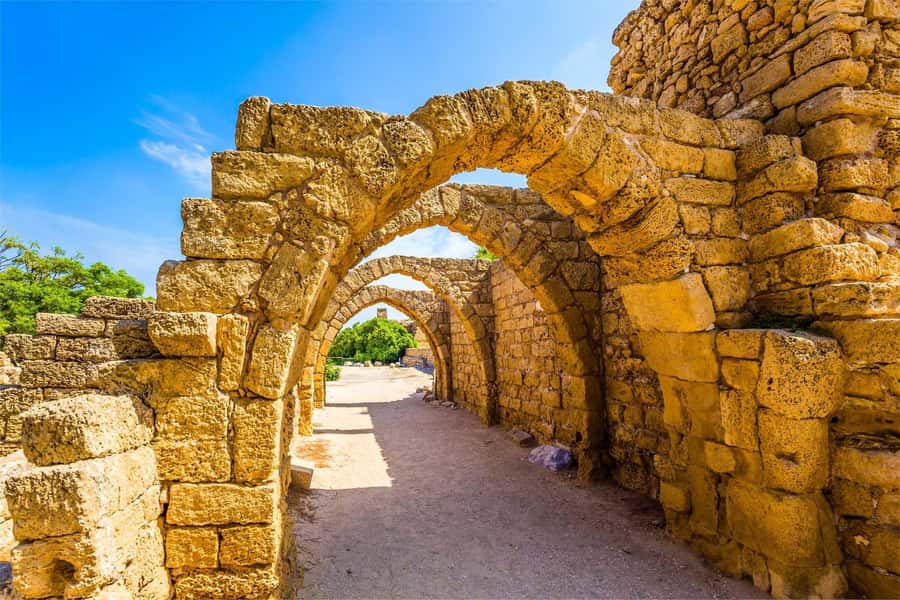
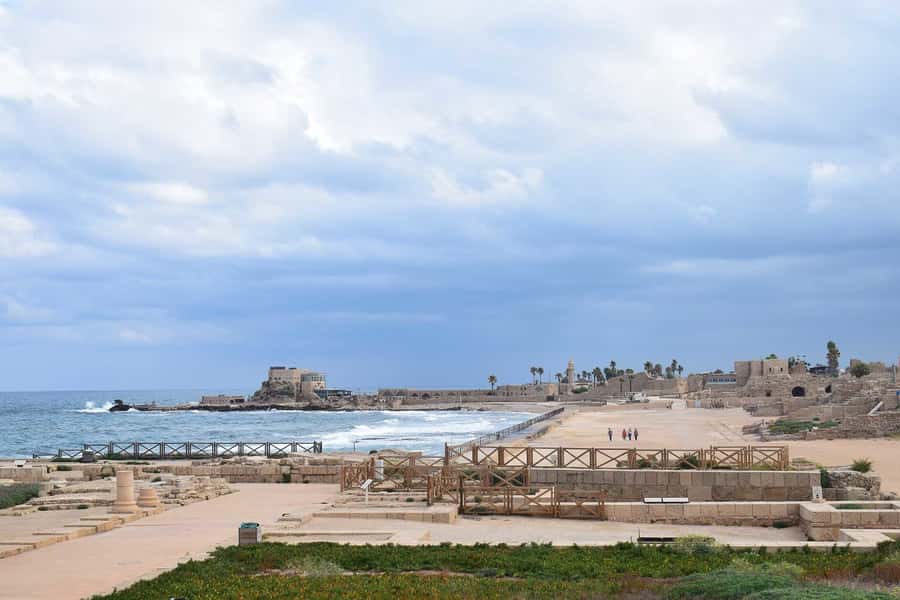
The first major stop is ancient Caesarea, built by Herod and named for Caesar. Herod did not simply establish a small harbor town. He created a major port city with public buildings, defenses, entertainment spaces, and a commercial connection to the wider Roman world.
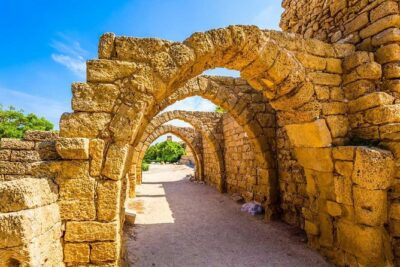
At the archaeological site, you can see gateways, a moat, old walls, and the remains of rooms. The amphitheater is the star for many people. Its surviving form makes it easier to picture Roman public life than a pile of scattered stones would. It is still used for performances by Israeli and international artists, giving the old structure a living role rather than leaving it as a silent monument.
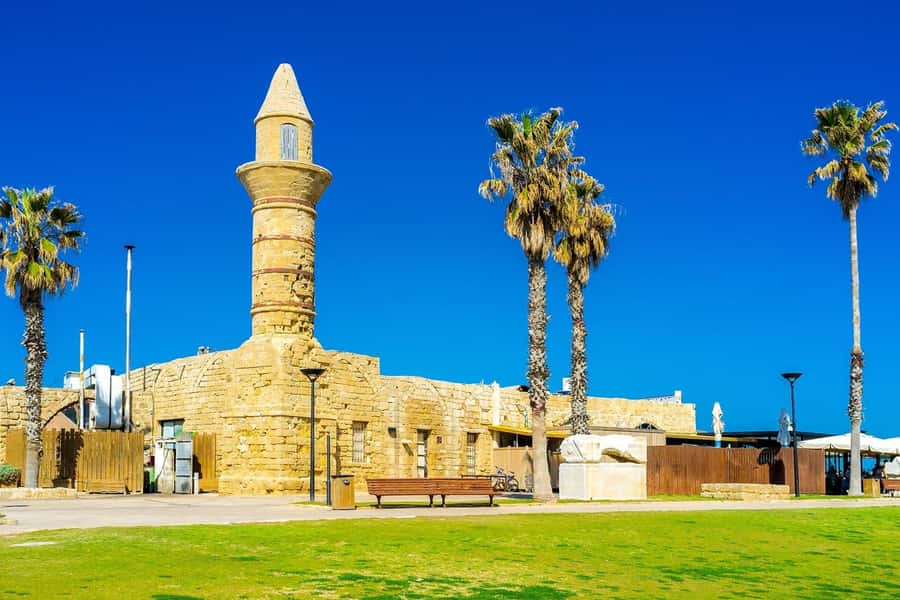
Nearby are the remains of the Hippodrome and a Roman temple. Your guide explains how these buildings looked over the port, where commercial ships brought goods from the east. Nabatean caravans also passed through the wider trade network on their way toward Rome.
That context helps. Caesarea is not only about columns and walls. It was a working port tied to commerce, politics, entertainment, and imperial power. The city’s later disappearance from prominence adds another turn to the story. After the Crusader period, a place that had once been prosperous slipped into obscurity.
I like this opening because it gives you a strong historical base for the rest of the day. The drawback is that Caesarea can feel like a quick introduction rather than a full archaeological study. If Roman sites are your main interest, you may want much more time than this day-trip format allows.
Haifa’s Baha’i Gardens on Mount Carmel
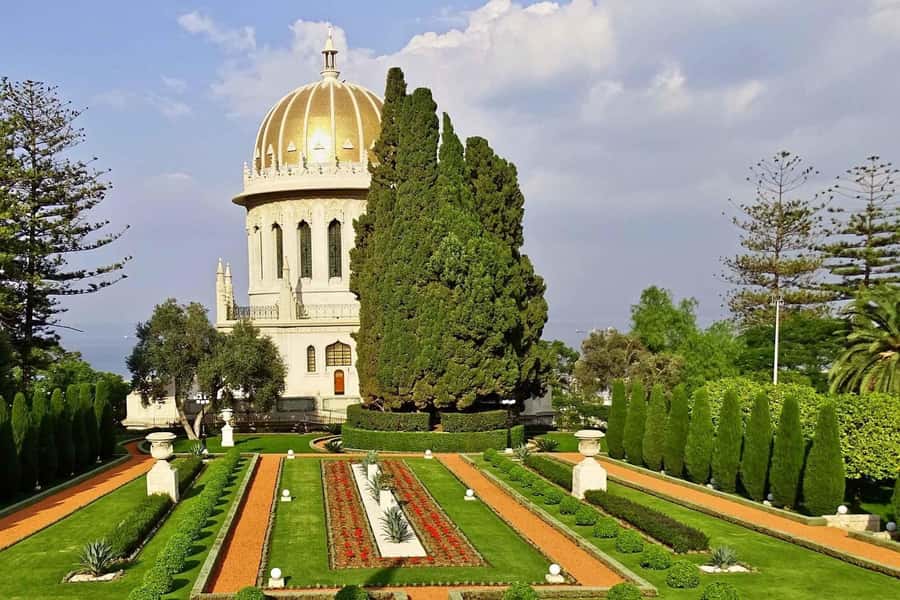
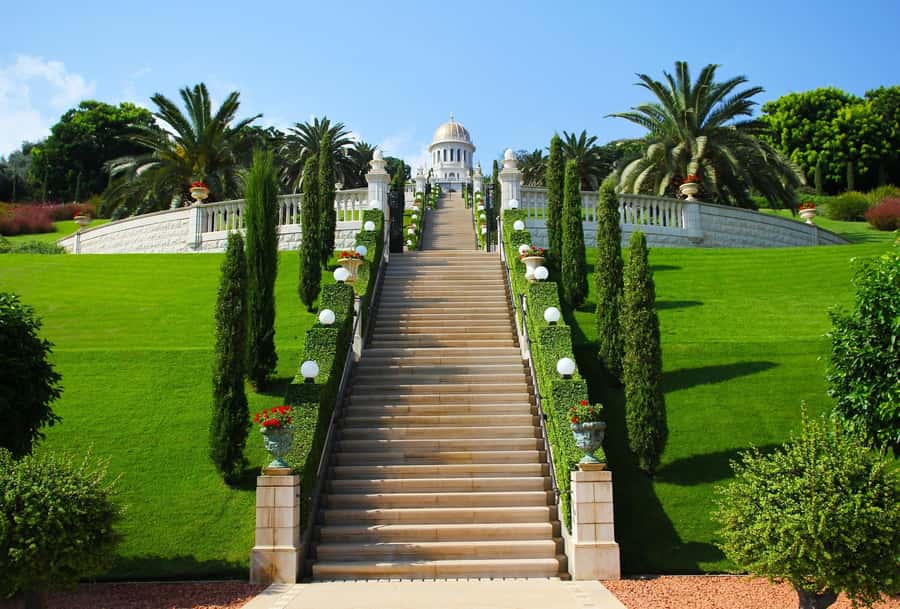
The coach then continues to Haifa, where the view shifts from ancient ruins to one of the city’s best-known modern landmarks. The Baha’i Shrine and Gardens occupy the slope of Mount Carmel, with 19 terraces descending toward the city.
The gardens are designed in a strict, symmetrical style. Flower beds, trimmed greenery, paths, and terraces create a long visual axis down the mountain. From the viewpoint, the arrangement is the point. You are looking at a carefully ordered series of gardens, with Haifa and the coast spread below.
Haifa is also listed among the UNESCO World Heritage sites included in this route. The Baha’i Gardens are important not just for their appearance, but for their connection to the Baha’i faith and its sacred places. Even if you know little about the religion before arriving, the site gives you a clear example of how belief, architecture, and garden design can work together.
This stop is shorter and less physically demanding than Rosh Hanikra or Acre. That makes it a useful pause after Caesarea. You can focus on the view and the terraces without needing to work through a large archaeological complex.
Keep expectations practical. The tour information promises a stop to see the shrine and gardens, not an extended garden walk or a detailed religious visit. Your view and access may depend on the day’s schedule and the areas open during the stop. The guide’s explanation matters here, since the visual design alone does not tell you much about the site’s meaning.
Rosh Hanikra and the cable car to the sea caves
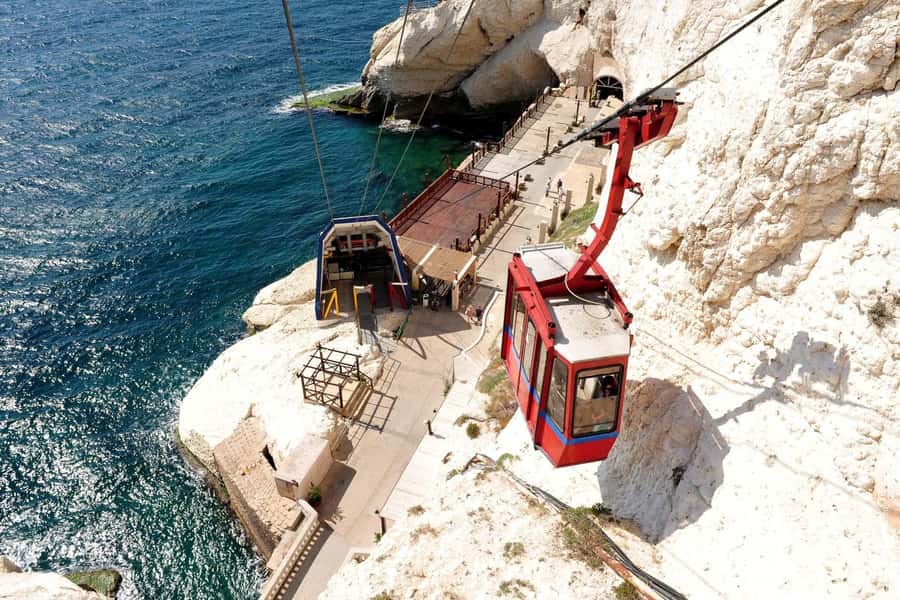
At Rosh Hanikra, the day reaches Israel’s northernmost point along the Mediterranean coast. The main attraction is the cable car, which carries you down toward a network of limestone grottoes.
The caves were formed by the constant force of waves striking the rock. Inside, the setting feels very different from the Roman remains earlier in the day. Caesarea shows human control over stone, while Rosh Hanikra shows what water and time can do to the coast.
The cable car is a small but important part of the experience. It saves you from making the descent on foot and gives you a clear sense of the height between the upper point and the grottoes. Once below, you follow the cave area and look at the openings cut through the limestone.
This is likely to be the most visually dramatic stop. It is also the place where sturdy shoes and care matter most. The tour specifically advises comfortable footwear, and that advice makes sense for a coastal attraction with rock surfaces and walking near the grottoes.
The stop depends on the cable car operating. The supplied information does not give a weather policy or a backup plan, so you should understand that this part is tied to local conditions and operation on the day. Still, when the ride is running, it adds a memorable change of pace to an otherwise history-heavy itinerary.
More caesarea tours in Jerusalem:
- Caesarea, Haifa, Acre and Rosh Hanikra Tour from Jerusalem
★ 3.5 · 7 reviews - From Tel Aviv: Caesarea, Haifa and Akko Day Trip
★ 4.4 · 744 reviews - Caesarea, Rosh Hanikra and Acre Day Trip from Tel Aviv
★ 4.5 · 406 reviews - Unforgettable Tour to Caesarea, Haifa, Acre and Rosh HaNikra from Tel Aviv
★ 4.0 · 56 reviews
Acre: Crusader walls and a living old city
On the way south, the tour stops in Acre, also called Akko. This is the largest Crusader city in the country and another UNESCO World Heritage site on the route.
Acre is not merely an archaeological park. Ancient buildings remain part of a functioning city, with markets, streets, and people living among the old walls. That mix makes the visit more engaging than a site where every building has been cleared of daily life.
The old city’s walls and moat are especially important. They were reconstructed and repaired by El Jazzar at the end of the 18th century, strengthening Acre’s defenses. Those walls helped protect the city from Napoleon, who failed to conquer it. Your guide can connect the military architecture to the city’s position on the coast and its long role as a strategic port.
The Crusader remains give you a look at the city’s earlier power. You also learn about the prison used under Turkish rule and the gallows used during the British Mandate. The gallows are tied to the British limits on Jewish immigration to Palestine after World War II and to Jews who broke those laws.
That final subject gives Acre a more recent and painful layer. The city is not frozen in the Crusader era. Its buildings carry Roman, Crusader, Ottoman, and British Mandate connections, and the tour moves through those periods in a compact visit.
I like Acre best as a walking stop because it combines architecture with ordinary life. The possible weakness is time. Acre deserves a slow wander, yet this itinerary has already taken you through three other major stops and still requires the return to Jerusalem.
The guide can make or break the day
The tour is offered in English with a live professional guide. That guide is responsible for turning a series of impressive places into a connected story.
You want clear explanations at Caesarea, where the ruins need context. You also want the guide to explain the Baha’i Gardens and Acre’s political history without reducing everything to a list of dates. The supplied feedback includes special praise for a guide named Omri, especially for explaining historical and biblical views. If Omri is assigned to your departure, that is a useful sign, but guide assignment should be confirmed when booking.
Other feedback points to a pleasant guide and interesting surroundings, while also warning that the commentary can be brief. That contrast is worth taking seriously. The physical route is fixed, but the amount of explanation may vary with the guide and the day.
I would bring a small notebook or use your phone for quick notes if you care about names and dates. You will see enough in one day to blur together later, especially after several hours on the road.
How much road time should you expect?

This is a full-day excursion from Jerusalem, not a short outing. You leave around 5:40 AM, travel north along the Mediterranean coast, pass areas such as Herzliya and Netanya, visit the sites, and then return south from Acre.
The long coach ride is the central drawback. One French-language comment described the day as involving a lot of driving, with interesting scenery but brief explanations and a very high price. Since this tour is in English, the language complaint may not apply directly to you, but the warning about road time does.
The coach does provide useful benefits. You do not need to navigate between four distant stops, find parking, or arrange separate transport from Jerusalem. Air conditioning matters on a long day, too. Hotel pickup and drop-off from main Jerusalem hotels remove another layer of hassle.
Still, do not book this expecting a relaxed coastal holiday. Think of it as an efficient orientation to northern Israel. You trade depth for reach.
What is included, and where the value lies

The package includes air-conditioned coach transportation, a professional guide, hotel pickup and drop-off from Jerusalem’s main hotels, and all entrance fees. Food and drinks are extra, and insurance is not included.
No tour price is provided here, so I cannot judge the exact cost against comparable departures. The right value question is what you would spend and organize to reach four separate places independently. Transport from Jerusalem alone is a major part of the calculation, especially with a very early start and a late return.
The tour is best value when you want convenience and broad coverage. It is weaker value if you plan to rent a car, already have transport, or care more about spending several hours in one place. A high price would be easier to justify if the guide provides strong explanations and the schedule keeps all four stops running smoothly.
Bring water and food for the road since neither is included. The information does not specify meal stops, so do not rely on a long restaurant break. Comfortable shoes will serve you better than stylish ones.
Who should book this northern Israel day trip?
I would recommend it to first-time visitors who have a limited stay in Jerusalem and want to add the northern coast without changing hotels. It also suits history fans who like moving between periods rather than spending an entire day at one excavation.
Families with older children may appreciate the variety. The Roman amphitheater, cable car, caves, gardens, and fortress walls give the day several visual changes. The early departure and long return may be tiring for younger children.
The tour is also a good fit for anyone who wants a guide to handle the route. You get the basic structure, admissions, and transport in one booking. You should think twice if you need a slow pace, a private itinerary, or extensive time for photography.
The overall rating of 4.2 from 25 bookings suggests a generally positive experience with some clear limits. The most praised elements are the pleasant guides, beautiful surroundings, historical views, and the wide range of sights. The main caution is not the destinations. It is the amount of driving and the possibility of short commentary.
My verdict: book it for breadth, not for a slow day
Book this tour if you want to see Caesarea, Haifa, Rosh Hanikra, and Acre in one organized day from Jerusalem. The route covers Roman ruins, a UNESCO-listed religious site, sea caves, and a Crusader city, with entrance fees and transport already handled.
Skip it if your ideal day includes long lunches, extended museum visits, or time to wander without watching the clock. The early start and long road sections are real costs.
For most short-stay visitors, I see the value in it. Just arrive ready for a demanding day, wear comfortable shoes, bring food and water, and treat the tour as a well-packed introduction to Israel’s northern coast rather than a leisurely exploration.
FAQ
Where does the tour begin?
The tour includes pickup from Jerusalem’s main hotels.
What time is hotel pickup?
Pickup is scheduled for around 5:40 AM.
How long does the experience last?
The tour lasts one full day. You should expect a long day because it travels from Jerusalem to the northern coast and returns south after visiting the stops.
Which places does the tour visit?
The itinerary includes Caesarea, Haifa, Rosh Hanikra, and Acre, also known as Akko.
Is transportation included?
Yes. Transportation is provided by air-conditioned coach, with hotel pickup and drop-off from Jerusalem’s main hotels.
Are entrance fees included?
Yes. All entrance fees are included.
Is food included?
No. Food and drinks are not included.
Is the tour conducted in English?
Yes. The activity includes a live English-speaking guide.
What should I bring?
Comfortable shoes are specifically recommended. Since food and drinks are not included, you may also want to bring your own refreshments.
Can I cancel the booking?
You can cancel up to 24 hours in advance for a full refund. The tour also offers a reserve-now, pay-later option.
More Rosh Hanikra Tours in Jerusalem
- Highlights of Caesarea, Haifa, Acre and Rosh Hanikra Tour from Tel Aviv
★ 4.0 · 10 reviews - Caesarea, Haifa, Akko and Rosh Hanikra Private Tour from Tel Aviv
★ 5.0 · 8 reviews - Haifa Acre and Rosh Ha-Nikra Private Tour from Tel Aviv
★ 5.0 · 5 reviews
Just added around Jerusalem
- Tour of Jerusalem & Dead sea private tour★ 5.0 · 4 reviews
- full day tour Jerusalem price per van up to 6 people★ 5.0 · 8 reviews
- West Bank Tour from Jerusalem and Tel-Aviv – Bethlehem & Jericho★ 5.0 · 6 reviews
- jerusalem classic tour★ 5.0 · 3 reviews
- Privet Tour – FROM JERUSALEM TO JERICHO & THE DEAD SEA★ 5.0 · 8 reviews
- Experience Shabbat With Dinner In Jerusalem★ 5.0 · 5 reviews
- Private Tour: Old City of Jerusalem Christianity Tour★ 5.0 · 5 reviews
- Temple Mount Private Guided Tour★ 5.0 · 4 reviews
Caesarea Tours, compared.
From Tel Aviv: Caesarea, Haifa and Akko Day Trip
Read our review →
Caesarea, Rosh Hanikra and Acre Day Trip from Tel Aviv
Read our review →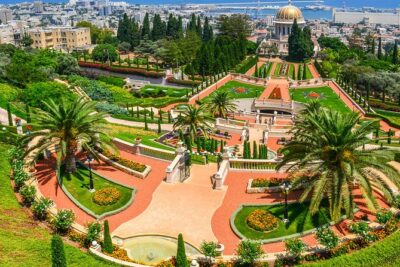
Caesarea, Acre & Rosh Hanikra Day Trip from Jerusalem
Read our review →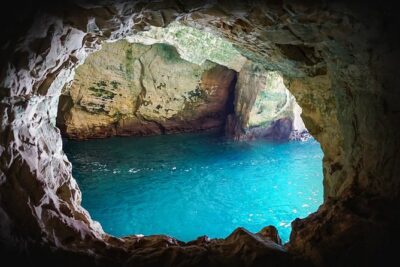
Unforgettable Tour to Caesarea, Haifa, Acre and Rosh HaNikra from Tel Aviv
Read our review →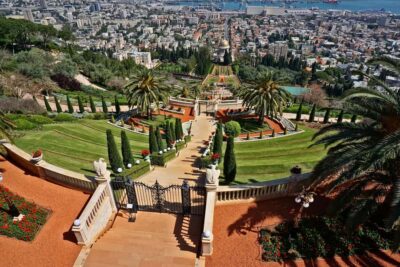
Tel Aviv/Jerusalem: Caesarea, Haifa & Akko Day Tour
Read our review →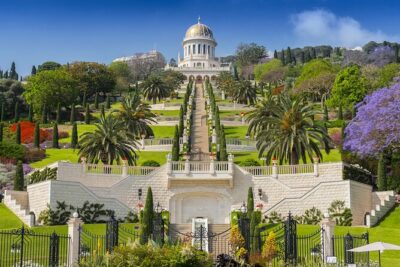
Caesarea, Haifa, Rosh Hanikra, and Acre Tour from Jerusalem
Read our review →
Highlights of Caesarea, Haifa, Acre and Rosh Hanikra Tour from Tel Aviv
Read our review →Browse the lists this tour appears in