
Reviewed · CAESAREA TOURS
Caesarea, Haifa And Akko Tour
Caesarea, Haifa, and Acre pack a remarkable slice of Israel into one long day. You move from Herodian port ruins to Haifa’s hillside Bahai Gardens, then finish among Acre’s medieval halls, old market, and Templar’s Tunnel. It is a history lesson with sea air and plenty of walking.
I like the variety of the route and the fact that a guide gives each stop some shape instead of leaving you to puzzle over ancient stones. I also like the practical comfort of an air-conditioned vehicle, return transport, and the option to begin and end in either Tel Aviv or Jerusalem.
The trade-off is time. Twelve hours is a lot, and each site gets only a limited visit. Admission fees are separate, and food and drinks are not included, so your final cost will be higher than the advertised $99.
In This Review
- Key points at a glance
- Why this coastal route works so well
- Caesarea’s port and amphitheater in 90 minutes
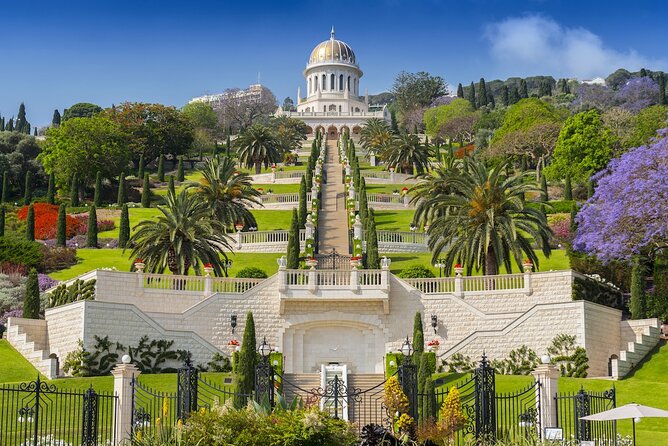
- Haifa and the Bahai Gardens on Mount Carmel
- Acre’s port, market, and underground tunnel
- The guides make the history easier to follow
- Transport, timing, and the cost of the day
- Walking, food, and what to bring
- Who will get the most from this tour
- Is the $99 tour worth booking?
- FAQ
- How long is the Caesarea, Haifa, and Acre tour?
- Where does the tour start and finish?
- Which places are visited?
- How long is the stop at Caesarea?
- What can I see in Caesarea?
- How long is the Acre visit?
- What sights are included in Acre?
- Is there an admission fee for the Bahai Gardens stop in Haifa?
- Are entrance tickets included in the $99 price?
- Are food and drinks included?
- Is the tour guided?
- How many people can join the tour?
- Can most people participate?
- Can I cancel for a full refund?
- What happens if bad weather cancels the tour?
Key points at a glance
- Three major coastal sights in one day: See Caesarea, Haifa, and Acre without arranging separate transport.
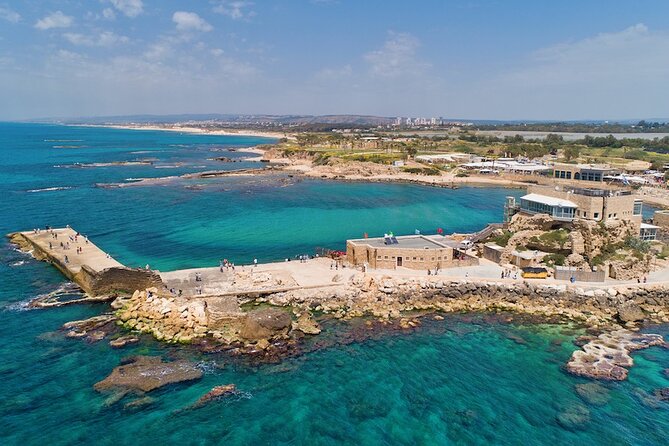
- Caesarea’s Roman and Herodian remains: Spend about 90 minutes at the port, archaeological park, and amphitheater.
- Haifa’s famous Bahai Gardens: Enjoy a guided look at one of Israel’s best-known city views, with no admission fee listed for this stop.
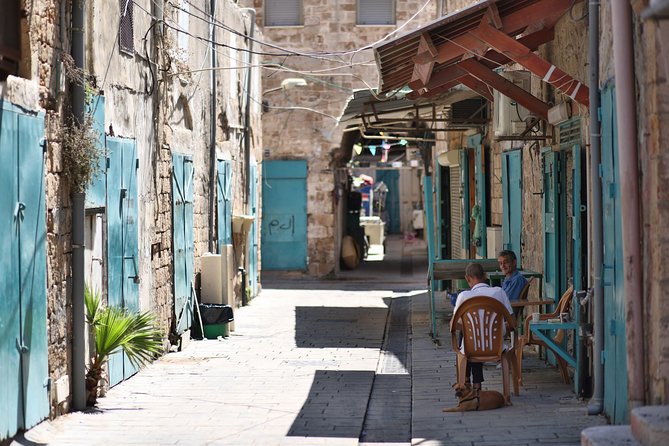
- Acre’s medieval core: Explore the port, market, Knights’ Halls, and Templar’s Tunnel during a two-hour visit.
- Strong guide element: Guides including Oded and Aviad have been singled out for clear explanations, good subject knowledge, and a friendly manner.
- A long but useful day: Expect about 12 hours, walking at several sites, and a group that may include up to 100 people.
Why this coastal route works so well
This tour is built around contrast. Caesarea presents the remains of a grand ancient port. Haifa gives you a modern city spread across Mount Carmel, with the Bahai Gardens as its visual centerpiece. Acre brings you into an old walled city with Crusader-era halls, a traditional market, and an underground passage built by the Templars.
That sequence helps you understand the coast as more than a string of photo stops. You see how different powers used the same shoreline over many centuries. The guide’s role matters here because the sites are not always self-explanatory. A column, wall, tunnel, or stone hall becomes much more useful when you know what it was for and why it mattered.
You should also set your expectations correctly. This is not a slow, relaxed day in one town. It is a road tour with several stops, a fair amount of walking, and a schedule that must keep moving. If you want to linger over every ruin or sit for a long meal, choose separate day trips instead.
For a first visit to Israel, though, the route makes good sense. You can see three important places in one outing, then return to Tel Aviv or Jerusalem without having to work out the intercity transport yourself.
More Acre (Akko) Tours in Tel Aviv
- From Tel Aviv: Caesarea, Haifa and Akko Day Trip
★ 4.4 · 744 reviews - Caesarea, Rosh Hanikra and Acre Day Trip from Tel Aviv
★ 4.5 · 406 reviews - Walking Tour of Akko (Half-day)
★ 5.0 · 84 reviews
Caesarea’s port and amphitheater in 90 minutes
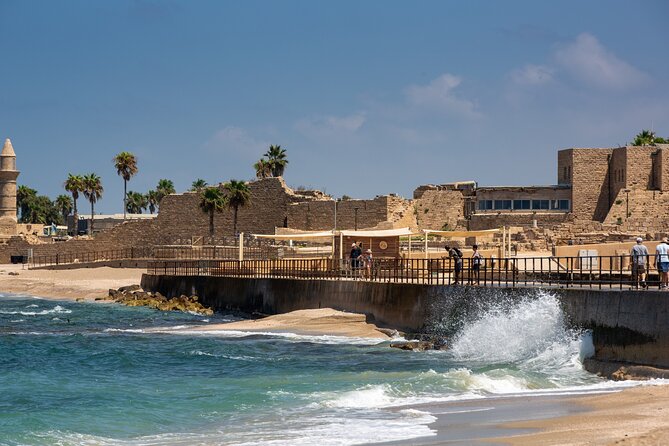
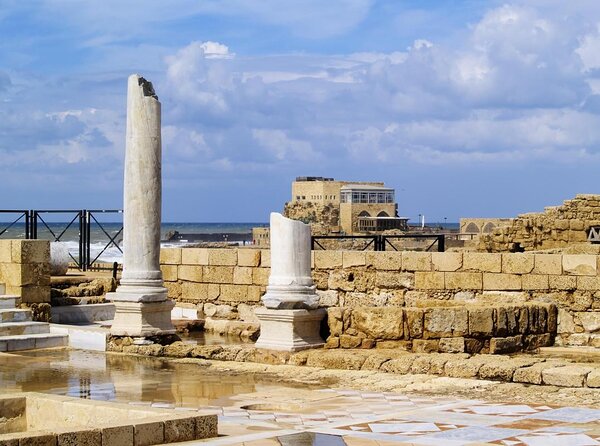
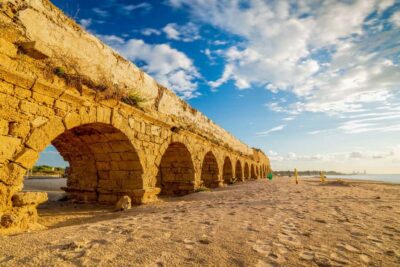
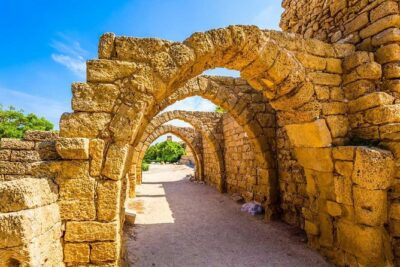
The first stop is Caesarea National Park, where the visit focuses on the famous port, archaeological park, and amphitheater. The name points to Herod the Great, who developed Caesarea into a major port and named it for the Roman emperor Augustus. You do not need to be an ancient-history specialist to enjoy the setting. The remains sit beside the Mediterranean, so the visit combines open coastal views with visible traces of a once-important city.
The port area gives you a sense of scale. Building a major harbor here was a serious engineering project, and the ruins help explain why Caesarea became important. A guide can connect the surviving stones to the city’s former role, rather than treating the site as a collection of disconnected walls.
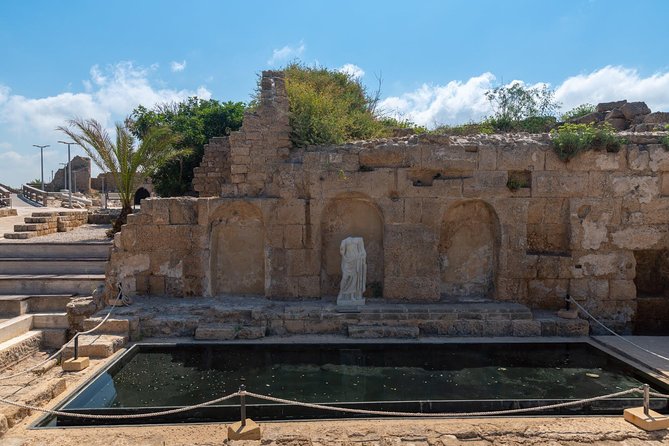
The archaeological park adds more layers. You might see remains from different periods close together, which is one reason a guided visit helps. In 90 minutes, you can get oriented and see the principal areas, but you will not have time to inspect every corner at leisure.
The amphitheater is another clear highlight. Its shape makes it easier to imagine public performances and large gatherings than many scattered ruins do. It is also the kind of place where your guide can provide useful context quickly, which suits the tight schedule.
The main limitation is the length of the stop. Caesarea deserves more time if ancient ruins are your main interest. Here, you get a well-chosen introduction, not an exhaustive archaeological visit. Wear comfortable shoes, since the day includes walking across outdoor paths and historic surfaces.
Haifa and the Bahai Gardens on Mount Carmel
Haifa is Israel’s third city, set on the slopes of Mount Carmel. The city’s position gives it a different feel from the flat coastal setting of Caesarea and the enclosed old city of Acre. The Bahai Gardens are the key sight, known for their carefully arranged terraces and strong views across the city and toward the sea.
The tour allows about two hours in Haifa. That gives you time to take in the gardens and hear about the Bahai Faith, as well as to get a sense of Haifa’s unusual shape. The city climbs the mountain, so the setting itself is part of the visit.
There is no admission charge listed for this stop, which helps the tour’s overall value. It also gives the day a visual pause after the stonework and ruins of Caesarea. You move from archaeology to formal gardens and a wide city view, then continue north to Acre.
Do not expect a long independent exploration of Haifa. The visit is centered on the gardens and the city’s main viewpoint rather than a full tour of every neighborhood. That focus is sensible on a three-stop day, but you may want a separate visit if Haifa is high on your list.
The gardens are also a place where timing and group movement matter. With a large possible group, you may need to stay attentive to the guide and meeting instructions. The advantage is that the guide can point out the main features and keep the stop organized. The drawback is less freedom to pause wherever you like.
Acre’s port, market, and underground tunnel
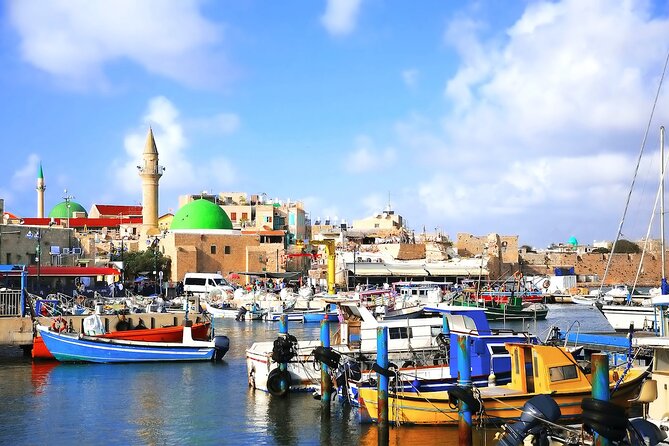
Acre, also called Akko, receives the longest scheduled visit, about two hours. That is appropriate because the old city offers several distinct sights close together. The tour includes the port, old city market, Knights’ Halls, and the Templar’s Tunnel.
The port provides a natural starting point. Acre’s location helped make it a strategic coastal city, and the waterfront gives you a quick sense of its long connection with trade and military power. From there, the old market brings a more everyday side of the city into view. You can expect a tighter, more active setting than the open ruins at Caesarea.
The Knights’ Halls are among the most important stops. These large medieval spaces make the old city’s military and religious past easier to picture. Their scale is more impressive in person than a short description suggests, and a guide can explain how the rooms fitted into the wider complex.
The Templar’s Tunnel adds a different kind of experience. Instead of looking across open ruins, you enter a passage connected with the Templars, the medieval order that had a base in Acre. A tunnel visit also breaks up the day nicely. After the outdoor port and market, you get a more enclosed, atmospheric stop.
Two hours is enough to cover the main points, but not enough for a leisurely market wander, a long meal, and a detailed visit to every historic room. If you want time to browse, keep your pace sensible and listen carefully for the group’s meeting time.
Acre is likely to be the stop where the tour feels most varied. You have a waterfront, streets, market activity, substantial medieval rooms, and an underground passage. It is also the stop where comfortable footwear matters most.
More Caesarea Tours in Tel Aviv
- Unforgettable Tour to Caesarea, Haifa, Acre and Rosh HaNikra from Tel Aviv
★ 4.0 · 56 reviews - Tel Aviv/Jerusalem: Caesarea, Haifa & Akko Day Tour
★ 4.5 · 53 reviews - Highlights of Caesarea, Haifa, Acre and Rosh Hanikra Tour from Tel Aviv
★ 4.0 · 10 reviews - Caesarea and Haifa Private Tour from Tel Aviv
★ 5.0 · 8 reviews
The guides make the history easier to follow

The strongest part of this experience is the guided format. The tour is not just transport between three locations. A licensed guide accompanies the visits and supplies the historical links that help you understand what you are seeing.
Oded has been praised for keeping the day moving while explaining the subject clearly and in a personable way. Aviad has also been singled out for strong historical explanations. A driver identified as David was praised for keeping the vehicle service on time. Guide assignments can change, so you should not book expecting one particular person, but these names show the standard of guide experience associated with the tour.
Good guiding matters especially at Caesarea and Acre. Ruins can look similar when you first arrive, and a clear explanation helps you separate a port from a public building, or a medieval hall from a later structure. The best guides also leave room for questions. The experience is stronger when you can ask about details rather than simply follow a speech from one stop to the next.
One useful personal touch reported from the day is that a guide supplied cool drinks and fruit, and patiently answered questions. That is not listed as a formal inclusion, so you should not count on it. Still, it suggests that some guides pay attention to the practical side of a long, warm day.
Transport, timing, and the cost of the day
The tour costs $99 per person and lasts about 12 hours. The price includes an air-conditioned vehicle, transfers to all three sites, return transport to Tel Aviv or Jerusalem, and a fully guided tour.
For a visitor who would otherwise arrange three separate transfers, the price can be reasonable. You are paying for the route planning, the driver, the guide, and the ability to cover a long stretch of coast in one day. The return option is especially helpful if you are staying in Tel Aviv or Jerusalem and do not want to solve the journey back after a full day out.
The price does not include entrance fees, food, or drinks. This is the most important cost detail to keep in mind. The advertised figure is a starting price, not the full amount you should budget for the day.
The tour may have as many as 100 participants. That is a large possible group, and it affects the experience. You will have less independence than on a small-group outing, and meeting points may need careful attention. In exchange, larger tours often make a long intercity route available at a lower price than a private vehicle.
The schedule also requires realistic expectations. A 12-hour day may include early pickup, road time, site visits, and the return transfer. You will spend part of the day in the vehicle, though the air conditioning is a meaningful comfort in warm weather.
Pickup and drop-off can be arranged in Jerusalem or Tel Aviv. Check your selected departure details carefully, since the tour is designed around those two cities rather than general pickup anywhere in Israel.
Walking, food, and what to bring
The day includes walking at all three locations. Caesarea has outdoor archaeological areas, Haifa involves a hillside setting and garden views, and Acre includes an old city, historic halls, and a tunnel. You do not need to be an athlete, since the activity information says most people can participate, but comfortable shoes are a smart choice.
Food and drinks are not included. Bring what you need for a long day, or plan to buy food during an appropriate break if the schedule allows. Do not assume you will have a long restaurant stop, since the main goal is to visit all three destinations.
A small bag is useful for water, snacks, sun protection, and any personal items you need during the day. Keep an eye on the group and the guide’s instructions, especially in Acre’s old city, where streets and meeting points may not always be obvious.
The tour requires good weather. If poor weather forces a cancellation, you can be offered another date or a full refund. The tour also requires a minimum number of participants, so a cancellation for that reason comes with the same choice of another date or experience, or a full refund.
Who will get the most from this tour
I would recommend this experience most strongly to first-time visitors who want an efficient introduction to Israel’s Mediterranean coast. It is also a good fit if you are based in Tel Aviv or Jerusalem and want to see places that can be awkward to connect by public transport in one day.
History fans will appreciate the range. Caesarea covers the ancient world, Acre brings in the medieval period, and Haifa adds religious architecture, city views, and a modern urban setting. The guide helps keep those periods from blending into one long list of dates.
The tour also suits people who prefer not to drive. You can sit back between sites, let the driver handle the route, and focus on the guide’s explanations. The air-conditioned vehicle is particularly useful during warmer weather.
I would hesitate if you dislike fixed schedules, large groups, or long days. The route is ambitious. You will see a lot, but you will not have unlimited time at any one place. A private tour or separate day trips would suit a slower pace better, though they would likely cost more and require more planning.
Is the $99 tour worth booking?
For $99, this is a practical way to see three major coastal sights with transport and a guide included. The value is strongest when you want broad coverage rather than long, independent visits. Caesarea gives you ancient port ruins, Haifa supplies the gardens and views, and Acre brings medieval architecture and a tunnel into the same day.
Before booking, allow for entrance fees and your own food and drinks. Also ask yourself if a possible group of up to 100 people and a 12-hour schedule match your travel style.
I would book it for a first overview, especially from Tel Aviv or Jerusalem. I would choose another format if Acre, Caesarea, or Haifa is your main reason for visiting and you want time to explore one place properly. The tour’s greatest strength is its range, and its main weakness is the limited time that range requires.
FAQ
How long is the Caesarea, Haifa, and Acre tour?
The tour lasts approximately 12 hours.
Where does the tour start and finish?
You can choose pickup and return transfer in Tel Aviv or Jerusalem.
Which places are visited?
The tour visits Caesarea National Park, Haifa, and Acre, also known as Akko.
How long is the stop at Caesarea?
The guided visit to Caesarea lasts about 1 hour and 30 minutes.
What can I see in Caesarea?
The visit includes the famous port, the archaeological park, and the amphitheater.
How long is the Acre visit?
The scheduled visit to Acre lasts about two hours.
What sights are included in Acre?
The guide visits the port, old city market, Knights’ Halls, and the Templar’s Tunnel with the group.
Is there an admission fee for the Bahai Gardens stop in Haifa?
Admission is listed as free for the Haifa stop.
Are entrance tickets included in the $99 price?
No. Entrance fees must be purchased separately.
Are food and drinks included?
No. Food and drinks are not included.
Is the tour guided?
Yes. The experience includes a fully guided tour and visits with a licensed guide.
How many people can join the tour?
The maximum group size may be 100 people.
Can most people participate?
The activity information says most people can participate. You should still expect walking at all three stops.
Can I cancel for a full refund?
Yes, if you cancel at least 24 hours before the experience start time. Cancellations made less than 24 hours in advance are not refunded.
What happens if bad weather cancels the tour?
You can be offered a different date or a full refund if poor weather causes the cancellation.
Just added around Tel Aviv
- private Full-day Tour to Jericho + the Dead Sea★ 5.0 · 3 reviews
- VIP Tel Aviv airport Terminal 3 Fast Track Skip Line From plane★ 4.5 · 9 reviews
- Jerusalem and Dead Sea Trip from Tel Aviv★ 4.0 · 6 reviews
- Package VIP Skip Line Services in BGN Airport with Transfer to Tel aviv Hotels★ 5.0 · 3 reviews
- Haifa Acre and Rosh Ha-Nikra Private Tour from Tel Aviv★ 5.0 · 5 reviews
- Food & Drink Private Guided Tour in Tel Aviv★ 5.0 · 3 reviews
- The Golan heights★ 5.0 · 4 reviews
- The full walk of Tel Aviv! – The city,Jaffa and the German colony★ 4.0 · 4 reviews
Caesarea Tours, compared.
From Tel Aviv: Caesarea, Haifa and Akko Day Trip
Read our review →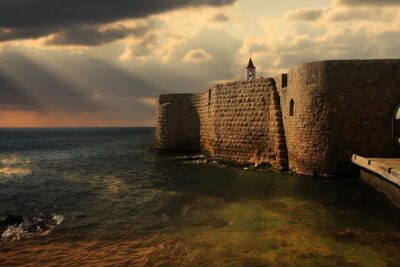
Caesarea, Rosh Hanikra and Acre Day Trip from Tel Aviv
Read our review →
Caesarea, Acre & Rosh Hanikra Day Trip from Jerusalem
Read our review →
Unforgettable Tour to Caesarea, Haifa, Acre and Rosh HaNikra from Tel Aviv
Read our review →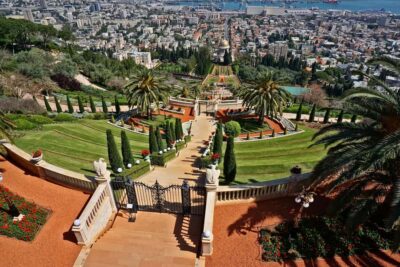
Tel Aviv/Jerusalem: Caesarea, Haifa & Akko Day Tour
Read our review →
Caesarea, Haifa, Rosh Hanikra, and Acre Tour from Jerusalem
Read our review →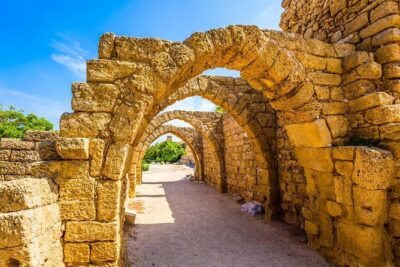
Highlights of Caesarea, Haifa, Acre and Rosh Hanikra Tour from Tel Aviv
Read our review →Browse the lists this tour appears in