

Reviewed · JERUSALEM OLD CITY TOURS
Tel Aviv & Old City of Jaffa – Tiny group from Tel Aviv
Tel Aviv’s story makes the most sense when you walk from its earliest neighborhood to its oldest port. This small-group tour of no more than 10 people links Neve Tzedek, the White City, HaTachana, and Jaffa in one compact morning.
I like the route for two reasons: it shows both Tel Aviv’s young, modern character and Jaffa’s much older Ottoman core, and it gives a guide time to explain how the city’s past still shapes Israel today. The tour also finishes at the Clock Tower, leaving you in a useful spot to continue exploring Jaffa.
The main consideration is value. At $139 per person, this is not a cheap orientation walk, and food, drinks, and transportation are not included. You also need comfortable shoes and a moderate level of fitness for about three hours on foot.
In This Review
- Key points to know before booking
- Why this route works for a first look at Tel Aviv
- Neve Tzedek: Tel Aviv’s first neighborhood
- The Suzanne Dellal Centre and Neve Tzedek’s cultural side
- HaTachana and the old railway connection
- Tel Aviv’s White City and Bauhaus architecture
- Jaffa’s Clock Tower and Ottoman remains
- What the small group changes
- Is $139 a fair price?
- Timing, weather, and walking comfort
- Who will get the most from this walk?
- Should you book Tel Aviv and Old City of Jaffa?
- FAQ
- Where does the tour start?
- Where does the tour end?
- What time does the tour begin?
- How long does the experience last?
- How many people can join the tour?
- Is there a minimum number of people required?
- What places are included on the route?
- Are food and drinks included?
- What should I wear?
- What happens if the weather is poor?
Key points to know before booking
- A 10-person maximum keeps the walk personal: You spend less time gathering a large group and more time listening and asking questions.
- Neve Tzedek provides the best starting point: You see Tel Aviv’s first neighborhood and its distinctive houses before reaching later landmarks.
- HaTachana shows a different side of the city: The 19th-century railway station has been adapted for modern use while retaining its unusual structures.
- The White City section connects architecture with history: Your guide explains why Tel Aviv received UNESCO World Heritage status for its Bauhaus buildings.
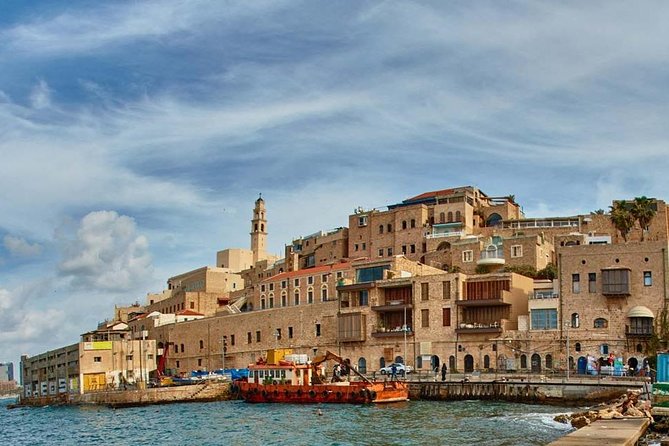
- Jaffa supplies the older setting: The Clock Tower, Ottoman Seraya building, and old city offer a clear contrast with Tel Aviv.
- The tour ends in central Jaffa: You can continue exploring from the Clock Tower after the guided portion finishes.
Why this route works for a first look at Tel Aviv
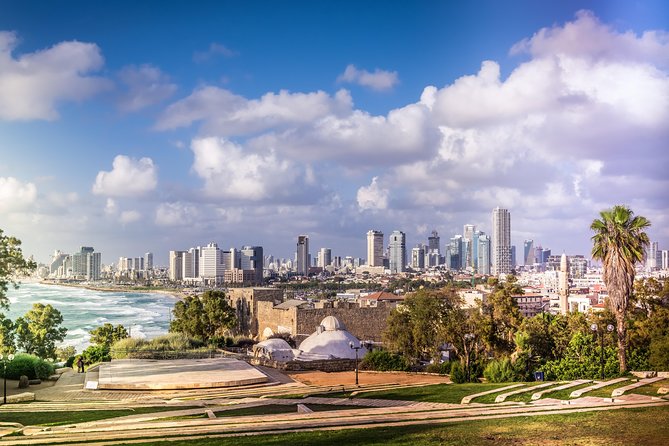
Tel Aviv can feel like several cities joined together. Along one route you find early neighborhood houses, early 20th-century European-influenced architecture, a former railway station, and an ancient port city with Ottoman remains.
That variety is the tour’s main strength. Instead of seeing Tel Aviv as only a beach city or a modern business center, you get a quick lesson in how its neighborhoods developed. The guide’s role matters here. The most praised aspect of the experience is the historical explanation, especially the way recent Israeli history is placed beside the much older story of the region.
This is not a museum tour with long indoor visits. It is a guided walk through streets and public areas, with free admission to the listed stops. You are paying mainly for the guide’s interpretation, the compact route, and the small group rather than for entry tickets.
The tour begins at 10:00 am at the Dan Panorama on Kaufmann Street. It ends at the Clock Tower on Yefet Street in Jaffa, so it is a one-way walk rather than a round trip. That is useful if you want to continue sightseeing in Jaffa, but you should plan your day around finishing there.
More Jerusalem Old City Tours in Tel Aviv
- From Tel Aviv: Jerusalem Old City & Dead Sea Guided Day Tour
★ 4.4 · 389 reviews - Jerusalem Half-Day Tour from Tel Aviv: Holy Sepulchre and Western Wall
★ 4.0 · 61 reviews - From Tel Aviv: Jerusalem Old City Guided Tour
★ 4.6 · 59 reviews
Neve Tzedek: Tel Aviv’s first neighborhood
The walk starts in Neve Tzedek, described as the first neighborhood on the southern side of Tel Aviv. This is where the tour begins to explain the city through its buildings rather than through a long lecture.
Look for the personality of the local houses. The appeal here is not a single grand monument. It is the mix of small-scale structures, street views, and architectural details that show how different Neve Tzedek feels from the larger modern city around it.
A guide can make this part much more useful than a solo stroll. You will hear how the neighborhood fits into Tel Aviv’s early development and why its houses matter. The supplied tour details do not name individual guides, so you should not expect a particular guide by name. Still, the experience has been praised for cheerful, flexible guiding and for explaining places in a way that connects old events to Israel today.
The pace is likely to be steady rather than rushed. You need to remain on your feet and walk through several districts, so comfortable shoes are not a minor suggestion. People who want a relaxed café morning with very little walking may find the format tiring.
The Suzanne Dellal Centre and Neve Tzedek’s cultural side
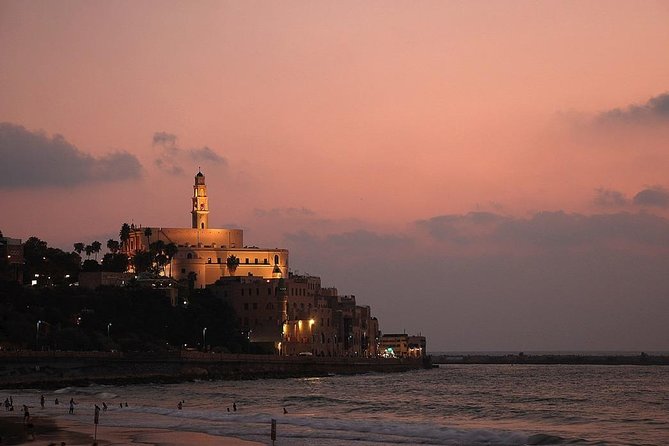
The route continues to the Suzanne Dellal Centre, a cultural center in the old neighborhood. This stop helps show that Neve Tzedek is not simply a preserved historic quarter. It also has a present-day cultural role.
The center gives the walk a change of mood. After looking at residential houses and early neighborhood development, you reach a place connected with performance and culture. The guide can explain how the older setting and current use sit together, although the supplied information does not promise an indoor performance, a show, or admission to a particular building.
That distinction matters. You should book this as an outdoor city walk, not as a ticketed cultural event. The value comes from seeing the center as part of the neighborhood’s story and understanding why this section of Tel Aviv remains important.
HaTachana and the old railway connection
Next comes HaTachana, the former 19th-century railway station. Its unusual structures make it one of the route’s more distinctive stops.
A railway station may sound less exciting than Jaffa’s old streets, but it gives you a useful piece of urban history. Railways change how people and goods move, and HaTachana helps connect Tel Aviv and Jaffa to that wider story. Its later conversion also shows how old structures can receive a new purpose.
The tour information says the station has been converted and retains unique structures. It does not promise a long interior visit or a specific amount of free time there. Think of HaTachana as a guided stop along the walking route, with the guide pointing out what to notice and why the site matters.
This is also where the route begins to feel nicely layered. You have seen a neighborhood built around local homes, a cultural center, and now a transport site from the 19th century. Each stop adds a different part of the city’s development without requiring a full day.
Same coast, a completely different kind of day:
- From Tel Aviv: Masada & Dead Sea Full Day Tour with Pick Up
★ 4.5 · 1,496 reviews - From Tel Aviv: Jerusalem and Bethlehem Guided Day Trip
★ 4.3 · 1,316 reviews - Masada and the Dead Sea Day Trip from Tel Aviv
★ 4.5 · 1,014 reviews - Tel Aviv: Jerusalem, Bethlehem & Dead Sea
★ 4.0 · 881 reviews
Tel Aviv’s White City and Bauhaus architecture
The tour also covers Tel Aviv’s Bauhaus architecture, the reason the city is known as the White City. The guide explains the highlights connected with its UNESCO World Heritage status.
This portion is valuable even if you are not an architecture specialist. Bauhaus buildings are easier to appreciate when someone points out the design features and explains why so many of them appeared in Tel Aviv. Without context, you may simply see pale façades and curved forms. With a guide, the buildings become evidence of a particular period in the city’s growth.
The supplied route specifically names Neve Tzedek, the Suzanne Dellal Centre, HaTachana, Independence Hall, and the White City. The tour details do not clearly promise an interior visit at Independence Hall, so treat it as a sight along the walk unless your guide says otherwise.
The city’s UNESCO status is another reason a guide adds value. The important point is not only that Tel Aviv has protected buildings. It is that the city’s architecture reflects a clear historical chapter, and the walk helps you place those buildings within the broader story.
If modern architecture is your main interest, you may wish the tour spent more time in the White City. The route covers several themes in roughly three hours, so it cannot offer a detailed architectural survey of every important building.
Jaffa’s Clock Tower and Ottoman remains
The final part takes you into Jaffa, one of the oldest cities in the world. The change is immediate in spirit, even though the districts sit close together.
The Clock Tower is the endpoint and one of the clearest meeting points in the old city. From there, the route includes the Ottoman Seraya building and the surrounding historic streets. These sights give you a chance to see physical traces of Ottoman administration within a place whose story reaches much farther back.
Jaffa works especially well as the second half of this route. You first learn about Tel Aviv’s newer neighborhoods and architecture, then reach a port city with a much older identity. That contrast helps you understand why the two places are often spoken of together but feel so different.
One of the most useful features of the guiding is practical orientation. The guide can point out places in Jaffa worth returning to after the tour. Since the walk ends at the Clock Tower, you are not immediately sent back to your starting point. You can use the rest of the day to explore on your own, subject to your own plans.
The tour does not include food or drinks. Jaffa is a sensible place to arrange your own meal or refreshment afterward, but the supplied details do not identify a restaurant or promise a food stop. Bring water for the walk, especially in warm weather.
What the small group changes
The maximum group size is 10 people. That is small enough to make a real difference on a city walk.
In a large group, you can lose time waiting for people to cross streets, gather around a guide, or hear a question from the back. A tiny group allows the guide to keep the route moving and adjust explanations when the group shows interest.
The experience requires at least three participants. That creates one practical uncertainty: a reservation is subject to availability and minimum numbers. Confirmation is sent within 48 hours of booking, also subject to availability. If you need a guaranteed activity on a particular morning, keep that condition in mind.
One unusual point deserves mention. A past booking began 30 minutes late, and the operator said it had attempted to notify the participant. The operator also said that a private tour was provided in that case despite a group booking. This does not establish a normal delay, but it is a reason to check your messages and answer calls before the start time.
Is $139 a fair price?
At $139 per person, the price is high for a three-hour walking tour with no food, drinks, or admission tickets included. You are not paying for costly attractions. You are paying for a licensed professional guide and a small group moving through several historically important areas.
The price makes more sense if you want interpretation rather than a list of addresses. A strong guide can connect Neve Tzedek, Bauhaus design, Independence Hall, the railway station, and Ottoman Jaffa into one clear story. The strongest praise for this experience focuses on that historical explanation and on the way it helps make sense of modern Israel as well as its older past.
The value is weaker if you are comfortable researching the sights yourself, prefer a short self-guided walk, or want lots of free time at each stop. You could see several of these areas without a tour, though you would miss the built-in explanation and the convenience of a planned route.
The 4.6 out of 5 rating indicates a generally strong experience, but the small number of published ratings means you should not treat it as a guarantee. One poor experience focused on a late start and disappointment with the amount covered. The operator disputed the circumstances and said contact attempts were missed. That mixed detail is worth considering alongside the otherwise strong comments about the guide and historical content.
Timing, weather, and walking comfort
The stated duration is about three to four hours, while the itinerary describes three hours. Allow at least the full three hours and avoid scheduling a tight connection immediately afterward.
The tour starts at 10:00 am. Morning timing can work well for seeing the city before the day becomes hotter, though the exact comfort of the walk depends on the season and weather. The experience requires good weather. If poor weather causes cancellation, you are offered another date or a full refund.
In winter, bring an umbrella and warm clothing. In every season, wear comfortable shoes. The route covers multiple neighborhoods and includes a moderate physical fitness requirement, so expect a genuine walking tour rather than a drive-by introduction.
The tour uses a mobile ticket, and the meeting point is the Dan Panorama, Kaufmann Street 10, Tel Aviv-Yafo. The endpoint is the Clock Tower, Yefet Street 14, Tel Aviv-Yafo. Because the beginning and end are different, check your onward plans before booking.
Who will get the most from this walk?
I would choose this tour for a first visit to Tel Aviv when you want the city explained in a short, well-structured morning. It suits anyone interested in architecture, urban development, Ottoman-era remains, and the connection between Tel Aviv and Jaffa.
It is also a good choice if you prefer a small group and want the freedom to ask questions. The guide’s historical role is central, so the experience is best for you if you enjoy context rather than simply photographing landmarks.
You may want another option if you need wheelchair-access information, a food-focused walk, a private departure time, or a detailed interior tour of specific buildings. None of those features is stated here. You should also think twice if $139 feels high for a walk without included admissions.
Should you book Tel Aviv and Old City of Jaffa?
Book it if you want one guide to connect Tel Aviv’s earliest neighborhood, Bauhaus White City, HaTachana, Independence Hall, and Ottoman Jaffa in a small group. The route is efficient, the endpoint is useful, and the historical explanation is the main reason to pay for it.
Skip it if you prefer to explore slowly on your own or want more time inside individual attractions. For the best match, reserve this as an orientation walk at the beginning of your Tel Aviv stay, then use the finish in Jaffa to continue exploring independently.
FAQ
Where does the tour start?
It starts at the Dan Panorama, Kaufmann Street 10, Tel Aviv-Yafo, Israel.
Where does the tour end?
The tour ends at the Clock Tower, Yefet Street 14, Tel Aviv-Yafo, Israel.
What time does the tour begin?
The scheduled start time is 10:00 am.
How long does the experience last?
It lasts approximately three to four hours. The itinerary describes the walking portion as three hours.
How many people can join the tour?
The group has a maximum of 10 participants.
Is there a minimum number of people required?
Yes. The tour requires at least three participants.
What places are included on the route?
The walk includes Neve Tzedek, the Suzanne Dellal Centre, HaTachana, Tel Aviv’s White City and Bauhaus architecture, Independence Hall, and Jaffa’s Clock Tower, Seraya building, and old city.
Are food and drinks included?
No. Food and drinks are not included.
What should I wear?
Comfortable shoes are recommended because this is a walking tour. In winter, bring an umbrella and warm clothing.
What happens if the weather is poor?
If poor weather causes the experience to be canceled, you will be offered a different date or a full refund.
More Jaffa Old Port Tours in Tel Aviv
- Tel Aviv Jaffa Guided Bike Tour
★ 4.5 · 178 reviews - Tel Aviv: Jaffa Half-Day Walking Tour
★ 4.5 · 70 reviews - Tel Aviv: Jaffa & Carmel Market Walking Tour
★ 4.7 · 60 reviews - Best of Tel Aviv and Jaffa Walking Tour – 1 Day
★ 4.5 · 53 reviews
Just added around Tel Aviv
- private Full-day Tour to Jericho + the Dead Sea★ 5.0 · 3 reviews
- VIP Tel Aviv airport Terminal 3 Fast Track Skip Line From plane★ 4.5 · 9 reviews
- Jerusalem and Dead Sea Trip from Tel Aviv★ 4.0 · 6 reviews
- Package VIP Skip Line Services in BGN Airport with Transfer to Tel aviv Hotels★ 5.0 · 3 reviews
- Food & Drink Private Guided Tour in Tel Aviv★ 5.0 · 3 reviews
- The Golan heights★ 5.0 · 4 reviews
- Haifa Acre and Rosh Ha-Nikra Private Tour from Tel Aviv★ 5.0 · 5 reviews
- The full walk of Tel Aviv! – The city,Jaffa and the German colony★ 4.0 · 4 reviews
Jerusalem Old City Tours, compared.

From Tel Aviv: Jerusalem Old City & Dead Sea Guided Day Tour
Read our review →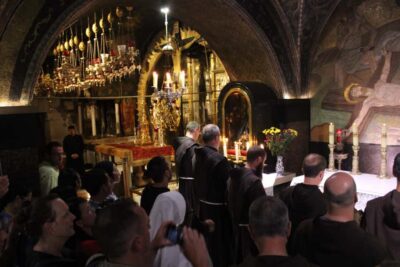

Jerusalem Half Day Tour: Holy Sepulchre and Western Wall
Read our review →
Jerusalem Half-Day Tour from Tel Aviv: Holy Sepulchre and Western Wall
Read our review →
Browse the lists this tour appears in