
Reviewed · TEL AVIV TOURS
Tel Aviv: Best of Jerusalem Day Tour
Jerusalem’s great appeal is packed into one long day here: ancient stone lanes, major holy sites, modern streets, and a food market where daily life carries on around the monuments. You begin at Jaffa Gate, visit the Western Wall, Via Dolorosa, and Church of the Holy Sepulchre, then walk across the newer parts of the city.
I like the round-trip ride from Tel Aviv, which saves you the trouble of arranging intercity transport. I also like the route’s range, especially the shift from the Old City to Nahlaot and Mahane Yehuda. The tradeoff is clear: this is a demanding 10-hour day with stairs, long walks, and little room for a slow, lingering pace.
In This Review
- Key points
- Why this Jerusalem day trip works
- Meeting the group in Tel Aviv
- Entering the Old City through Jaffa Gate
- The Western Wall and the weight of the Old City
- Walking the Via Dolorosa
- The Church of the Holy Sepulchre
- From Tzahal Square into modern Jerusalem
- A pause in Nahlaot
- Finishing at Mahane Yehuda Market
- What the guide adds
- Is $89 a fair price?
- Who should book this day tour?
- Should you book it?
- FAQ
- Where does the tour start in Tel Aviv?
- How long does the tour last?
- What language is the tour conducted in?
- Which Old City landmarks are included?
- Does the tour include Mahane Yehuda Market?
- Are food and drinks included?
- What should I wear?
- Is the tour suitable for people with limited mobility?
- What happens if Mahane Yehuda Market is closed?
Key points
- Old City essentials: Enter through Jaffa Gate and visit the Western Wall, Via Dolorosa, and Church of the Holy Sepulchre.
- A full-day route: Allow 10 hours, including about three hours of road travel between Tel Aviv and Jerusalem.
- Two sides of Jerusalem: Move from ancient religious sites to Jaffa Street, the Municipality Complex, and Nahlaot.
- Mahane Yehuda finish: End at Jerusalem’s famous food market, with time to look around and buy food or drinks at your own cost.
- English-speaking local guide: The guide provides the historical setting at each stop. Yana has been singled out for speaking with passion about the city’s complexity.
- Active walking day: Comfortable shoes, sun protection, and modest clothing are essential. The route is not suitable for wheelchair users.
Why this Jerusalem day trip works
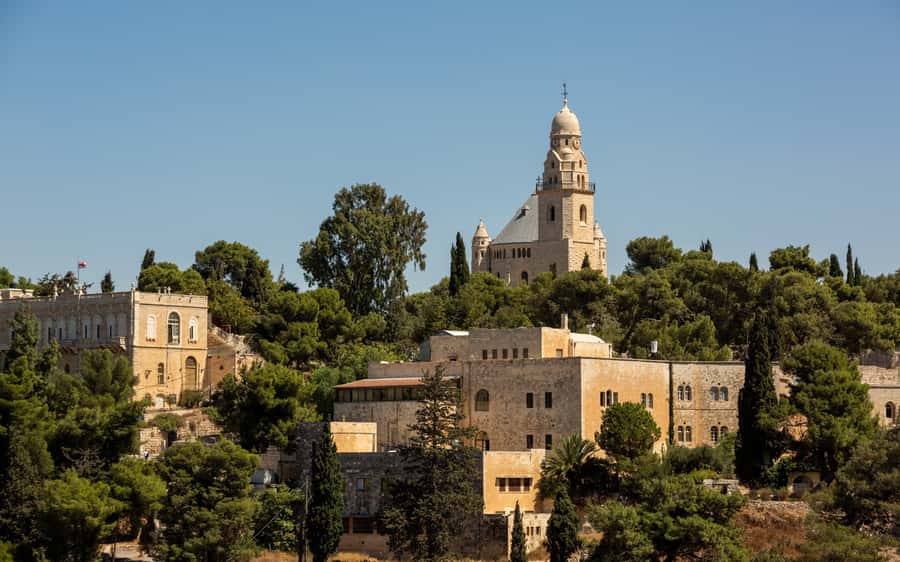
This tour gives you a useful first look at Jerusalem without asking you to change hotels or work out the bus system from Tel Aviv. The drive takes about 1.5 hours each way, so the day is not light on road time, but the transport makes the long excursion simple.
The real strength is the route design. Many Jerusalem day trips focus only on the Old City. This one continues into the modern center, along Jaffa Street, through Nahlaot, and into Mahane Yehuda Market. You get a clearer sense of Jerusalem as a living city rather than a collection of sacred sites.
At $89 per person, the price is reasonable for a 10-hour outing that includes transport in both directions and a local guide. You still pay for your own meals and drinks, so the final cost depends on what you buy at the market. Even so, the included transportation and guiding cover the two parts of the day that are hardest to arrange independently.
The schedule is tight. You will not have hours to sit over lunch, wander down every side lane, or return to a favorite church. I would choose this trip for orientation and coverage, not for a leisurely study of one neighborhood.
Other Tel Aviv days worth putting on the list:
- From Tel Aviv: Masada & Dead Sea Full Day Tour with Pick Up
★ 4.5 · 1,496 reviews - From Tel Aviv: Jerusalem and Bethlehem Guided Day Trip
★ 4.3 · 1,316 reviews - Masada and the Dead Sea Day Trip from Tel Aviv
★ 4.5 · 1,014 reviews
Meeting the group in Tel Aviv
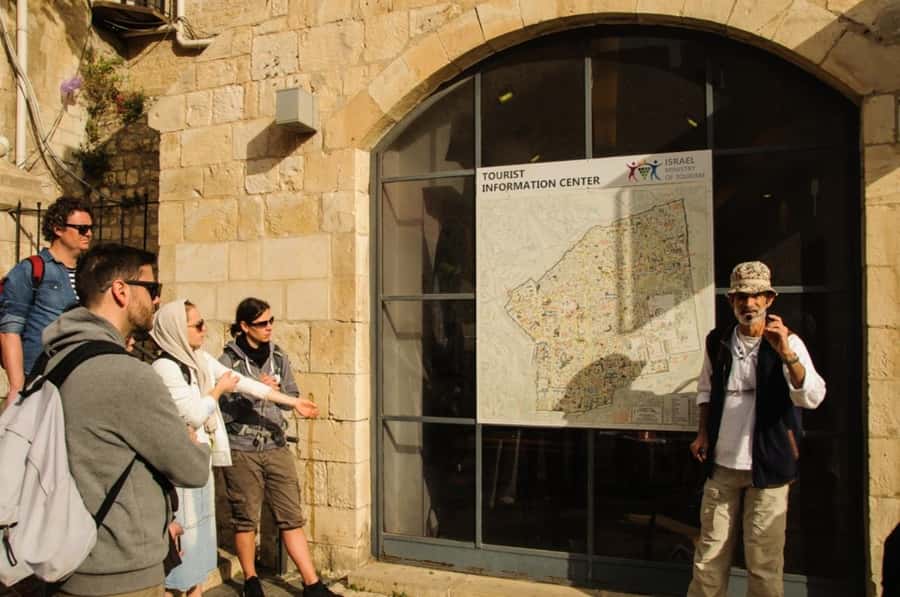
The day begins at Kaufmann Street 2, in front of the Textile Building. Look for the guide holding an orange Tourist Israel sign. That detail matters at a busy city meeting point, so arrive with enough time to identify the building and group before departure.
The English-speaking guide travels with you to Jerusalem and leads the walking portions. A strong guide makes a major difference here. Jerusalem’s sites can feel confusing when you encounter them without context, since religious traditions, political events, and layers of construction overlap in a small area.
The ride from Tel Aviv takes around 90 minutes. It gives you a chance to rest before the walking starts, though the return drive can feel long after a full day on your feet. Round-trip transport is especially useful if you want a straightforward day away from Tel Aviv without renting a car.
Entering the Old City through Jaffa Gate
The Old City portion begins at Jaffa Gate, one of the best-known entrances through Jerusalem’s walls. From here, the guide leads you into the historic center and explains the significance of the streets and buildings as you go.
Expect roughly four hours for the guided Old City visit. That is enough time to see the principal landmarks, but not enough for every quarter, museum, and viewpoint. The value lies in having the route connected into one story rather than visiting isolated points on a map.
The Old City is not a polished open-air museum. Streets can be narrow, uneven, crowded, and steep. You will climb several sets of stairs, and the pace can be tiring in warm weather. Wear shoes with good support, bring water, and keep sunscreen and a hat close at hand.
Modest clothing is required for visits to the holy sites. Your knees and shoulders should be covered. Short skirts and sleeveless shirts are not allowed, so dress for the religious setting from the start rather than hoping to adjust later.
The Western Wall and the weight of the Old City
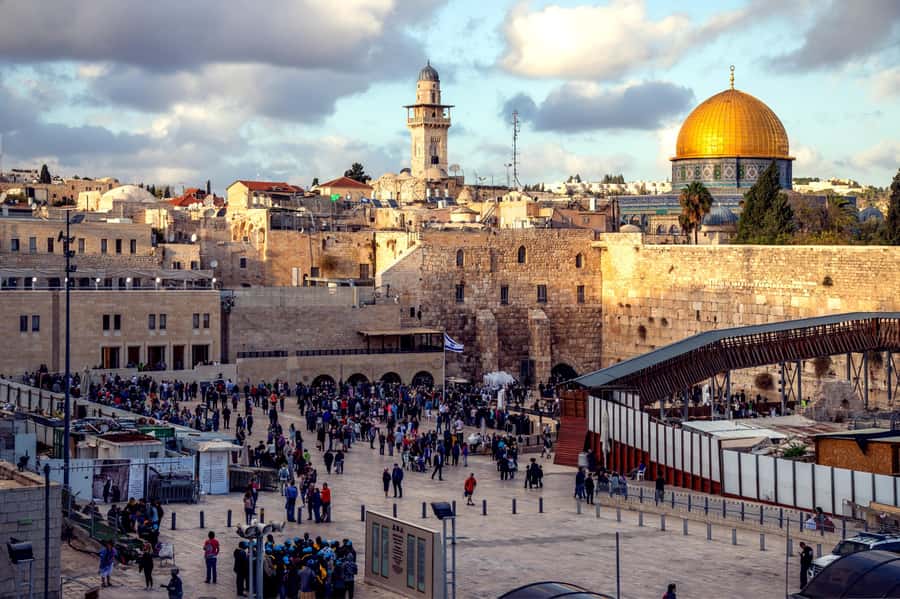
The Western Wall is one of the day’s central stops. Your guide provides the setting for the site and explains why it matters, helping you look beyond the familiar photographs.
You should expect this part of the route to be active rather than private or slow. The tour is designed to show major landmarks within a group schedule. If you want extended time for prayer, quiet reflection, or detailed photography, you may need to use your free moments carefully.
The Western Wall also makes the importance of dress and conduct clear. Listen to the guide’s instructions and respect the religious nature of the area. A practical approach is best: keep shoulders and knees covered, avoid treating the site like a casual photo stop, and carry cash if you wish to make small purchases during the day.
Same coast, a completely different kind of day:
- Tel Aviv: Jerusalem, Bethlehem & Dead Sea
★ 4.0 · 881 reviews - From Tel Aviv: Guided Day Trip to Nazareth & Sea of Galilee
★ 4.4 · 824 reviews - From Tel Aviv: Jerusalem Old & New City Bus Tour
★ 4.2 · 824 reviews - From Tel Aviv: Caesarea, Haifa and Akko Day Trip
★ 4.4 · 744 reviews
Walking the Via Dolorosa
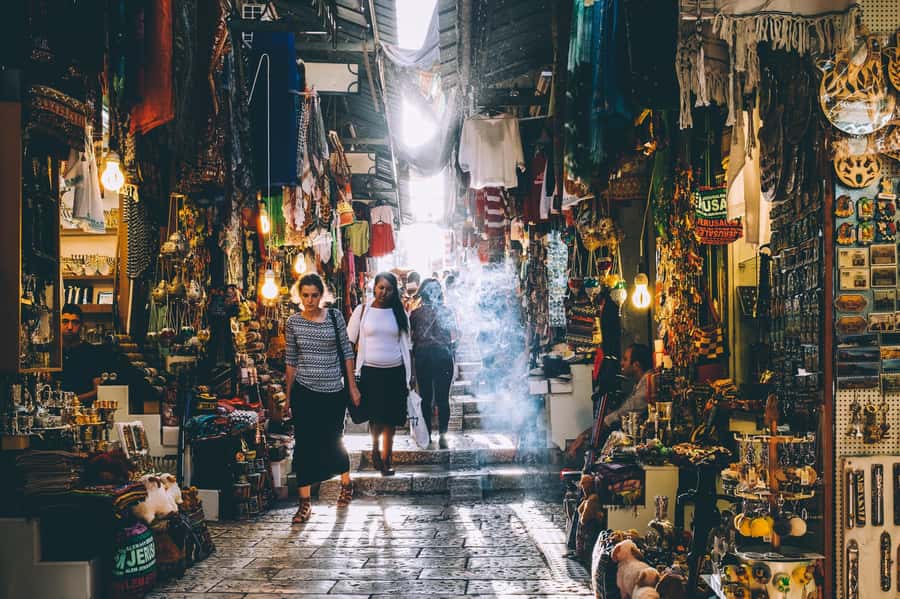
The Via Dolorosa brings you into the Christian story of Jerusalem. The route follows the traditional path associated with Jesus’ final journey, and the guide explains the meaning of the stations along the way.
This is one place where a local guide adds real value. Without an explanation, the narrow lanes and religious markers can be difficult to read. With context, the route becomes easier to follow and more meaningful, even if you are not visiting for religious reasons.
The path also shows the practical side of the Old City. You may move through busy passages where shops, worshippers, and tour groups share the same narrow space. Keep your belongings secure and stay aware of the group as the guide moves between stops.
The Church of the Holy Sepulchre
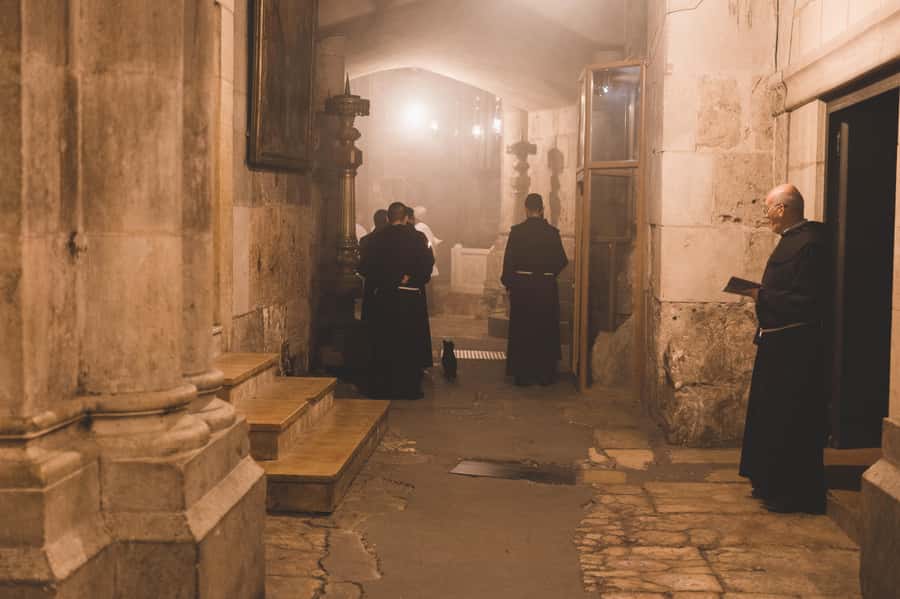
The Church of the Holy Sepulchre is another major highlight. It is one of Christianity’s most important places, and the building contains several sites tied to the crucifixion and burial traditions.
The church can feel complex at first. Different areas, chapels, and religious communities share the building, and its layout is not always easy to understand on your own. The guide’s explanation helps you connect the spaces to the larger story.
Do not expect a quiet, empty interior. This is an active place of worship and pilgrimage. The best approach is to follow the guide, observe respectfully, and accept that the time available may be limited by the group schedule and conditions inside.
The Old City section is the most historically concentrated part of the trip. It is also the part most likely to tire you. Four hours of guided walking, combined with uneven surfaces and stairs, can be a lot for anyone with limited mobility. The tour is not suitable for wheelchair users, and anyone wanting a gentler day should choose a less active option.
From Tzahal Square into modern Jerusalem
After the Old City, the tour changes tone. The route continues from Tzahal Square toward the Municipality Complex, giving you a look at Jerusalem beyond its walls and sacred landmarks.
This transition is one of the tour’s smartest features. Ancient Jerusalem can dominate a first visit, but the modern city has its own character, public spaces, shops, offices, and everyday routines. Walking through this area helps you understand that Jerusalem is not only a religious destination.
You then continue along Jaffa Street. The street links important parts of the city and gives the walk a more contemporary feel. Instead of spending the entire day among ancient stones, you see how Jerusalem functions as a modern capital and working city.
The route includes about 2.5 hours of walking through Jerusalem outside the Old City. That is a substantial amount of time, so keep your pace steady. This is not the moment to spend all your energy rushing through the first section.
A pause in Nahlaot
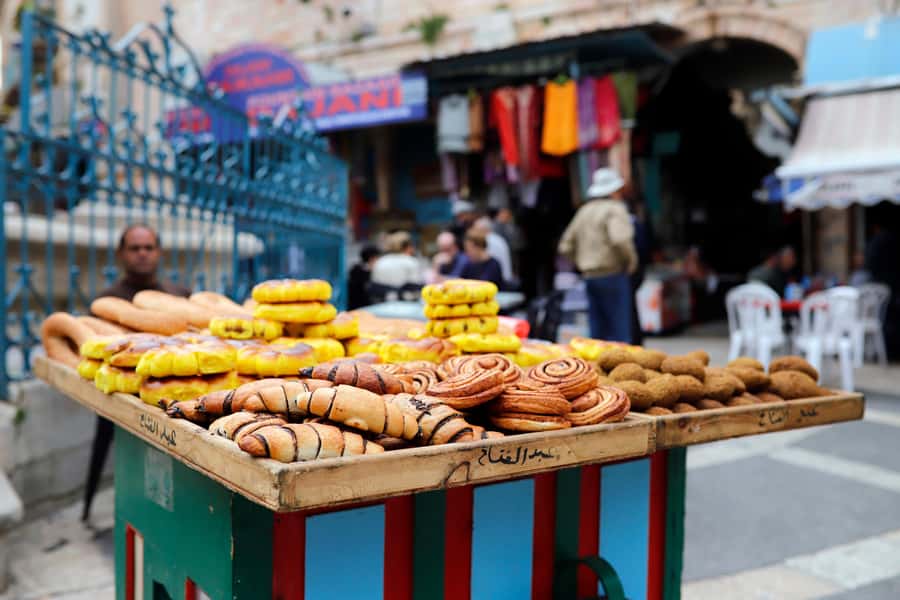
Nahlaot offers another change in mood. The neighborhood is known for its small streets and residential character, and it gives the walking route a more local scale after the monumental Old City.
A stop here helps balance the day. You move from major religious and civic landmarks into a neighborhood where the interest comes from street-level details and the feel of ordinary Jerusalem life. You might find this section less instantly dramatic than the Western Wall or the church, but it is important to the tour’s wider view of the city.
Nahlaot also provides a natural pause before the final market visit. Use the opportunity to check your water, sunscreen, and cash. You will want energy left for Mahane Yehuda rather than treating the market as an afterthought.
Finishing at Mahane Yehuda Market
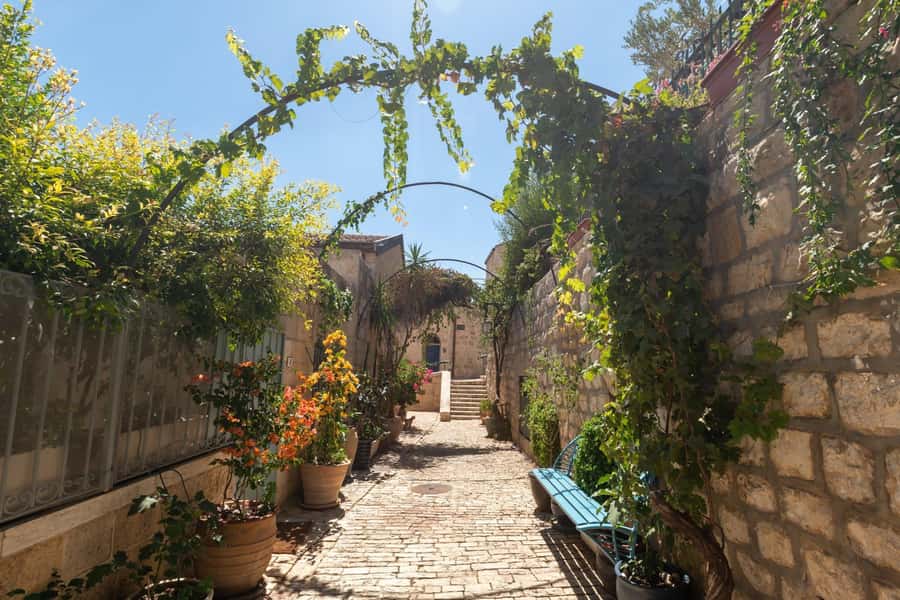
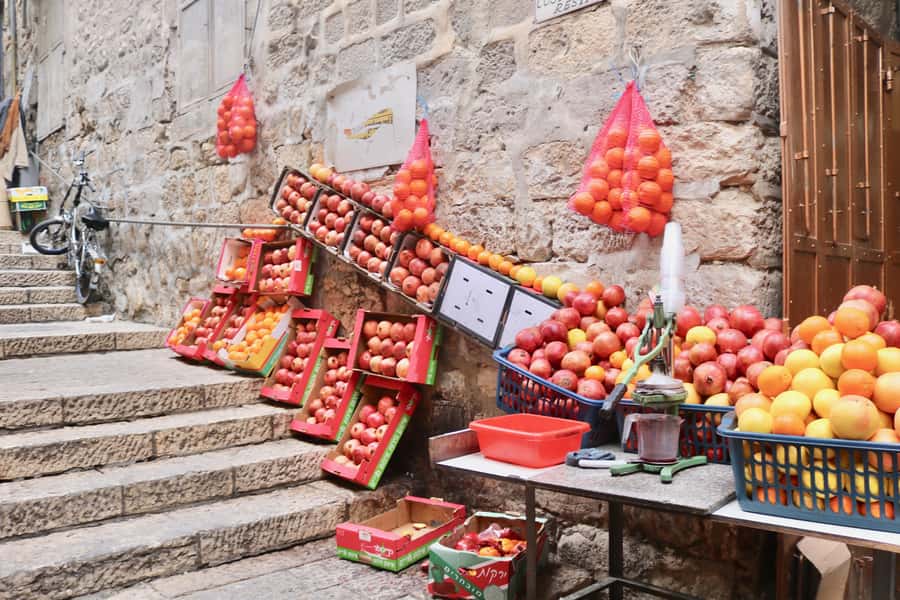
The tour finishes at Mahane Yehuda Market, one of Jerusalem’s best-known places to see food, shopping, and local routines in one setting. The market brings a livelier, more immediate ending after the Old City’s religious landmarks and the formal streets around the center.
You have about an hour here. Meals and drinks are not included, so bring cash for anything you want to eat or buy. Cash is listed as an important item to bring, and it is useful for market purchases as well as small personal expenses during the day.
An hour gives you time to look around and sample something if you choose, but it is not a full market crawl. If you have a long list of foods to try, you will need to be selective. I would focus on enjoying the atmosphere, choosing one or two items, and keeping track of the meeting instructions.
Mahane Yehuda is closed on Saturdays, and it can also close for Shabbat or holidays. On those days, the route changes to nearby sights such as Sultan Pool, Mishkenot Sha’ananim, the Old Windmill, the YMCA, and the Russian Compound. That alternative still gives you a look at Jerusalem outside the Old City, but it is a different experience. If the market is your main reason for booking, check the day of your visit before paying.
What the guide adds
The guide is more than a person who points out buildings. Jerusalem’s sites require explanation, and the tour depends on someone who can connect the religious, civic, and neighborhood sections into one readable day.
One recent guide, Yana, was praised for speaking with passion about Jerusalem’s complex character. That is the kind of guiding this route needs. The city does not fit neatly into one simple story, and a good explanation should acknowledge its many layers without turning every stop into a lecture.
The guide also keeps the day moving. With ten hours and several major sections, timing matters. You benefit from having someone manage the route while you concentrate on what you are seeing.
Because the tour is offered in English, you should be comfortable listening while walking. The guide’s explanations are an important part of the value, so this is not the right choice if you prefer to explore silently at your own pace.
Is $89 a fair price?
For $89, you receive round-trip transportation from Tel Aviv and a hand-picked local guide for a 10-hour day. Those two inclusions make the price easier to justify, especially if you are staying in Tel Aviv and want to avoid arranging transport and a separate guide in Jerusalem.
The price does not include meals or drinks. Budget extra for Mahane Yehuda, where food is likely to be part of the appeal. Personal travel insurance is also not included.
The strongest value comes from the amount of ground covered. You see the Old City’s main landmarks, modern Jerusalem, Jaffa Street, Nahlaot, and Mahane Yehuda in one organized outing. The weaker point is that the schedule gives you breadth rather than long, unhurried visits.
I would compare this with the cost and effort of arranging two one-way transport journeys, planning an Old City route, and finding a guide who can explain the major sites. For many visitors, the included structure is worth the $89. Independent explorers who already know Jerusalem may prefer more freedom.
Who should book this day tour?
I would recommend it to a first-time visitor based in Tel Aviv who wants a broad introduction to Jerusalem in one day. It suits people who enjoy walking, want historical explanation, and prefer a fixed route to a day of independent navigation.
It also suits anyone interested in seeing both sacred and ordinary sides of the city. The addition of modern Jerusalem, Nahlaot, and Mahane Yehuda keeps the experience from becoming a single string of religious monuments.
I would hesitate if you have limited mobility, dislike stairs, or find long walking days unpleasant. I would also think twice if your main goal is slow photography, extended prayer, museum time, or a long meal.
Wear clothing that covers your shoulders and knees, bring comfortable shoes, sunscreen, a sun hat, water, and cash. With those basics handled, you can spend the day paying attention to the city instead of worrying about practical problems.
Should you book it?
Book this tour if you want a well-filled first day in Jerusalem from a Tel Aviv base, with transport and guiding already arranged. Its best feature is the complete arc from Jaffa Gate and the Western Wall to Jaffa Street, Nahlaot, and Mahane Yehuda.
Skip it if you need a relaxed pace or have mobility limits. This is a long, active introduction, not a gentle stroll. For fit visitors who want the city’s major religious sites plus a taste of modern Jerusalem, $89 is a sensible price for the coverage.
FAQ
Where does the tour start in Tel Aviv?
The meeting point is in front of the Textile Building at Kaufmann Street 2. The guide will hold an orange sign marked Tourist Israel.
How long does the tour last?
The full experience lasts 10 hours. The outbound and return coach journeys each take about 1.5 hours.
What language is the tour conducted in?
The tour is conducted in English with a live guide.
Which Old City landmarks are included?
The route includes Jaffa Gate, the Western Wall, the Via Dolorosa, and the Church of the Holy Sepulchre.
Does the tour include Mahane Yehuda Market?
Yes. The route includes about one hour at Mahane Yehuda Market, when the market is open.
Are food and drinks included?
No. Meals and drinks are not included, so bring cash for anything you want to purchase.
What should I wear?
You should wear clothing that covers your knees and shoulders. Modest dress is required for visits to the Old City’s holy sites.
Is the tour suitable for people with limited mobility?
No. The tour includes substantial walking and several sets of stairs, particularly in the Old City, and it is not suitable for wheelchair users.
What happens if Mahane Yehuda Market is closed?
On Saturdays, Shabbat, or holidays when the market is closed, the route is adjusted. Stops may include Sultan Pool, Mishkenot Sha’ananim, the Old Windmill, the YMCA, and the Russian Compound.
Just added around Tel Aviv
- private Full-day Tour to Jericho + the Dead Sea★ 5.0 · 3 reviews
- VIP Tel Aviv airport Terminal 3 Fast Track Skip Line From plane★ 4.5 · 9 reviews
- Package VIP Skip Line Services in BGN Airport with Transfer to Tel aviv Hotels★ 5.0 · 3 reviews
- Jerusalem and Dead Sea Trip from Tel Aviv★ 4.0 · 6 reviews
- Food & Drink Private Guided Tour in Tel Aviv★ 5.0 · 3 reviews
- The Golan heights★ 5.0 · 4 reviews
- Haifa Acre and Rosh Ha-Nikra Private Tour from Tel Aviv★ 5.0 · 5 reviews
- The full walk of Tel Aviv! – The city,Jaffa and the German colony★ 4.0 · 4 reviews
Tel Aviv Tours, compared.
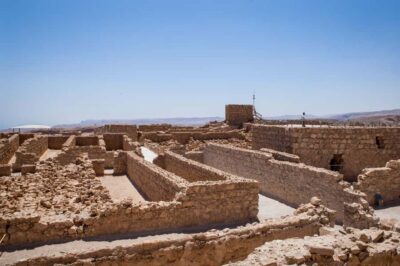
From Tel Aviv: Masada & Dead Sea Full Day Tour with Pick Up
Read our review →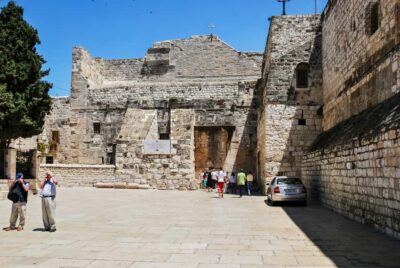
From Tel Aviv: Jerusalem and Bethlehem Guided Day Trip
Read our review →
Masada and the Dead Sea Day Trip from Tel Aviv
Read our review →

From Tel Aviv: Guided Day Trip to Nazareth & Sea of Galilee
Read our review →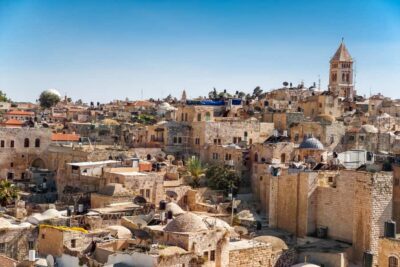
From Tel Aviv: Jerusalem Old & New City Bus Tour
Read our review →
From Tel Aviv: Caesarea, Haifa and Akko Day Trip
Read our review →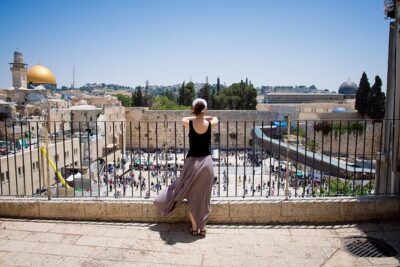
Day Tour to Jerusalem and Bethlehem from Tel Aviv
Read our review →Browse the lists this tour appears in