
Reviewed · JERUSALEM TOURS
ScaVentures! Have fun, explore and discover!
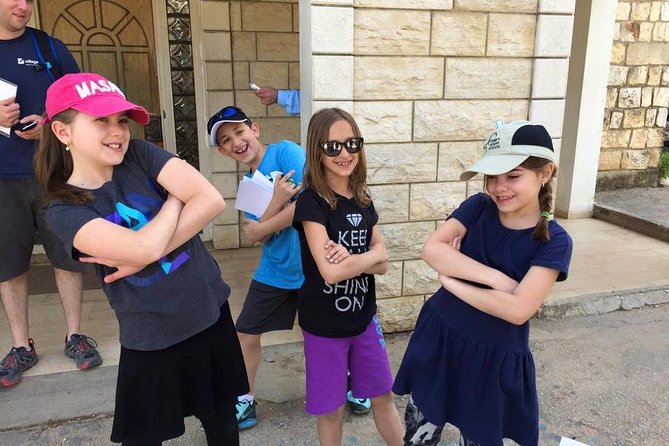
Jerusalem is best explored on foot, but a standard walking tour can lose younger visitors fast. This private ScaVenture scavenger hunt turns the city into a team game, with maps, missions, history clues, and a Picture Pack mystery guiding you from one station to the next.
I like the way every person receives a job, from navigator and historian to detective and photographer. I also like the broad age range it can handle: families with children as young as seven, teenagers, parents, and grandparents can all take part. The main consideration is weather and walking. You need moderate fitness, and the game runs in all conditions, so bring proper shoes and clothing.
In This Review
- Key points to know before booking
- Jerusalem sightseeing with a game plan
- How the two-hour ScaVenture unfolds
- The team roles make children part of the action
- Stations, missions, and the Picture Pack mystery
- Exploring Jerusalem without a standard tour script
- A family activity that works across generations
- Competition, cooperation, and group size
- What the Game Leader adds
- Weather, walking, and practical comfort
- Is $358.98 a fair price?
- Who should book this Jerusalem scavenger hunt?
- FAQ
- How long does the Jerusalem ScaVenture last?
- How many people can join one private group?
- What materials are provided?
- Do I need prior knowledge of Jerusalem?
- Is the activity suitable for children?
- Is transportation included?
- Should you book ScaVentures?
Key points to know before booking
- A two-hour Jerusalem mystery: Follow a route from the first station to the last while solving the Picture Pack mystery.
- Roles for every teammate: Leaders, detectives, note keepers, navigators, historians, and photographers all have a part to play.
- Private and flexible for groups: Groups of up to 15 are priced together at $358.98, with larger parties divided into teams.
- A strong family activity: Children must be accompanied by an adult, and the format gives younger participants real jobs.
- Led by a Game Leader: Staff members visit certain stations, explain details, track progress, and keep the game moving.
- Plan for outdoor conditions: Transportation is not included, and the experience operates in rain or shine.
Jerusalem sightseeing with a game plan
ScaVentures is not a conventional lecture with a guide at the front and a group trailing behind. Instead, you receive a kit and a mission. Your team must read the material, find its way through Jerusalem, complete tasks, and solve a visual mystery before reaching the final station.
That change in format matters. You are not simply being told to notice a doorway, inscription, market stall, or historic corner. You are sent looking for it. The Picture Pack gives the group a reason to examine its surroundings, while the information sheets add context along the way.
I especially like this setup for families who want history without asking children to listen quietly for two hours. The activity keeps hands and minds busy. It also makes the city feel less like a series of famous sights and more like a puzzle that your group can piece together.
You do not need prior knowledge of Jerusalem or the region. The supplied material gives you the information needed for the missions, so first-time visitors can participate without feeling behind. That said, the experience rewards curiosity more than passive sightseeing. If your ideal tour means standing still while a guide explains every detail, this may feel too active.
Other Jerusalem days worth putting on the list:
- From Jerusalem: Masada & Dead Sea Full Day Tour with Pick Up
★ 4.5 · 815 reviews - Masada and the Dead Sea Day Trip from Jerusalem
★ 4.5 · 757 reviews - From Jerusalem: Nazareth and Sea of Galilee Tour
★ 4.5 · 588 reviews
How the two-hour ScaVenture unfolds
The exact route depends on the Jerusalem game you book, but the basic structure is clear. You meet in Jerusalem, receive your materials, hear the rules from the Game Leader, and begin at the first station.
A team pack includes maps, stickers, information sheets, notepads, pencils, picture packs, and additional game materials. This is useful because you are not expected to arrive with special equipment or prepare a history lesson in advance. The mobile ticket is convenient for booking, but the actual game depends mainly on the physical pack and your group’s teamwork.
At the opening station, the Game Leader sets the tone and explains what your group needs to do. You then follow the map from station to station. The guide does not need to walk beside you every minute. Instead, the Game Leader visits selected points, adds information when useful, marks progress, and checks that each team is moving through the game correctly.
That gives you some independence without leaving you entirely on your own. You get the fun of finding the next location, but there is still a staff member managing the overall experience.
The team roles make children part of the action
The role system is one of the best ideas here. Each participant has a job, and the jobs can include leader, detective, note keeper, navigator, historian, photographer, and other assigned duties.
The leader keeps the group focused and helps run the missions. The navigator works with the map. The historian shares information from the pack. The detective searches for the right pictures, while the note keeper records answers. A photographer may handle image-based tasks.
These roles prevent one confident adult from taking over. A child who does not want to lead can navigate, search for pictures, or record answers. A teenager can take charge of a mission. A grandparent can help with the history clues. The activity works best when you let each person actually perform the assigned role rather than quietly doing the work for them.
For groups of nine or more, the usual team size is five to eight people. A group of 15 might divide into three teams, depending on the final arrangement. Smaller groups stay together and complete one team challenge.
That difference affects the mood. A small group gets a shared puzzle, with everyone working toward one result. A larger group adds competition and more noise, but it also gives each participant room to contribute. In one family group, five teenagers were divided into teams of three and four, which allowed everyone a turn to shine without creating oversized teams.
Stations, missions, and the Picture Pack mystery
At each station, the game combines three things: a story or historical detail, a mission, and a search for images from the Picture Pack. The historian relays the information, the leader engages the team with the task, and the detective looks for the needed pictures.
The Picture Pack is more than a collection of clues. It gives you a visual scavenger hunt that encourages close attention. You may find yourself checking architectural details, signs, objects, or small features you might otherwise walk past. The activity does not require you to know the answer in advance. You use the supplied pictures and information to work it out.
The missions add a physical and social element. The available information does not specify each task, so you should not expect a fixed list of challenges until you receive your pack. You can expect the missions to require cooperation and observation, not just quick walking.
The route runs from a starting point to a final station within a set time. Your team must complete the missions, answer the questions, and solve the Picture Pack mystery before finishing. Accuracy matters as much as speed, which is a useful feature in a historic city. It discourages you from racing past everything simply to arrive first.
One family began competitively, then slowed down after realizing how much interesting information they were picking up. That is probably the right approach. Treat the clock as part of the fun, not as a reason to miss the details.
Same coast, a completely different kind of day:
- Nazareth and the Sea of Galilee Day Trip from Jerusalem
★ 4.5 · 446 reviews - From Jerusalem: Masada&Dead Sea Tour INCLUDING ENTRANCE FEES
★ 4.3 · 392 reviews - Jerusalem: Guided Walking Tour of the Old City
★ 4.7 · 386 reviews - Full Day City Tour of Jerusalem
★ 4.1 · 367 reviews
Exploring Jerusalem without a standard tour script
The experience is designed around Jerusalem, but it is not limited to a single sightseeing style. The company has operated games in places such as the Old City, Nachlaot, and the Mahane Yehuda market, along with other Israeli locations. Your booking details should make clear which route you are choosing.
An Old City game can add structure to an area that often feels overwhelming. Narrow lanes, religious sites, historic walls, and small courtyards can blur together when you first arrive. A route with stations and missions gives you a practical reason to notice where you are and what you are seeing.
Nachlaot offers a different type of setting, with neighborhood streets and local character rather than only famous monuments. A market game in Mahane Yehuda adds interaction with vendors and a livelier street setting. These examples show why the format can be repeated in different parts of Jerusalem without feeling identical.
The trade-off is that a scavenger hunt may not provide the same depth as a specialist walking tour focused on one site. You will receive information at stations, but the main goal is to complete the game. If you want a long discussion of religious history, archaeology, or politics, plan a separate tour.
A family activity that works across generations
The strongest reason to book is the age range it can accommodate. Families have used the activity for children, teenagers, parents, and grandparents, including groups ranging from about age three to 70. Very young children may not follow every clue, but they can walk with the group and help search or observe.
Children must be accompanied by an adult. That is more than a formal rule. Adults should expect to help with navigation, street awareness, reading, and keeping a team together. The activity is family-friendly, but it is not childcare.
I would recommend assigning children meaningful roles instead of giving them a token job. Let them hold the picture pack, search for a clue, read part of a story, or help choose the next turn. The game was specifically praised for making children active participants in Old City exploration, and that is where it has the most value.
It can also work well for a family event. Several groups used it after a bar or Bat Mitzvah, and the company has supported larger celebrations and special programs. One Bat Mitzvah program included preparation with a guide so the young participant could lead friends through the Old City and share lessons connected to the occasion. That is a more specialized arrangement, so ask the provider about it directly if you are planning an event.
Competition, cooperation, and group size
The game changes noticeably once teams are involved. With nine or more participants, you generally divide into teams of five to eight. Each team receives its own materials and follows the same general route, competing to reach the end with the best combination of time and correct answers.
This format works well for reunions, school groups, family celebrations, and mixed-age parties. It gives teenagers a reason to work together and gives adults a chance to compete without turning the activity into a serious contest.
Still, competition can create tension if one team rushes or one person tries to control every answer. The role system helps, but the adults in the group should set a friendly tone. The best result is a contest with plenty of cooperation inside each team.
A small group has a quieter experience. You do not split into teams, so you lose the head-to-head race, but you may have more time to discuss the clues and move at your own pace. For just two people, the game can be harder, especially in poor weather or after dark. One two-person group found the instructions clear but had a tougher time in drizzle and low light.
What the Game Leader adds
The Game Leader is the staff member who keeps the experience from becoming a loose collection of clues. This person starts the game, visits selected stations, supplies extra information, checks progress, and makes sure the route is running smoothly.
Several guides have been praised by name, including Yomtov, Tali, Daniel, and Joel. Yomtov led games in both a market setting and a neighborhood route, while Daniel managed a large market group and kept track of answers. Tali has also handled planning and led family games, and Joel was singled out for his work with an Old City group.
Guide assignments can change, so you should not book on the assumption that a particular person will lead your game unless the provider confirms it. The important point is that the Game Leader is present as a guide and game manager, not simply as someone who hands over a booklet and disappears.
Weather, walking, and practical comfort
The experience operates in all weather conditions. That is useful in Jerusalem, where a clear morning can change quickly, but it also means you need to take the forecast seriously. A family completed a game during rain and hail, while another small group found darkness and drizzle made the route more difficult.
Wear comfortable shoes and dress for the conditions. The tour requires a moderate level of physical fitness, and you should expect to walk between stations while carrying or sharing the game materials. The information does not promise a fully accessible route, so ask the provider about your specific route if anyone in your group has mobility needs.
Transportation to and from the attractions is not included. You make your own way to the Jerusalem meeting point, and hotel pickup and drop-off are not provided. Build that into your schedule, especially if you are combining the activity with a meal, a religious service, or another timed booking.
Because the activity lasts about two hours, it fits neatly into a morning or afternoon. Allow extra time before and after for reaching the start, gathering your group, and finishing the route without rushing to your next appointment.
Is $358.98 a fair price?
The price is $358.98 per private group of up to 15 people. At the maximum group size, that works out to roughly $24 per person. For a full family party or celebration group, that is a fair way to pay for a private Game Leader, prepared materials, and a structured two-hour activity.
For a small group, the per-person cost becomes much higher. Two or three people may still value the private format, but the economics are less attractive than they are for a large family. A small group also misses the team competition that helps justify the format.
Taxes, fees, handling charges, and gratuities are included. Transportation, hotel pickup, and drop-off are not. There is no extra tip to calculate, but you still need to arrange your own route to the start.
The booking is non-refundable and cannot be changed for any reason. I would only reserve once your date, group size, and schedule are firm.
Who should book this Jerusalem scavenger hunt?
I would choose ScaVentures if you are visiting Jerusalem with children, organizing a family celebration, or looking for a way to get a mixed-age group moving together. It is especially useful when some people want history and others need a more active format.
First-time visitors can take part without background knowledge. Repeat visitors may also enjoy it because the missions can direct your attention to details you have missed on earlier walks.
I would be more cautious if your group dislikes walking, competition, outdoor weather, or shared decision-making. The game is not a substitute for a quiet, expert-led tour of one landmark. It is a playful way to connect places, clues, and people.
FAQ
How long does the Jerusalem ScaVenture last?
The game lasts approximately two hours from beginning to end.
How many people can join one private group?
The listed price covers a private group of up to 15 participants. Groups of nine or more generally divide into teams of five to eight people.
What materials are provided?
Each team receives maps, stickers, information sheets, notepads, pencils, picture packs, and other game materials.
Do I need prior knowledge of Jerusalem?
No. The activity is designed for first-time visitors, and the supplied information sheets provide the background needed for the missions.
Is the activity suitable for children?
Yes, the game is family-friendly and can include children and adults. Children must be accompanied by an adult.
Is transportation included?
No. You are responsible for transportation to and from the attractions and the Jerusalem meeting point. Hotel pickup and drop-off are not included.
Should you book ScaVentures?
Book it if you want your group to explore Jerusalem by solving, searching, navigating, and working together. The strongest value comes with a larger private group, where the $358.98 price spreads across many people and the team competition adds energy.
For families, this is a smart alternative to a conventional walking tour. You will not get the same depth as a specialist history tour, but you may get something just as useful for a busy family: children who stay involved, adults who keep learning, and a city that rewards close attention. Just confirm your route, prepare for the weather, and make sure your group is ready to walk and play.
Just added around Jerusalem
- full day tour Jerusalem price per van up to 6 people★ 5.0 · 8 reviews
- Tour of Jerusalem & Dead sea private tour★ 5.0 · 4 reviews
- West Bank Tour from Jerusalem and Tel-Aviv – Bethlehem & Jericho★ 5.0 · 6 reviews
- jerusalem classic tour★ 5.0 · 3 reviews
- Privet Tour – FROM JERUSALEM TO JERICHO & THE DEAD SEA★ 5.0 · 8 reviews
- Experience Shabbat With Dinner In Jerusalem★ 5.0 · 5 reviews
- Private Tour: Old City of Jerusalem Christianity Tour★ 5.0 · 5 reviews
- Private Silk Painting Workshop in Jerusalem – Create a scarf –★ 5.0 · 4 reviews
Jerusalem Tours, compared.
From Jerusalem: Masada & Dead Sea Full Day Tour with Pick Up
Read our review →
Masada and the Dead Sea Day Trip from Jerusalem
Read our review →
From Jerusalem: Nazareth and Sea of Galilee Tour
Read our review →
Nazareth and the Sea of Galilee Day Trip from Jerusalem
Read our review →
From Jerusalem: Masada&Dead Sea Tour INCLUDING ENTRANCE FEES
Read our review →
Browse the lists this tour appears in