
Reviewed · JERUSALEM OLD CITY TOURS
Jerusalem Old City & Mount Zion Day Tour
Jerusalem packs centuries of faith and conflict into a small, walkable core, and this late-start tour gives you a useful full day without demanding a dawn alarm. You begin with Mount Scopus views, then move through the Old City and Mount Zion, visiting places sacred to Christians and Jews.
I like the 10 a.m. departure, especially if you are adjusting to a new time zone, and I like the clear route through the city’s major religious sights. The main tradeoff is the group size, which can reach 40 people, and the tour includes a fair amount of walking with no food, drinks, or hotel pickup.
In This Review
- Key points at a glance
- Why this late-start Jerusalem tour works
- Mount Scopus gives you the city’s big picture
- Gethsemane brings you close to the Mount of Olives
- Four hours inside the Old City
- The Jewish Quarter and Byzantine Cardo
- The Western Wall requires respect and awareness
- Walking the Via Dolorosa
- Church of the Holy Sepulchre
- Mount Zion, the Cenacle, and King David’s Tomb
- What the $70 price really covers
- Who should book this experience
- Should you book it?
- FAQ
- What time does the tour start?
- Where does the tour begin?
- Where does the tour end?
- How long does the tour last?
- Is hotel pickup included?
- What is included in the price?
- How many people can join the tour?
- What should I wear?
Key points at a glance
- Mount Scopus opens the day: You get a broad view of Jerusalem before entering its tight stone lanes.
- Four hours in the Old City: The schedule gives the walled center the attention it deserves, rather than treating it as a quick photo stop.
- Major Christian and Jewish sites: The route includes the Western Wall, Via Dolorosa, Church of the Holy Sepulchre, Cardo, and Mount Zion.
- A practical late start: Meet at the Grand Court Hotel at 10 a.m., then finish near a light rail station.
- Guides are a major strength: Yoav Malachi, Hava, Eithan Amitai, and Avi have each been praised for clear explanations, respectful handling of religious sites, and friendly tour management.
- Good value at $70: Transportation, a guide, and entrance fees are included, though meals and hotel transfers are not.
Why this late-start Jerusalem tour works
Jerusalem can feel like a lot on a first visit. There are sacred buildings, different quarters, layers of archaeology, and narrow streets that make orientation tricky. This outing gives you a guide, transport between the main areas, and a planned sequence that connects the city’s biggest sights in one day.
The late start is a real advantage. You meet at 10 a.m. at the Grand Court Hotel on St George Street, rather than setting out at sunrise. That suits anyone who had a late arrival, needs a slower morning, or wants time for breakfast before a demanding day on foot.
The tour lasts about seven to eight hours. It is shared, with up to 40 people, so you should expect a social group setting rather than a quiet private visit. The benefit is the price: at $70 per person, the tour covers an air-conditioned vehicle, a professional guide, and entrance fees. You are paying for structure and coverage, not luxury or flexibility.
The biggest strength is the guide. Yoav Malachi has been singled out for organized explanations, passion, and a clear presentation of Jerusalem. Hava has been praised for her humor and smooth handling of the day, while Eithan Amitai is noted for being attentive and respectful toward different religions. Avi has also received strong praise for his explanations and group management. The specific guide depends on the departure, but this is an important part of the tour’s appeal.
More Jerusalem Old City Tours in Jerusalem
- Jerusalem: Guided Walking Tour of the Old City
★ 4.7 · 386 reviews - Best seller! Jerusalem old city four quarters tour
★ 5.0 · 123 reviews - Private Tour Jerusalem Old City
★ 5.0 · 118 reviews
Mount Scopus gives you the city’s big picture
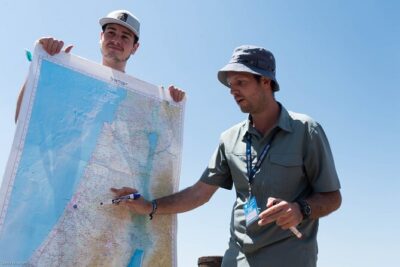
The first stop is Mount Scopus, where you spend about 30 minutes looking across Jerusalem. This is a smart beginning because the Old City can be confusing once you are inside its walls. From above, you can get your bearings before the lanes, gates, quarters, and domes begin competing for your attention.
The view is also a useful reminder that Jerusalem is more than a collection of religious monuments. You see the city spread across hills, with the Old City at its center. Your guide can explain what you are looking at and set up the places you will visit later.
This stop is mainly scenic and interpretive. There is no separate admission fee, and the time is short enough to keep the day moving. If you prefer a long viewpoint visit, 30 minutes may feel brief, but it works well as an introduction.
Gethsemane brings you close to the Mount of Olives
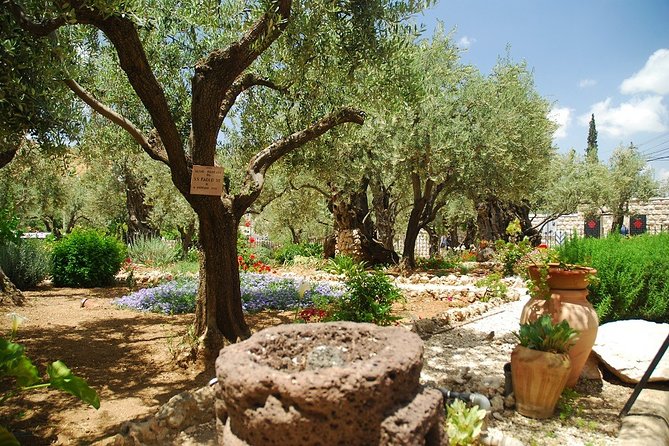
You then spend about 20 minutes at the Garden of Gethsemane. This is one of the Christian sites linked with the final period of Jesus’s life, and its setting gives the day a quieter pause before the Old City walking begins.
Do not expect a long, unhurried garden visit. The stop is compact, and the wider tour has many places to cover. Still, it matters because it adds context to the later visit along the Via Dolorosa and at the Church of the Holy Sepulchre.
The site also helps connect Jerusalem’s religious traditions to actual places rather than just names in a guidebook. I find that useful on a first visit, particularly when a good guide explains the beliefs and traditions without treating one faith as more important than another.
Four hours inside the Old City
The heart of the day is a roughly four-hour walk through the Old City. This is where you should expect the most sensory overload and the most walking. The stone passages can be uneven, the route may involve standing, and the schedule moves between several important stops.
The Old City is divided into quarters, and this tour gives special attention to the Jewish Quarter. You will also pass through areas connected with Christian worship and the route of the Via Dolorosa. The value here is not simply checking off monuments. It is seeing how close different religious traditions sit to one another within a compact walled center.
A group tour helps with orientation. Your guide can point out where you are, explain the meaning of a site before you enter, and keep the group moving through a complicated urban setting. The downside is that you will not control the pace. If you want to linger at every church, shrine, or street corner, a private guide or independent visit would give you more freedom.
Wear comfortable walking shoes. Modest clothing is required at holy sites, with knees and shoulders covered. This is not an optional suggestion to ignore at the last minute. Bring clothing that works for religious visits, since the route includes Jewish and Christian places of worship.
Same coast, a completely different kind of day:
- From Jerusalem: Masada & Dead Sea Full Day Tour with Pick Up
★ 4.5 · 815 reviews - Masada and the Dead Sea Day Trip from Jerusalem
★ 4.5 · 757 reviews - From Jerusalem: Nazareth and Sea of Galilee Tour
★ 4.5 · 588 reviews - Nazareth and the Sea of Galilee Day Trip from Jerusalem
★ 4.5 · 446 reviews
The Jewish Quarter and Byzantine Cardo
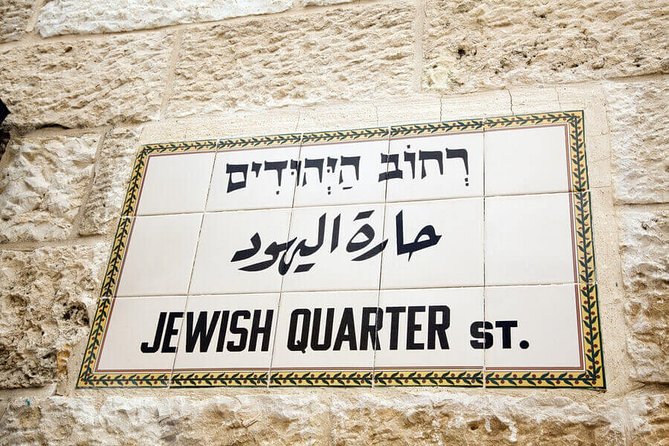
The Jewish Quarter receives about 30 minutes, enough for an introduction rather than an exhaustive visit. Here, the guide can help you understand the quarter’s place within the Old City and explain the Jewish traditions connected with the area.
The tour also visits the Cardo for about 20 minutes. The Byzantine Cardo was a principal street in ancient Jerusalem, and its remains offer a change of pace from the living religious sites. Instead of focusing only on worship, this stop shows how the city functioned as an urban center in an earlier era.
Twenty minutes is enough to see the main section and hear an explanation, but not enough for a detailed archaeological study. I would treat it as a well-chosen historical stop that adds variety to the day, not as a full archaeology tour.
The Western Wall requires respect and awareness
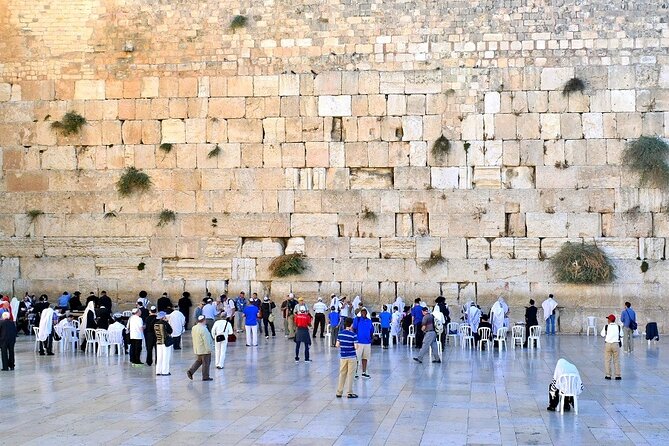
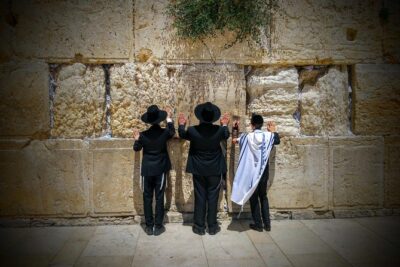
The Western Wall is scheduled for about 20 minutes. It is one of the most important Jewish prayer sites in the world, and even a short visit can feel meaningful if you understand the customs and setting.
Your guide should explain the site before you approach it, which is especially helpful if you have never visited. Dress modestly, follow local instructions, and remember that this is an active place of prayer, not only a sightseeing stop.
The short time keeps the full itinerary possible, but you may want more time if the Wall is a central reason for your visit. The tour gives you an introduction and access, while a separate return visit could allow you to stay longer at your own pace.
Walking the Via Dolorosa
The route continues along sections of the Way of the Cross, also called the Via Dolorosa. You spend about 30 minutes visiting some of the Stations of the Cross.
This is one of the places where a guide adds real value. The street itself can feel like an ordinary lane until you understand its religious meaning and the traditions attached to each station. A guide can also help you separate established tradition from the details that are less certain.
The route is not presented as a long private prayer walk. You will see selected stations as part of a larger circuit, so Christian visitors seeking extended devotion may want additional time later. For a first look, the stop gives useful structure to one of Jerusalem’s best-known religious routes.
Church of the Holy Sepulchre
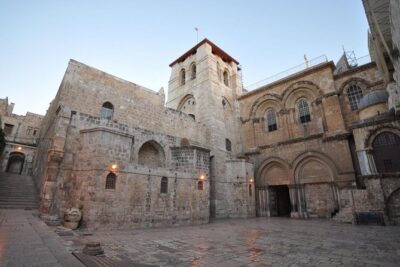
The Church of the Holy Sepulchre gets about 30 minutes. For many Christian visitors, this is the most important stop of the day. The church is associated with the crucifixion and burial of Jesus, and several Christian traditions share responsibility for the site.
The building can be difficult to understand without guidance. Different chapels, shrines, and traditions are packed into one complex, and the atmosphere may shift quickly from quiet prayer to a crowded passage. A guide who explains the layout and religious importance before you enter can make the visit far more useful.
Again, half an hour is an introduction, not a complete study. You may not have time to wait at every shrine or explore every corner. I see that as the natural compromise of a one-day highlights tour. You get inside, learn why the church matters, and can decide if you want to return independently.
Mount Zion, the Cenacle, and King David’s Tomb
After the Old City, the route moves to Mount Zion. The Cenacle, traditionally identified as the room of the Last Supper, receives about 20 minutes. The site is important to Christian tradition, though the identification is based on belief and long-standing tradition rather than a simple modern proof.
The visit is brief, but it fits the wider theme of the day: Jerusalem’s sacred places often carry several layers of meaning. Your guide can explain the tradition without presenting every claim as settled fact, which is particularly helpful in a city where history and faith often overlap.
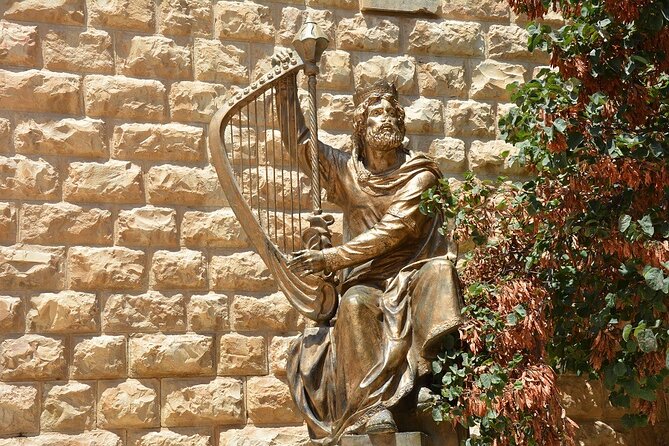
Nearby, you visit King David’s Tomb for about 20 minutes. This is another place of Jewish religious importance, and the paired visits to the Cenacle and tomb underline Mount Zion’s importance to more than one tradition.
These final stops also make the day feel broader than a simple Old City walk. You have seen the main Christian route, the Jewish Quarter, the Wall, and Mount Zion, all within one organized circuit.
What the $70 price really covers
At $70, this tour is priced for people who want broad coverage at a moderate cost. The air-conditioned vehicle matters because the day includes several areas rather than one continuous walk, and the guide helps turn a list of sites into a connected story.
Entrance fees are included, which makes budgeting easier. Food and drinks are not included, so plan for your own meal or snacks. The tour also does not include hotel pickup or drop-off. You need to reach the Grand Court Hotel at the start and make your own way from the ending point.
The finish is at one of Jerusalem’s light rail stations, specifically Giv’at Hamivtar Light Rail Station in the supplied details. That gives you a useful public transport connection, but it is not a return to your hotel. Confirm the exact end point with your booking details before you set out.
The tour requires a minimum number of participants to operate. If that minimum is not reached, you can be offered another date or experience, or receive a full refund. You can cancel for a full refund up to 24 hours before the start time. That is a reasonable safety net, but last-minute changes made within 24 hours are not accepted.
Who should book this experience
I would recommend it to a first-time visitor who wants to see Jerusalem’s main sacred sites in one day and prefers a guide to independent navigation. It also fits people staying in Jerusalem who want a structured overview without sacrificing the entire morning.
The tour is a good match if you value explanation over long private visits. The strong guide feedback, especially around Yoav Malachi, Hava, Eithan Amitai, and Avi, suggests that the human side of the day can be excellent. Their praised qualities are clear communication, respect for different religions, humor, and attention to group needs.
I would think twice if you dislike group schedules or want deep time at one site. A group of up to 40 can make movement slower, and 20 to 30 minutes at several stops will feel short if you are a serious photographer, worshipper, or archaeology enthusiast.
Children under four cannot join. Older children may participate, but the walking and religious-site rules still matter. Anyone with mobility concerns should also consider the reasonable amount of walking and the nature of an Old City route before booking.
Should you book it?
Book this tour if you want a well-priced first look at Jerusalem with a later start, major sights, included transport, and a professional guide. The route is broad and sensible, covering both the Old City and Mount Zion without asking you to organize complicated connections yourself.
Skip it if you want a private pace, a food-focused day, or extended time inside individual churches and prayer sites. For most first visits, though, the $70 cost buys a useful introduction and a strong foundation for exploring Jerusalem on your own afterward.
FAQ
What time does the tour start?
The tour starts at 10:00 a.m.
Where does the tour begin?
It begins at the Grand Court Hotel Jerusalem, 15 St George Street.
Where does the tour end?
The tour ends at Giv’at Hamivtar Light Rail Station or another light rail station in Jerusalem, according to the supplied tour details.
How long does the tour last?
The tour lasts approximately seven to eight hours.
Is hotel pickup included?
No. Hotel pickup and drop-off are not included.
What is included in the price?
The price includes an air-conditioned vehicle, a professional guide, and entrance fees.
How many people can join the tour?
The group can have a maximum of 40 people. The tour also requires a minimum number of participants to operate.
What should I wear?
Modest dress is obligatory at holy sites. Your knees and shoulders should be covered, and comfortable walking shoes are recommended.
Just added around Jerusalem
- Tour of Jerusalem & Dead sea private tour★ 5.0 · 4 reviews
- full day tour Jerusalem price per van up to 6 people★ 5.0 · 8 reviews
- jerusalem classic tour★ 5.0 · 3 reviews
- West Bank Tour from Jerusalem and Tel-Aviv – Bethlehem & Jericho★ 5.0 · 6 reviews
- Privet Tour – FROM JERUSALEM TO JERICHO & THE DEAD SEA★ 5.0 · 8 reviews
- Experience Shabbat With Dinner In Jerusalem★ 5.0 · 5 reviews
- Private Tour: Old City of Jerusalem Christianity Tour★ 5.0 · 5 reviews
- Private Silk Painting Workshop in Jerusalem – Create a scarf –★ 5.0 · 4 reviews
Jerusalem Old City Tours, compared.

From Tel Aviv: Jerusalem Old City & Dead Sea Guided Day Tour
Read our review →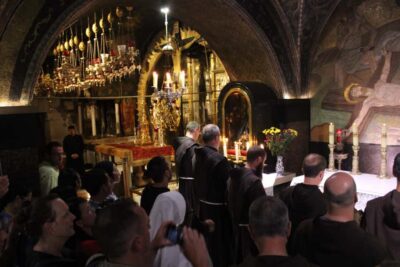

Jerusalem Half Day Tour: Holy Sepulchre and Western Wall
Read our review →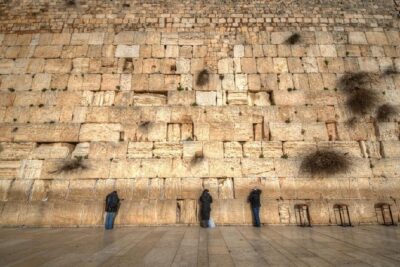
Jerusalem Half-Day Tour from Tel Aviv: Holy Sepulchre and Western Wall
Read our review →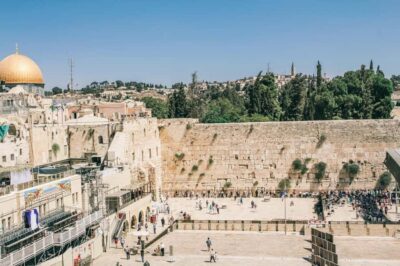
Browse the lists this tour appears in