
Reviewed · JERUSALEM OLD CITY TOURS
Jerusalem: Old City Highlights Tour
Jerusalem’s Old City is a place where a short walk can cross centuries, faiths, and empires. This 10-hour tour gives you a broad first look, beginning with the view from Mount Scopus and continuing through the Armenian and Jewish Quarters, the Western Wall, Via Dolorosa, and the Church of the Holy Sepulchre.
I like the way the route mixes major holy sites with smaller historical details, especially the Byzantine Cardo and the Old City bazaar. I also like that transport, entry fees, guide service, and pickup and drop-off are included, which keeps a long day simpler. The main drawback is the pace: you cover a lot of ground, and the tour may feel demanding if you want extended quiet time at each site.
In This Review
- Key points at a glance
- Why this full-day Jerusalem route works
- Mount Scopus gives you the right opening view
- Zion Gate and the Armenian Quarter
- The Jewish Quarter and the Byzantine Cardo
- The Western Wall and the meaning of the stop
- Walking the Via Dolorosa
- The Church of the Holy Sepulchre
- The Old City bazaar adds everyday Jerusalem
- Gethsemane, the Church of All Nations, and the Kidron Valley
- Mount Zion and its three key stops
- What the 10-hour schedule feels like
- Is $75 a good value?
- Who should book this Jerusalem tour?
- Should you book the Old City Highlights Tour?
- FAQ
- How long does the Jerusalem Old City Highlights Tour last?
- How much does the tour cost?
- What is included in the tour?
- Which languages are available?
- Are food and drinks included?
- What should I wear?
- Does the itinerary change on Mondays and Thursdays?
- Can children visit every part of the tour?
- Is the tour suitable for wheelchair users?
Key points at a glance
- Mount Scopus begins the day: Take in a wide view of Jerusalem before entering the Old City.
- Three Old City quarters appear on foot: Walk through the Armenian and Jewish Quarters before reaching the Western Wall.
- The central Christian route is included: Follow the Via Dolorosa to the Church of the Holy Sepulchre.
- Mount Zion adds major biblical sites: See the Dormition Church, Room of the Last Supper, and King David’s Tomb.
- The itinerary changes twice a week: On Mondays and Thursdays, except during Jewish holidays, the tour visits Yad Vashem instead of several Mount Zion and Gethsemane stops.
- Dress matters: Shorts, short skirts, and sleeveless shirts are not allowed at the holy sites.
Why this full-day Jerusalem route works
Jerusalem can be hard to organize on your own. The Old City is compact on a map but packed with lanes, gates, religious sites, and areas where the route is not always obvious. This tour puts the main sights into one long day, with an air-conditioned coach handling the transport between the Old City, Mount Scopus, Gethsemane, and Mount Zion.
You pay $75 per person. That is a fair price if you want a guided introduction and plan to visit several of these sites anyway. Entry fees, transport, pickup and drop-off, and a live guide are included. Food and drinks are not, so plan for your own meals during the day.
I would choose this tour for a first visit to Jerusalem, especially if you have limited time. It gives you the essential religious and historical stops without requiring you to work out the route yourself. If you already know the Old City well, or if you prefer spending an hour or two at one church or wall, the fixed full-day schedule may feel too brisk.
The guide is available in English, French, or Spanish. Since the tour lasts 10 hours, your language choice matters. You will get more from the day if explanations about the sites are easy for you to follow.
More Jerusalem Old City Tours in Jerusalem
- Jerusalem: Guided Walking Tour of the Old City
★ 4.7 · 386 reviews - Best seller! Jerusalem old city four quarters tour
★ 5.0 · 123 reviews - Private Tour Jerusalem Old City
★ 5.0 · 118 reviews
Mount Scopus gives you the right opening view
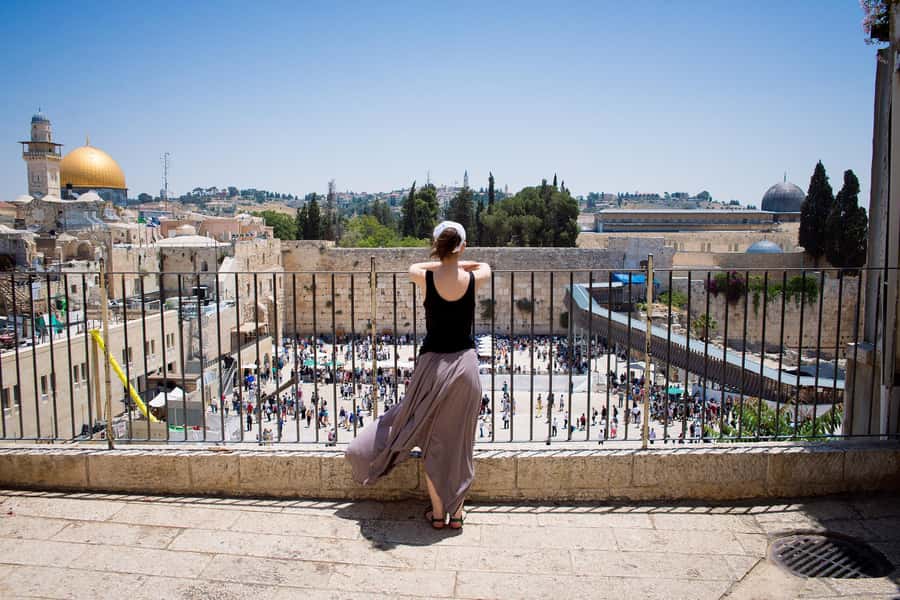
The day starts with a panoramic view from Mount Scopus. This is a useful beginning because Jerusalem’s Old City can otherwise seem like a dense maze of stone streets and religious buildings. From above, you get a better sense of the city before walking into it.
The view also helps frame the day. You are not just visiting a collection of separate monuments. You are looking at a compact city with sacred places important to Judaism, Christianity, and Islam, though this particular route focuses on Jewish and Christian sites.
The panoramic stop should appeal to anyone who likes to get their bearings before touring. It is also a good chance to take photographs, though the exact amount of time at each stop is not specified. Keep your expectations practical: the tour is designed to introduce many places, not to turn every stop into a long viewing session.
Zion Gate and the Armenian Quarter
The Old City entry is through historic Zion Gate, followed by a walk into the Armenian Quarter. This gives you a quieter and less immediately familiar start than heading straight to the Western Wall or Via Dolorosa.
The Armenian Quarter is one of the Old City’s distinct sections, and its inclusion helps you see that Jerusalem is not one single religious or cultural space. The route uses the quarter as part of the walk toward the Jewish Quarter, so you experience the city by moving through its separate communities rather than by visiting isolated buildings.
Wear shoes suited to a long day on foot. The tour includes several walking sections, and historic lanes are not designed like modern city sidewalks. The information does not specify the exact walking distance, but the 10-hour schedule makes comfortable footwear a sensible choice.
The Jewish Quarter and the Byzantine Cardo
The tour continues into the Jewish Quarter, where you see the remains of the Byzantine Cardo. The Cardo was a major north-south street in ancient Jerusalem, and its remains offer a useful contrast to the holy sites ahead.
This is one of the stops I especially like because it adds urban history to the day. The Western Wall is an active place of prayer. The Cardo helps you picture Jerusalem as a working Roman and Byzantine city, with streets, shops, and public movement.
Do not rush past this part simply because the Western Wall is next. The Cardo gives you a clearer sense of how old Jerusalem was planned and rebuilt over time. It is also a reminder that the Old City is more than a set of religious destinations. Its stones record many layers of daily life.
Same coast, a completely different kind of day:
- From Jerusalem: Masada & Dead Sea Full Day Tour with Pick Up
★ 4.5 · 815 reviews - Masada and the Dead Sea Day Trip from Jerusalem
★ 4.5 · 757 reviews - From Jerusalem: Nazareth and Sea of Galilee Tour
★ 4.5 · 588 reviews - Nazareth and the Sea of Galilee Day Trip from Jerusalem
★ 4.5 · 446 reviews
The Western Wall and the meaning of the stop
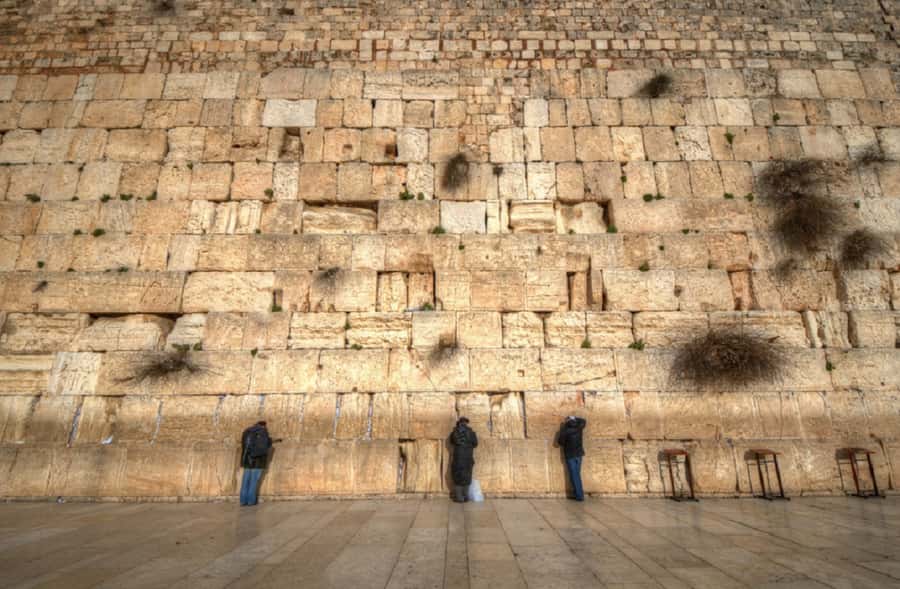
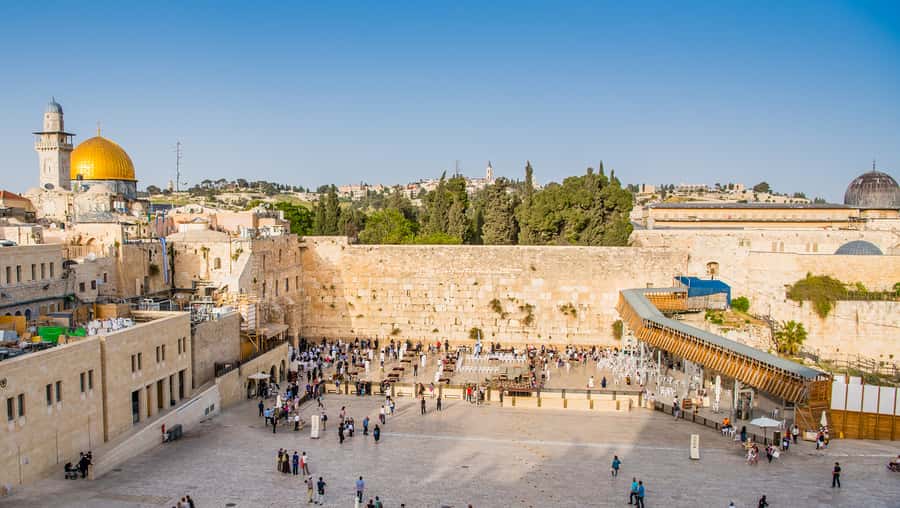
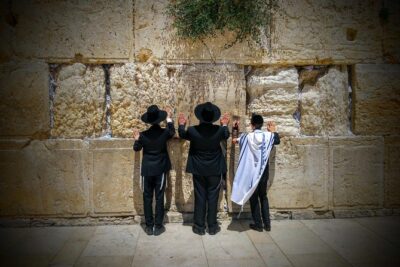
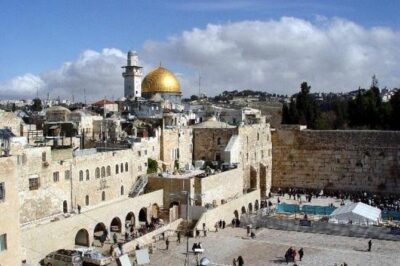
The Western Wall is one of the day’s major stops. It is a sacred Jewish site and an important place of prayer, reflection, and ceremony. You will see people approaching the wall with different purposes and emotions, so the best approach is to be quiet, respectful, and attentive to the rules on site.
The tour brings you here after the Jewish Quarter and Cardo. That order makes sense. You first see part of the historic quarter, then arrive at one of its most important religious sites.
Modest clothing is required. Shorts, short skirts, and sleeveless shirts are not allowed, and the clothing rule applies to the holy sites included throughout the day. This is not the time to rely on a last-minute cover-up if you can avoid it. Dress modestly from the start and you will not need to adjust your clothing between stops.
Walking the Via Dolorosa
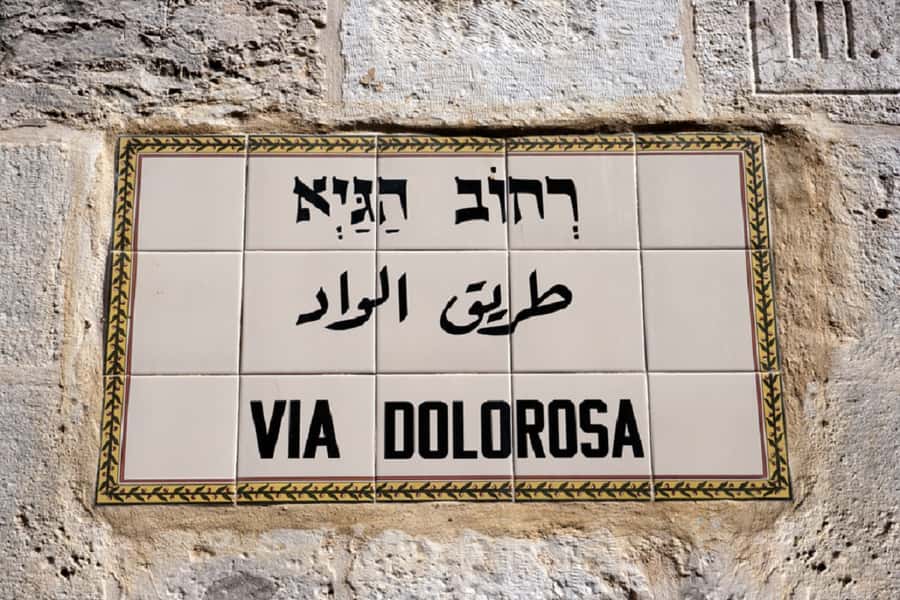
From the Jewish Quarter, the route moves into the Christian section of the Old City and along the Via Dolorosa. This is the traditional path associated with Jesus on the way to crucifixion.
The value here is not simply ticking off another famous street. The Via Dolorosa is a working Old City route, lined with shops and religious points of interest. Its narrow setting makes the experience feel close and immediate, but it can also make the walk feel crowded or stop-start. The tour description does not give a group size, so you should be prepared to stay aware of the guide as the route moves through busy lanes.
This section is best approached as a religious pilgrimage route rather than a standard sightseeing street. Even if you are not visiting for faith reasons, you can appreciate how the path connects several Christian traditions and places of worship.
The Church of the Holy Sepulchre
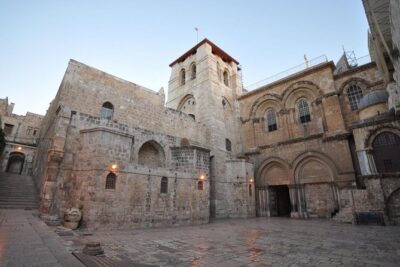
The Via Dolorosa leads to the Church of the Holy Sepulchre, one of Jerusalem’s most important Christian sites. The church contains places associated with the crucifixion and Christ’s tomb, along with centuries of religious objects and traditions.
This is likely to be one of the emotional centers of the day. It is also a place where you need patience. The church is sacred to many Christian communities, and religious services, prayer, and visitor movement can all shape what you see. The tour includes entry, but entry does not mean you will have unlimited time or a private visit to every area.
I like that the church appears as the culmination of the Via Dolorosa rather than as a disconnected stop. You follow the traditional route first, then reach the building connected to its final events. That gives the visit a stronger sense of place.
If you want a detailed study of every chapel, icon, and architectural feature, you may find the tour too short. If you want a guided introduction to the site as part of a wider Jerusalem day, it fits well.
The Old City bazaar adds everyday Jerusalem
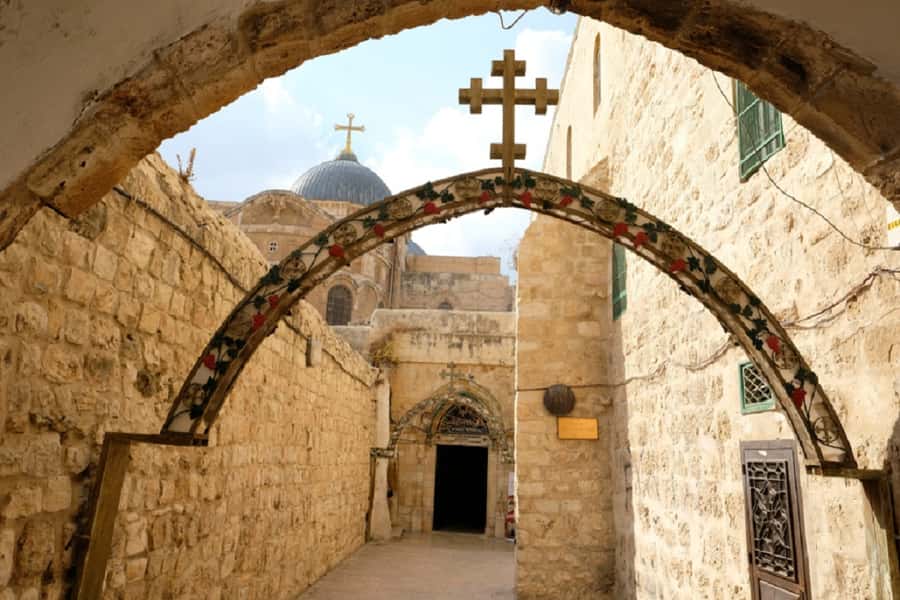
After the major religious sites, the route includes time in the colorful Old City bazaar. This is an important change of tone. Jerusalem is not only walls, churches, tombs, and prayer spaces. It is also a place of trade, browsing, conversation, and ordinary daily movement.
The bazaar offers a chance to see the Old City as a living part of the city rather than an open-air museum. You might find spices, souvenirs, food stalls, religious items, and other goods, though the exact shops and time available are not specified.
Treat this as a short look at local commerce, not as a dedicated shopping tour. Food and drinks are not included, so the bazaar may be useful if the schedule allows you to buy something, but do not assume a meal stop is part of the package.
Gethsemane, the Church of All Nations, and the Kidron Valley
The route then moves to the Garden of Gethsemane and the Church of All Nations. Gethsemane is associated with the final period before Jesus’ arrest, while the church is known for its connection to that tradition.
The setting offers a different experience from the Old City lanes. Instead of walking through tightly packed quarters, you visit a quieter religious area with views toward the Kidron Valley. The tour also points out ancient Jewish tombs in the valley, adding another layer to the city’s religious and historical setting.
This part of the itinerary is valuable because it links several places rather than treating each as a separate photo stop. You see the garden, the church, and the valley together, then move on to Mount Zion.
There is an important schedule change to understand. On Mondays and Thursdays, except during Jewish holidays, the tour visits the Holocaust Museum, Yad Vashem, instead of the Church of All Nations at Gethsemane, King David’s Tomb, and the Hall of the Last Supper on Mount Zion. If one of those Mount Zion sites is a priority, check the day of your tour before booking.
Children under 10 are not permitted to visit Yad Vashem because of the sensitive content. That rule matters for families planning a Monday or Thursday departure.
Mount Zion and its three key stops
On Mount Zion, the standard route includes the Dormition Church, the Room of the Last Supper, and King David’s Tomb. These sites are close enough to work naturally as a group, but each carries a different religious tradition.
The Dormition Church is associated with the death or falling asleep of Mary in Christian tradition. The Room of the Last Supper is linked to the final meal of Jesus and his disciples. King David’s Tomb is an important Jewish site connected by tradition to the biblical king.
I like this portion of the tour because it brings together places that are often missed by people who spend all their time around the Western Wall and Church of the Holy Sepulchre. It also reinforces the main theme of the day: Jerusalem’s sacred geography is shared, layered, and sometimes contested.
Again, the Monday and Thursday substitution is significant. On those days, you visit Yad Vashem instead of the Church of All Nations, King David’s Tomb, and the Hall of the Last Supper. The day therefore becomes less focused on Mount Zion and more focused on 20th-century Jewish memory.
What the 10-hour schedule feels like
A 10-hour tour is a serious commitment. It is useful because Jerusalem’s major sites are spread across several areas, but it can also leave you tired by the final stop. Expect a mix of coach transport, walking, standing, sightseeing, and listening.
The air-conditioned coach helps with the longer connections between areas. Pickup and drop-off are included, which removes some of the stress of reaching the meeting point and finding your way back after a full day.
You should plan for a practical touring day. Wear comfortable shoes, dress modestly, carry water, and keep your belongings manageable. Food and drinks are not included, and the tour details do not specify a meal break, so you should be prepared for the day without relying on the package to feed you.
The tour is not suitable for children under 4 or wheelchair users. Families with older children should also consider the Monday and Thursday Yad Vashem rule, since children under 10 cannot enter the museum.
Is $75 a good value?
At $75 per person, the tour offers good value if you want a wide survey of Jerusalem in one day. You receive transport by air-conditioned coach, pickup and drop-off, a live guide, and entry fees. Paying separately for transport and several admissions could easily make an independent day more complicated, even before you factor in route planning.
The price is less compelling if you want a slow, personal visit. You are paying for coverage and convenience, not a private guide or a custom schedule. The itinerary includes many major stops, so time at each one is likely to be limited compared with a specialist tour devoted only to the Old City or Christian sites.
The staff receive strong praise, and the tour holds a five-star rating from the available feedback. That supports the idea that the organization and guiding are important strengths, though you should still choose the guide language that suits you and check the departure day carefully.
Free cancellation is available up to 24 hours before the tour for a full refund. You can also reserve now and pay later, which helps if your Israel plans are still changing.
Who should book this Jerusalem tour?
I would recommend it to you if:
- You are visiting Jerusalem for the first time.
- You want the city’s major Jewish and Christian sites in one day.
- You prefer a guide and organized transport.
- You want entry fees included in the upfront price.
- You are comfortable with a long schedule and substantial walking.
- You can follow the tour in English, French, or Spanish.
I would look elsewhere if you want a slow photography walk, a wheelchair-accessible experience, or a tour built around one specific faith tradition. I would also think twice if you have small children, especially if your date falls on a Monday or Thursday and you need an itinerary suitable for children under 10.
Should you book the Old City Highlights Tour?
Book it if your goal is to understand Jerusalem’s main sights in a single organized day. The sequence from Mount Scopus to Zion Gate, the Cardo, Western Wall, Via Dolorosa, Holy Sepulchre, Gethsemane, and Mount Zion gives you a broad and useful introduction.
Before paying, check three things: your tour language, the day of the week, and your clothing. If you accept the long pace and the Monday or Thursday substitution, this is a practical way to see a remarkable number of important places for $75.
FAQ
How long does the Jerusalem Old City Highlights Tour last?
The tour lasts 10 hours. Starting times vary, so you should check availability for your chosen date.
How much does the tour cost?
The price is $75 per person.
What is included in the tour?
Entry fees, a live guide, transport by air-conditioned coach, and pickup and drop-off are included.
Which languages are available?
The live tour guide is available in English, French, and Spanish.
Are food and drinks included?
No. Food and drinks are not included in the tour price.
What should I wear?
Modest clothing is required at the holy sites. Shorts, short skirts, and sleeveless shirts are not allowed.
Does the itinerary change on Mondays and Thursdays?
Yes. On Mondays and Thursdays, except during Jewish holidays, the tour visits Yad Vashem instead of the Church of All Nations, King David’s Tomb, and the Hall of the Last Supper on Mount Zion.
Can children visit every part of the tour?
Children under 4 are not permitted on the tour. Children under 10 are not permitted to visit Yad Vashem because of the sensitive content.
Is the tour suitable for wheelchair users?
No. The tour is not suitable for wheelchair users.
Just added around Jerusalem
- Tour of Jerusalem & Dead sea private tour★ 5.0 · 4 reviews
- full day tour Jerusalem price per van up to 6 people★ 5.0 · 8 reviews
- West Bank Tour from Jerusalem and Tel-Aviv – Bethlehem & Jericho★ 5.0 · 6 reviews
- jerusalem classic tour★ 5.0 · 3 reviews
- Privet Tour – FROM JERUSALEM TO JERICHO & THE DEAD SEA★ 5.0 · 8 reviews
- Experience Shabbat With Dinner In Jerusalem★ 5.0 · 5 reviews
- Private Tour: Old City of Jerusalem Christianity Tour★ 5.0 · 5 reviews
- Temple Mount Private Guided Tour★ 5.0 · 4 reviews
Jerusalem Old City Tours, compared.
From Tel Aviv: Jerusalem Old City & Dead Sea Guided Day Tour
Read our review →
Jerusalem Half Day Tour: Holy Sepulchre and Western Wall
Read our review →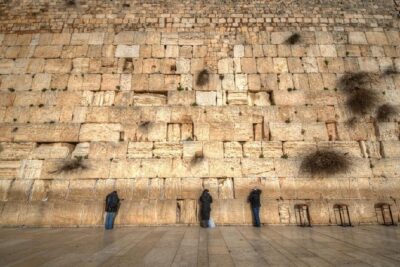
Jerusalem Half-Day Tour from Tel Aviv: Holy Sepulchre and Western Wall
Read our review →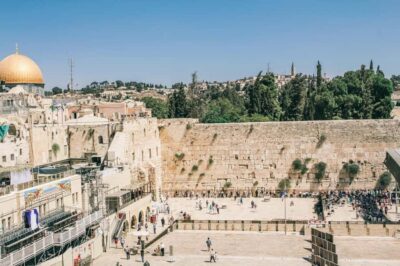
Browse the lists this tour appears in