
Reviewed · WALKING TOURS
Jerusalem Jewish Orthodox Neighborhood Walking Tour
The most interesting part of this Jerusalem walk is the chance to see Haredi life from inside the community rather than from a distance. In Me’a She’arim, a local guide explains religious signs, customs, and daily routines while leading you through streets that many visitors only observe from the outside. Motti has earned especially strong praise for his clear, fair explanations and steady answers to questions.
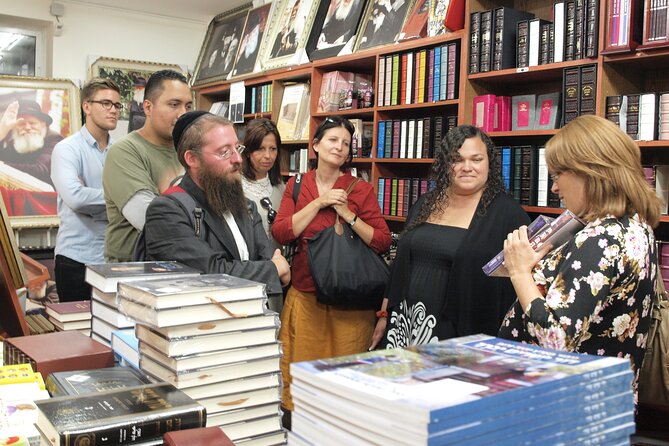
I like two things here: the tour gives social and religious context, and it takes you beyond sightseeing to places tied to daily life, including a synagogue, bakery, soup kitchen, community center, and library. The pastries, especially rugelach and challah, add a welcome taste of the neighborhood. The main caution is that the advertised program may not always match the actual walk. Some bookings have lasted about three hours rather than four, and promised home or synagogue visits have not always taken place.
In This Review
- Key points to know before you book
- What this walk reveals about Haredi Jerusalem
- Starting at Davidka Square near central Jerusalem
- Walking into Me’a She’arim
- The synagogue visit and the limits of the promise
- Meeting a Haredi family at home
- Rugelach, challah, and the neighborhood bakery
- A library filled with religious artifacts
- What the guide adds to the experience
- Is $45 a fair price in Jerusalem?
- Timing, clothing, group size, and cancellations
- Who should book this Jerusalem walk?
- Should you book the Jerusalem Jewish Orthodox Neighborhood Walking Tour?
- FAQ
- Where does the tour start?
- How long does the tour last?
- What neighborhood does the tour visit?
- Is modest dress required?
- Is food included in the price?
- What is the maximum group size?
- Can I cancel for a refund?
Key points to know before you book
- Me’a She’arim from a local point of view: Learn about Haredi customs, symbols, and community life from a guide connected to the neighborhood.
- A taste of Jewish bakery culture: The program includes Jewish pastries and bread, with rugelach and challah named specifically.
- Motti is a strong guide choice: His explanations are described as fair, clear, and packed with useful facts about modern Israeli society.
- A small-group Jerusalem walk: The maximum group size is 20, which should make questions easier than on a large coach tour.
- Dress matters: Modest clothing is required for both men and women.
- Check the exact inclusions: The tour is sold at $45 per person, but food and drinks are not included, and some planned visits may depend on local circumstances.
What this walk reveals about Haredi Jerusalem
Jerusalem is not one single city experience. Within a short distance of the light rail, major roads, and Mahane Yehuda Market, you can enter a neighborhood shaped by strict religious practice, close family networks, communal services, and its own public manners.
That is the purpose of this walk. You are not simply being shown old buildings. You are being given a framework for understanding how Haredi residents use streets, synagogues, schools, libraries, bakeries, and shared services. The guide points out religious symbols and explains customs that can be hard to interpret on your own.
I find that useful because Haredi life can be easy to misunderstand from a quick walk through the quarter. Clothing, signs, prayer schedules, separate social norms, and neighborhood notices all carry meaning. A guide from the local community can explain those details without asking you to guess.
The tone also matters. The strongest feedback describes a guide who offered an interesting, fair, and balanced view of this part of Israeli society. That is the right approach for a sensitive subject. You should leave with more context, not a cartoon version of ultra-Orthodox life.
The experience is listed in different places as either about two and a half hours or about four hours. The detailed program describes a four-hour walk, but one account says it lasted three hours. Plan for a substantial afternoon outing, but do not build a tight evening reservation around the longer estimate.
A few more Jerusalem trips to weigh up
- Jerusalem: Guided Walking Tour of the Old City
★ 4.7 · 386 reviews - All Inclusive Walking Tour Old City Jerusalem
★ 5.0 · 83 reviews - Jerusalem Walking Tour: In the Footsteps of Jesus
★ 4.5 · 67 reviews
Starting at Davidka Square near central Jerusalem
The meeting point is Abraham Jerusalem, at Ha-Nevi’im Street 67, with a 4:30 pm start. The walk begins at Davidka Square, a practical central location near public transportation, the light rail, the Jaffa Road pedestrian mall, and Mahane Yehuda Market.
Davidka Square gives the tour a useful opening point. Its name comes from the Davidka, a homemade mortar used by Jewish forces during the 1948 Arab-Israeli War. Today, the square is a transport hub and meeting place, so it helps you get your bearings before the group moves toward the Haredi quarter.
The scheduled stop is about 15 minutes, with no admission charge. Do not expect a long museum-style presentation here. Instead, this opening gives the guide a chance to set the geographic and historical scene.
The central location has another advantage. You can reach it by public transportation, and the end of the activity returns to the same meeting point. That makes the tour easier to fit into a Jerusalem day, especially if you are staying near central streets.
Walking into Me’a She’arim
The main portion takes place in Me’a She’arim, a traditional Haredi neighborhood. The planned walk here lasts about 1 hour and 15 minutes in the detailed schedule, although the full experience is described as longer because of additional community visits and conversations.
This is where the tour earns its price, if the guide makes good use of the time. You will hear about Haredi identity, religious practice, and the meaning of important signs and places. The guide may also explain the difference between simply seeing a neighborhood and understanding the rules that shape it.
The setting is active, but the attraction is not a list of famous monuments. It is the ordinary street scene: notices, religious symbols, local businesses, community services, and people following a way of life that differs sharply from the tourist center nearby.
You should treat the neighborhood with care. Modest dress is required for everyone. That means dressing respectfully before you arrive rather than trying to adjust at the last minute. The requirement is not a minor detail. It affects whether you can enter certain places and whether your presence feels considerate.
The tour is open to most participants, and service animals are allowed. It is a walking experience, so you should still be comfortable moving through city streets for several hours.
The synagogue visit and the limits of the promise
A working synagogue is part of the advertised experience, along with a community center and soup kitchen. These locations matter because they show how religious life connects with practical support. You are not only hearing about prayer or custom in the abstract. You may also see how communal institutions serve local residents.
There is an important qualification. One account says the synagogue was viewed only through a window, while another says the advertised family visit did not happen. That means access can vary. A working religious institution is not a museum, and local schedules, privacy, or community rules may change what the group can enter.
I would book this for the explanation, not for a guaranteed interior visit. If you are able to step inside, consider it an added privilege. If you only see the building from outside, the guide’s context becomes even more important.
The same point applies to the soup kitchen and community center. Their inclusion gives the walk social depth, but the supplied details do not confirm exactly how long you spend at each site or whether every group enters each one. Ask at the start what is possible that day.
Same coast, a completely different kind of day:
- From Jerusalem: Masada & Dead Sea Full Day Tour with Pick Up
★ 4.5 · 815 reviews - Masada and the Dead Sea Day Trip from Jerusalem
★ 4.5 · 757 reviews - From Jerusalem: Nazareth and Sea of Galilee Tour
★ 4.5 · 588 reviews - Nazareth and the Sea of Galilee Day Trip from Jerusalem
★ 4.5 · 446 reviews
Meeting a Haredi family at home
The most personal feature is the planned visit to a Haredi family in its home. In theory, this offers something a street walk cannot: a chance to ask direct questions about family life and culture in a private setting.
That kind of meeting can be valuable because it places religious practice in an everyday setting. You may gain a better sense of how communal identity works inside the home, not just on public streets.
But you should not assume this visit will happen. At least one booking did not include it, despite the promise in the program. If this is the main reason you want to book, confirm the current arrangement before paying, or treat it as a possible part of the afternoon rather than a certainty.
There is also a practical reason to keep expectations flexible. A family home is private, and the visit may depend on the family’s availability and comfort. A good tour should explain any change clearly, but you should still approach this part with respect and patience.
Rugelach, challah, and the neighborhood bakery
The bakery stop is one of the easiest features to appreciate. Jewish pastries such as rugelach and bread such as challah offer a direct, simple connection to local food traditions.
A bakery visit also shows the neighborhood as a working community rather than a backdrop. You can see what people buy, what kinds of food are made for religious households, and how food fits into weekly and holiday routines.
The cost is less clear than the description suggests. Food and drinks are listed as not included, and one account says that food bought at a snack shop had to be paid for separately. Do not assume every bite is covered by the $45 price. Carry some Israeli shekels or a payment method suitable for a small purchase.
I like this part because it breaks up the talking and gives you a sensory detail to remember. Still, it should be viewed as a sample, not a full meal. Eat beforehand if you are likely to be hungry during a walk that may run three to four hours.
A library filled with religious artifacts
The neighborhood library is described as holding ancient Jewish religious artifacts. This stop gives the tour a quieter, more scholarly side.
The value here is not just the age of an object. A library collection can help show how religious learning, preservation, and community memory fit together. After seeing daily life on the street, you get a look at the texts and objects that support that life.
The available information does not specify which artifacts are displayed, how many are shown, or whether the collection is open at every departure. As with the family and synagogue visits, it is sensible to confirm the current access plan.
If the library is open to the group, take advantage of the guide’s explanations. Ancient items can be hard to appreciate without context, and the local guide is the bridge between a display case and the living tradition around it.
What the guide adds to the experience
The guide is the biggest factor in the tour’s quality. This subject needs more than dates and labels. You need someone who can explain why a custom matters, how the neighborhood functions, and where simple outside assumptions fall short.
Motti receives particularly warm praise for answering questions and explaining Haredi society at a good pace. The strongest descriptions present him as someone who knows the community from the inside and can connect local details to broader Israeli society.
Another booking describes a female guide as excellent, though no name is provided. So the experience may be led by different local guides. I would expect the style and exact route to vary somewhat depending on who leads your group.
The best use of your time is to ask polite, specific questions. Ask about the symbols you see, the role of communal services, or how the neighborhood’s institutions support residents. A good guide can turn those questions into a clearer picture of the community.
The walk is capped at 20 people. That is not a tiny private tour, but it is small enough for the guide to stop and respond to questions. Stand near the guide if you want to hear every explanation, especially on busy streets.
Is $45 a fair price in Jerusalem?
At $45 per person, this is not the cheapest way to spend an afternoon in Jerusalem. You can walk through the streets independently for nothing, at least in terms of admission. The fee pays for interpretation and access to places you might not understand or find on your own.
The value is strongest if the tour includes several of the planned community sites and gives you time to ask questions. A bakery tasting, family meeting, synagogue access, and library visit would make the price easier to justify, though food may cost extra.
The value is weaker if the experience becomes only a general walk. One account describes the guide as informed but says the advertised visits and pastry tasting did not happen. That is the central issue to weigh before booking.
I would see the tour as a cultural orientation, not a sightseeing checklist. If you want an expert explanation of Haredi life and are comfortable with some flexibility, $45 can be reasonable. If you want guaranteed entry to every listed stop, the uncertainty is a real drawback.
Timing, clothing, group size, and cancellations
The meeting time is 4:30 pm, and the tour ends back at the starting point. Because the duration is described both as two and a half hours and four hours, leave room in your evening. The detailed schedule and actual timing may not line up perfectly.
Wear modest clothing from the start. This applies to men and women and is especially important if the group visits religious buildings or private spaces.
The activity is near public transportation, and most people can participate. Service animals are allowed. A mobile ticket is provided, so you do not need a printed voucher.
Free cancellation is available up to 24 hours before the start time for a full refund. Changes or cancellations inside that window are not accepted, and poor weather or an insufficient number of bookings can lead to a different date or a refund.
Who should book this Jerusalem walk?
I would recommend it to you if you want social context, enjoy asking questions, and are curious about a part of Jerusalem that can seem closed or unfamiliar. It is also a useful choice if you have already seen the Old City and want a different view of Jewish life in the city.
It suits adults and older children who can manage a city walk and respect a religious neighborhood’s rules. The small maximum group helps, though the tour is not private.
I would be more cautious if your main goal is food. The pastry stop may be brief, and food is not included. I would also hesitate if a private family visit or synagogue interior is essential to your booking, since both have not been consistent parts of every experience.
Should you book the Jerusalem Jewish Orthodox Neighborhood Walking Tour?
Book it if the chance to understand Haredi life matters more to you than a perfectly fixed schedule. The strongest feature is the local guide, with Motti receiving special praise for clear, balanced explanations. The neighborhood walk, community institutions, bakery, and library can give you a side of Jerusalem that independent sightseeing rarely provides.
Go in with flexible expectations. The tour is advertised with more stops and a longer duration than some people actually receive, and extra food costs may apply. If you confirm the current route and dress respectfully, the $45 price can buy a useful, human look at one of Jerusalem’s most distinctive communities.
FAQ
Where does the tour start?
The meeting point is Abraham Jerusalem at Ha-Nevi’im Street 67, Jerusalem. The tour starts at 4:30 pm and ends back at the meeting point.
How long does the tour last?
The experience is described as approximately two and a half hours in the summary and four hours in the detailed program. One account reports a duration of about three hours, so you should allow flexibility.
What neighborhood does the tour visit?
The main walking section takes place in Me’a She’arim, a Haredi Jewish neighborhood of Jerusalem.
Is modest dress required?
Yes. Modest dress is required for both men and women.
Is food included in the price?
No. Food and drinks are not included. Pastries and bread such as rugelach and challah are part of the planned bakery experience, but any food bought separately must be paid for by you.
What is the maximum group size?
The tour accepts a maximum of 20 travelers.
Can I cancel for a refund?
Yes, you can cancel at least 24 hours before the experience start time for a full refund. Cancellations or changes made less than 24 hours before the start are not accepted.
Just added around Jerusalem
- Tour of Jerusalem & Dead sea private tour★ 5.0 · 4 reviews
- full day tour Jerusalem price per van up to 6 people★ 5.0 · 8 reviews
- jerusalem classic tour★ 5.0 · 3 reviews
- West Bank Tour from Jerusalem and Tel-Aviv – Bethlehem & Jericho★ 5.0 · 6 reviews
- Privet Tour – FROM JERUSALEM TO JERICHO & THE DEAD SEA★ 5.0 · 8 reviews
- Experience Shabbat With Dinner In Jerusalem★ 5.0 · 5 reviews
- Private Tour: Old City of Jerusalem Christianity Tour★ 5.0 · 5 reviews
- Private Silk Painting Workshop in Jerusalem – Create a scarf –★ 5.0 · 4 reviews
Walking Tours, compared.

Jerusalem Walking Tour: In the Footsteps of Jesus
Read our review →


Browse the lists this tour appears in