
Reviewed · HALF-DAY
Jerusalem Half-Day Sightseeing Tour
Jerusalem packs thousands of years of faith and conflict into streets you can cross in minutes. This tour gives you the essential first look: Mount Scopus for the big picture, then the Old City on foot, from the Western Wall to the Church of the Holy Sepulcher and the ancient Cardo.
I like the smart route and the price. You get transport from your hotel, a professional guide, entrance fees, and five hours of sightseeing for $50. I also like that the tour ends in the Old City, leaving you free to eat lunch or keep exploring instead of riding straight back to a hotel.
The trade-off is a brisk schedule in crowded lanes, with no hotel drop-off. One past booking also spent too long in a shop, and another found the group too large for one guide, so this works best if you value broad coverage over a slow, quiet visit.
In This Review
- Key points to know before booking
- Why this five-hour Jerusalem route makes sense
- Mount Scopus gives you the city’s essential opening view
- The Garden of Gethsemane and the Kidron Valley
- Entering the Old City through the Armenian Quarter
- The Western Wall is a powerful, compact stop
- The bazaar and Christian Quarter add street life
- Walking the Via Dolorosa
- The Church of the Holy Sepulcher needs context
- The Cardo shows a different Jerusalem
- What the $50 price really includes
- Pace, group size, and the guide factor
- Who should book this half-day tour
- Should you book it?
- FAQ
- How long is the Jerusalem sightseeing tour?
- What time does the tour end?
- Does the tour include hotel pickup?
- Does the tour include hotel drop-off?
- Which places are included in the itinerary?
- Are entrance fees included?
- Are food and drinks included?
- Which languages are available?
- Can children under four join the tour?
Key points to know before booking
- Mount Scopus comes first: The high viewpoint gives you useful bearings before you enter the Old City.
- The walk covers major sacred sites: Expect the Garden of Gethsemane, Western Wall, Via Dolorosa, and Church of the Holy Sepulcher.
- You cross several Old City quarters: The route passes through Armenian, Christian, and Jewish areas, as well as the bazaar.
- The tour ends around 1:00 to 1:30 p.m.: Plan your own lunch and afternoon after the guided portion.
- Guides speak four languages: English, French, German, and Spanish are offered.
- The main weakness is pace and organization: Crowds, group size, and a possible shop stop can affect the day.
Why this five-hour Jerusalem route makes sense
Jerusalem is not a city you understand from a single monument. Its meaning comes from the way Jewish, Christian, and Islamic traditions meet within and around the Old City. A first visit can quickly become confusing: one lane leads to a church, another to a prayer wall, and a steep street appears to have been built for donkeys rather than modern feet.
This tour deals with that problem by beginning outside the Old City. After morning hotel pickup, you ride by air-conditioned coach to Mount Scopus, one of Jerusalem’s highest points. From there, your guide can point out the city before the walking begins.
The route then moves through the Kidron Valley to the Garden of Gethsemane and the walls of the Old City. You enter through the Armenian Quarter, reach the Western Wall Square, pass through the bazaar, and continue toward the Christian Quarter. The day finishes with the Via Dolorosa, Church of the Holy Sepulcher, Cardo, and Jewish Quarter.
That is a lot for half a day. If you have only one morning in Jerusalem, the coverage is useful. If you want long periods for prayer, photography, museums, or quiet thought, you may find the schedule too tight.
A few more Jerusalem trips to weigh up
- From Jerusalem: Dead Sea Chill Out Half-Day Trip
★ 4.7 · 165 reviews - Jerusalem: Half-Day Tour from Tel Aviv
★ 3.8 · 54 reviews - Holy Jerusalem Half-Day Tour From Jerusalem
★ 3.8 · 47 reviews
Mount Scopus gives you the city’s essential opening view
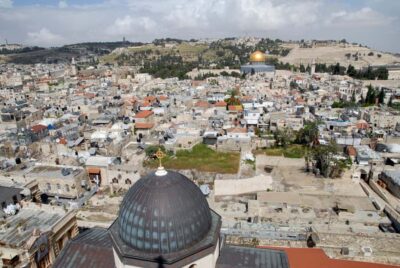
The first stop is Mount Scopus, a high ridge with a broad view over Jerusalem. This is more than a scenic pause. The Old City’s lanes make little sense until you see how its walls, valleys, and surrounding hills fit together.
I like beginning here because it gives you a mental map before the guide starts naming gates, quarters, and sacred sites. The view also helps explain why Jerusalem has always been a place of strategic and religious importance. You see the city as a whole rather than as a collection of isolated stops.
The exact length of the stop is not specified, so you should expect a viewpoint visit rather than a long hike. Bring your camera, but listen closely to the orientation talk. That short explanation may save you time later when the Old City begins to feel like a maze.
The Garden of Gethsemane and the Kidron Valley
From Mount Scopus, the coach travels along the Kidron Valley toward the Garden of Gethsemane and the Old City walls. This section connects the wide city view with the religious places that are central to the Christian story.
The Garden of Gethsemane is associated with the final hours before the crucifixion. The stop also puts you close to the lower slopes of the Mount of Olives and the historic walls, giving the walk a strong sense of place before you enter the narrow streets.
The itinerary does not promise an extended garden visit, so keep your expectations practical. You are seeing the setting as part of a larger route, not spending an entire morning at one site. That is a fair exchange for reaching several major places in five hours.
Entering the Old City through the Armenian Quarter
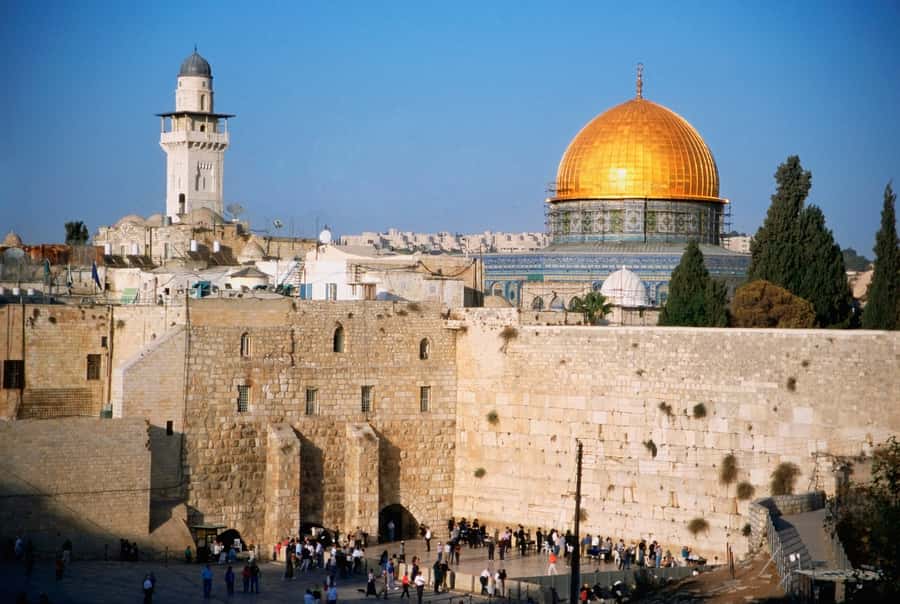
The route enters the Old City through the Armenian Quarter before reaching the Western Wall Square. This choice matters because it introduces you to the city’s quarters instead of sending you directly from one famous monument to the next.
Jerusalem’s Old City is divided into Armenian, Christian, Jewish, and Muslim quarters. The tour specifically takes you through the Armenian Quarter, then toward the bazaar and Christian Quarter. You get a sense of how the city changes from one section to another, even within a short walk.
The streets are narrow and can be crowded. Stay close to the guide and pay attention at turns. One guide, Alona, was praised for repeatedly checking that everyone was together, a useful habit in a place where a group can split in seconds.
Same coast, a completely different kind of day:
- From Jerusalem: Masada & Dead Sea Full Day Tour with Pick Up
★ 4.5 · 815 reviews - Masada and the Dead Sea Day Trip from Jerusalem
★ 4.5 · 757 reviews - From Jerusalem: Nazareth and Sea of Galilee Tour
★ 4.5 · 588 reviews - Nazareth and the Sea of Galilee Day Trip from Jerusalem
★ 4.5 · 446 reviews
The Western Wall is a powerful, compact stop

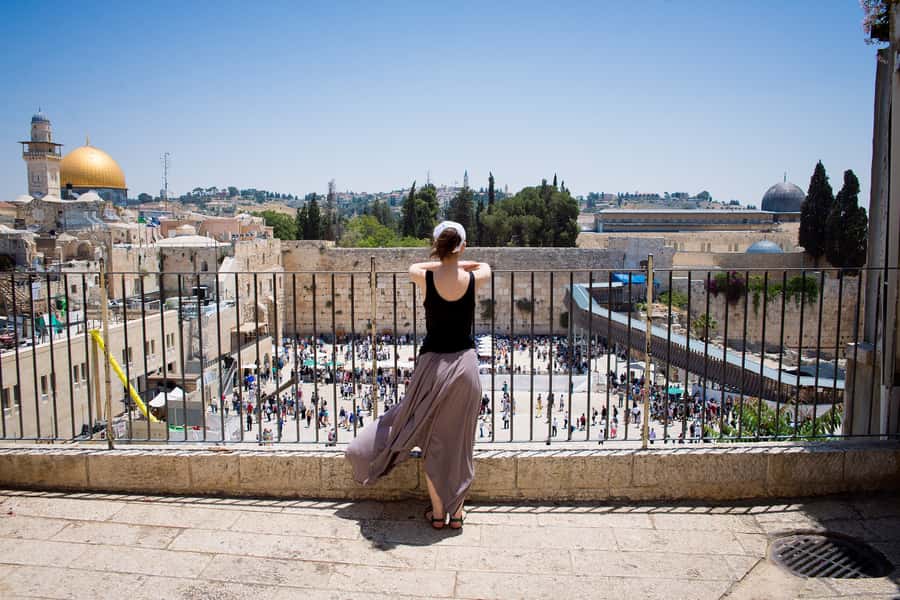
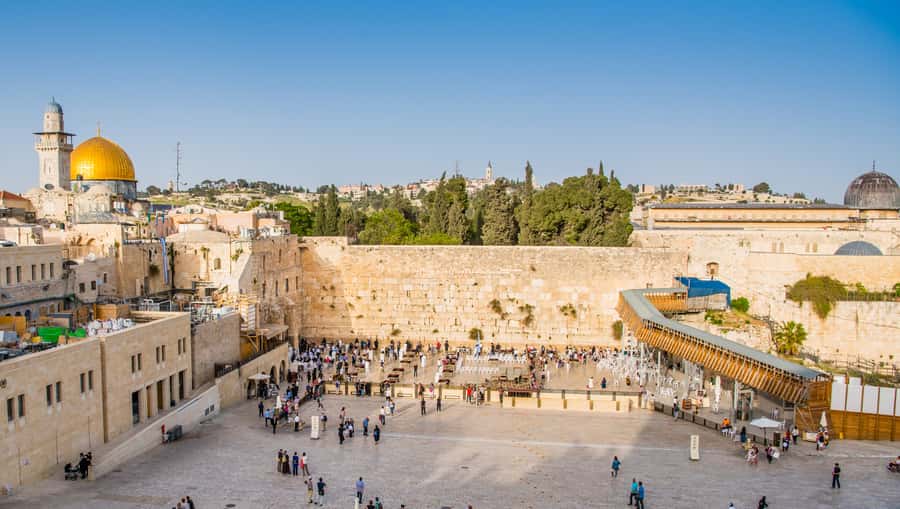
The Western Wall Square is one of the clearest places to understand Jerusalem’s continuing religious importance. The wall is part of the retaining structure around the ancient Temple Mount, and it remains a central Jewish place of prayer.
The tour approaches through the Armenian Quarter and bazaar, which gives the visit a gradual build-up. You are not simply delivered to a wall by coach. You walk through working streets first, then emerge into the open square.
Modest dress is required for this tour, and it is especially important at sacred sites. Dress with shoulders and knees covered so you do not have to worry about changing clothes or being turned away from the atmosphere of the visit.
The stop may feel brief if you want to spend time praying or observing. The guide’s role here is mainly to provide context and keep the schedule moving. If the Western Wall is a personal priority, note where you are and consider returning after the tour ends.
The bazaar and Christian Quarter add street life
Between the Western Wall and the Christian Quarter, the route passes through the bazaar. This is one of the places where the tour feels less like a list of monuments and more like a walk through a living city.
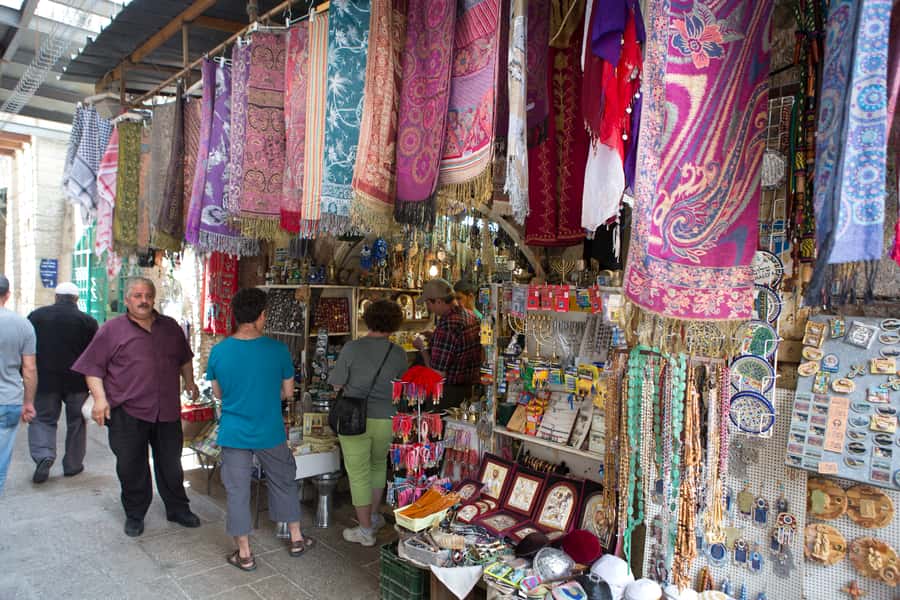
You might find shopkeepers, religious goods, food stalls, and everyday traffic sharing the same narrow lanes. The exact feel depends on the day and crowd levels, but the bazaar provides a useful contrast with the formal squares and churches.
There is one practical warning. Past bookings have included a stop at a guide’s friend’s shop, and one person felt the sale prices were based on inflated prices. Another said too much time was lost in the shop. A short shopping stop can be harmless, but you should not treat it as a core part of the Jerusalem experience.
Walking the Via Dolorosa
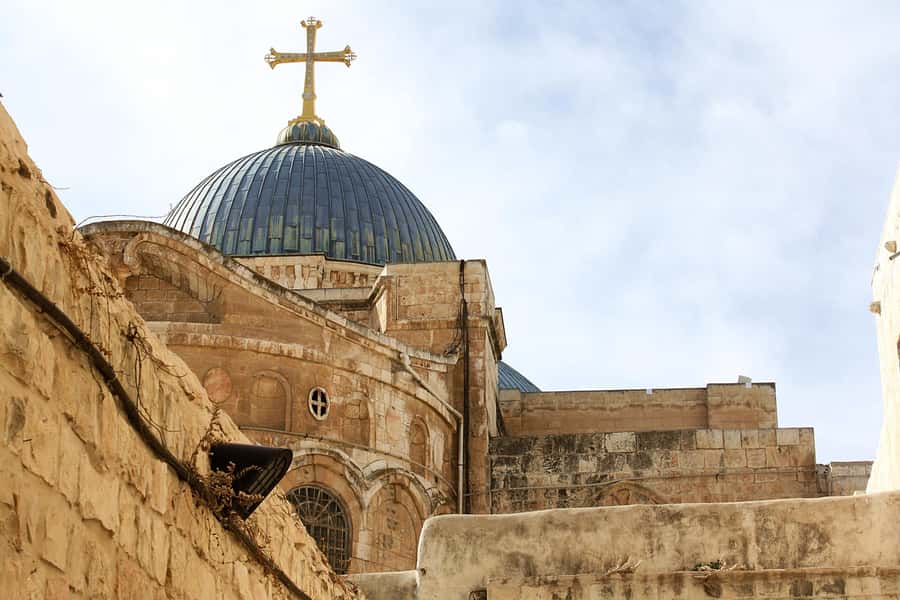
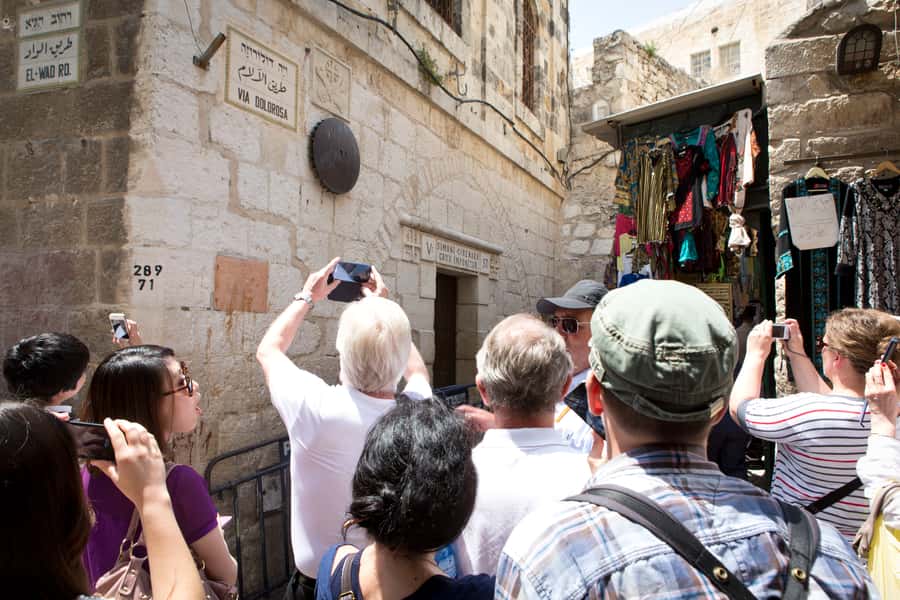
The Via Dolorosa is the central walking section for many Christian visitors. The route follows the Stations of the Cross through the Old City toward the Church of the Holy Sepulcher.
You will be walking on uneven, crowded streets, not along a quiet ceremonial path. The value of a guide is clear here: the route can be difficult to follow, and the meaning of each station is tied to the surrounding buildings and traditions.
The walk is also important for visitors who are not religious. Jerusalem’s sacred places have shaped art, politics, pilgrimage, and city life for centuries. A guide who explains the different traditions can help you see the Via Dolorosa as more than a single religious narrative.
Past guides such as Roy, Dorit, and Alona received strong praise for clear explanations, warmth, and attention to the group. Those names come from earlier departures, so they do not guarantee who will lead your tour. Still, they show the kind of guiding that makes this route work: historical facts, religious context, and practical help with the crowded streets.
The Church of the Holy Sepulcher needs context
The Church of the Holy Sepulcher is identified with the crucifixion and burial of Jesus. It is one of Christianity’s most important sites, and its interior can feel complex, crowded, and visually overwhelming.
That complexity is part of the point. Several Christian communities share responsibility for the church, and the building contains multiple chapels and sacred locations. A guide can explain what you are seeing far more efficiently than a quick solo walk with no background.
The tour promises a visit to the church, but it does not guarantee a long private viewing or time for every chapel. Crowds and religious services can affect how much you see. If you want extended prayer or detailed photography, plan to return independently after the tour.
The Cardo shows a different Jerusalem
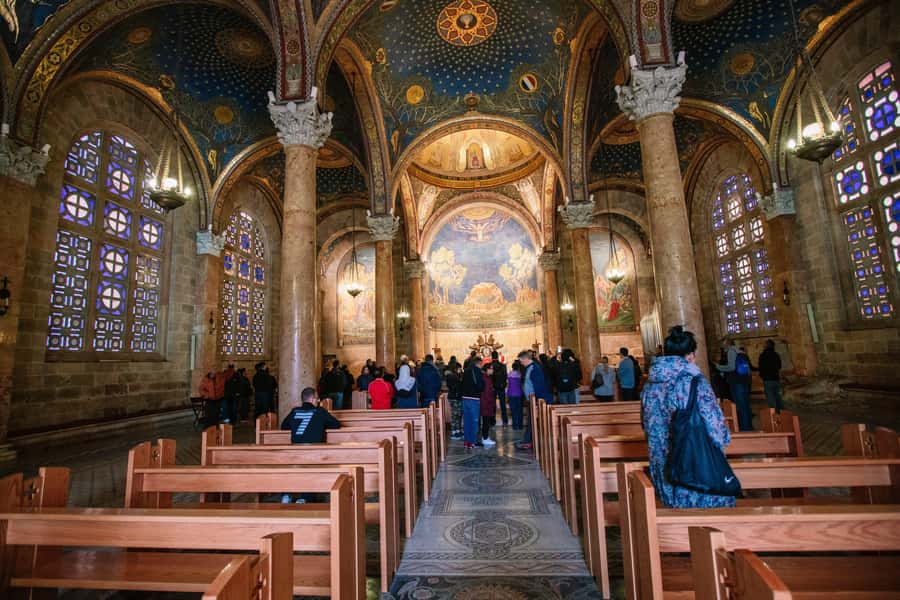
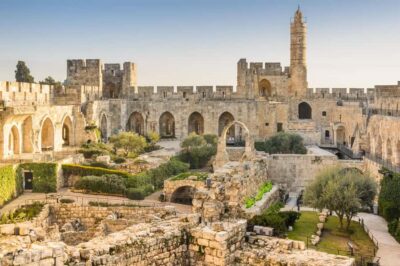
After the Christian Quarter, the group walks along the Cardo, the 1,700-year-old Byzantine main street. The recently restored Roman road helps you picture Jerusalem as an urban center of shops, movement, and public life, not only as a collection of holy places.
The Cardo is particularly useful for visitors who want more than biblical associations. Its remains connect the modern lanes with the Roman and Byzantine city beneath them. The restored section is easier to read than many archaeological sites, especially when a guide explains how the street once functioned.
The route also passes through the renovated Jewish Quarter. This gives the final part of the walk a different character from the bazaar and Christian Quarter. By this point, you have crossed several communities within a very small area, which is one of the defining features of Jerusalem.
What the $50 price really includes
At $50 per person, the strongest value comes from combining transport, orientation, a guide, and entrance fees. Hiring transport for a half-day and arranging visits to these sites independently can take time, especially if Jerusalem is unfamiliar to you.
The air-conditioned coach is useful in hot weather and removes the need to work out the morning route from your hotel. Hotel pickup from main Jerusalem hotels is included, though pickup from an Airbnb or another location may mean meeting at the closest designated point.
The price does not include food or drinks. Since the tour ends in the Old City around 1:00 to 1:30 p.m., you should budget for lunch there. The end point is also part of the value: you can choose your own restaurant or continue sightseeing instead of being taken back to your hotel.
The missing hotel drop-off is the main logistics issue. If you have an afternoon reservation far from the Old City, allow time to arrange your own return. One past booking specifically disliked not being brought back to the original pickup location.
Pace, group size, and the guide factor
Five hours sounds generous until you count coach transfers, a viewpoint, several sacred sites, and a long Old City walk. You will get a useful outline of Jerusalem, but you will not get unlimited time at each stop.
The best experience depends heavily on the guide. Strong guides have been described as friendly, clear, caring, and good at explaining historical and religious context. One person noted that the tour became much more than a basic history walk because of the guide’s background and insights.
Organization has not always been perfect. A past booking found the guide disorganized, with too many people for one guide. Another recorded a pickup running 30 minutes late, although the rest of the day went well.
I would book this for a first visit, especially if you prefer having someone handle the route. I would hesitate if you dislike group touring, need a quiet pace, or want to spend half an hour at every sacred site. Crowded lanes make group control a real issue, not a minor detail.
Who should book this half-day tour
This tour suits you best if you want to see Jerusalem’s main landmarks in one morning and still have the afternoon available. It is also a good fit if you want historical and religious explanations instead of simply taking photos at famous sites.
It works well for first-time visitors, people staying at main Jerusalem hotels, and anyone who wants a clear introduction before returning to favorite places alone. The four language options, English, French, German, and Spanish, make it easier to choose a guide you can follow comfortably.
It is less suited to children under four, who are not permitted on the tour. It may also challenge anyone who struggles with extended walking, uneven streets, or crowded spaces, although the supplied information does not specify accessibility arrangements.
Cancellation is flexible up to 24 hours before departure for a full refund, and you can reserve now and pay later. Those terms reduce the risk of booking while your schedule is still changing.
Should you book it?
Book this tour if you want maximum coverage in five hours and value a guide who can connect the Western Wall, Via Dolorosa, Church of the Holy Sepulcher, Cardo, and Old City quarters into one story.
Skip it if your main goal is slow personal time at one religious site, shopping, or an independent day with no fixed pace. The $50 price is fair for transport, guiding, and entrance fees, but remember the key compromise: you finish in the Old City, not back at your hotel.
For a first morning in Jerusalem, I think the route is a sensible choice. Use it to get your bearings, listen carefully at Mount Scopus, stay close in the Old City, and keep the afternoon free for the places you want to see again.
FAQ
How long is the Jerusalem sightseeing tour?
The tour lasts five hours.
What time does the tour end?
It ends in the Old City at approximately 1:00 to 1:30 p.m.
Does the tour include hotel pickup?
Yes. Pickup is available from main hotels in Jerusalem. If you are staying elsewhere, such as an Airbnb, the local operator will provide details for the closest pickup point.
Does the tour include hotel drop-off?
No. The tour ends in the Old City, and hotel drop-off is not included.
Which places are included in the itinerary?
The route includes Mount Scopus, the Garden of Gethsemane, the Western Wall, the Via Dolorosa, the Church of the Holy Sepulcher, the Cardo, and the renovated Jewish Quarter. It also passes through the Armenian and Christian quarters and the bazaar.
Are entrance fees included?
Yes. Entrance fees are included in the tour price.
Are food and drinks included?
No. Food and drinks are not included. You can arrange your own lunch after the tour ends in the Old City.
Which languages are available?
Live guides are available in English, French, German, and Spanish.
Can children under four join the tour?
No. The tour is not suitable for children under four. Modest dress is required.
Just added around Jerusalem
- Tour of Jerusalem & Dead sea private tour★ 5.0 · 4 reviews
- full day tour Jerusalem price per van up to 6 people★ 5.0 · 8 reviews
- jerusalem classic tour★ 5.0 · 3 reviews
- West Bank Tour from Jerusalem and Tel-Aviv – Bethlehem & Jericho★ 5.0 · 6 reviews
- Privet Tour – FROM JERUSALEM TO JERICHO & THE DEAD SEA★ 5.0 · 8 reviews
- Experience Shabbat With Dinner In Jerusalem★ 5.0 · 5 reviews
- Private Tour: Old City of Jerusalem Christianity Tour★ 5.0 · 5 reviews
- Private Silk Painting Workshop in Jerusalem – Create a scarf –★ 5.0 · 4 reviews
Half-Day, compared.
From Jerusalem: Dead Sea Chill Out Half-Day Trip
Read our review →
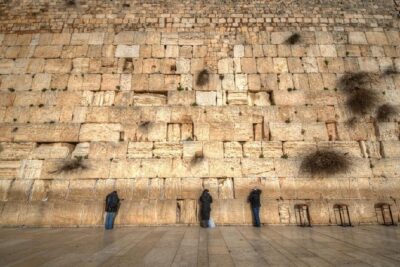
Jerusalem Half-Day Tour from Tel Aviv: Holy Sepulchre and Western Wall
Read our review →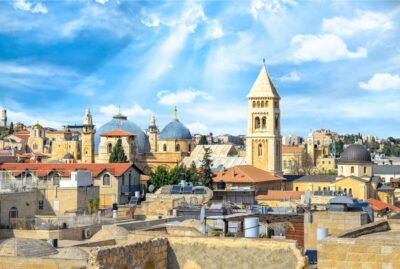

Browse the lists this tour appears in