
Reviewed · JERUSALEM TOURS
Jerusalem: Dual Narrative Tour
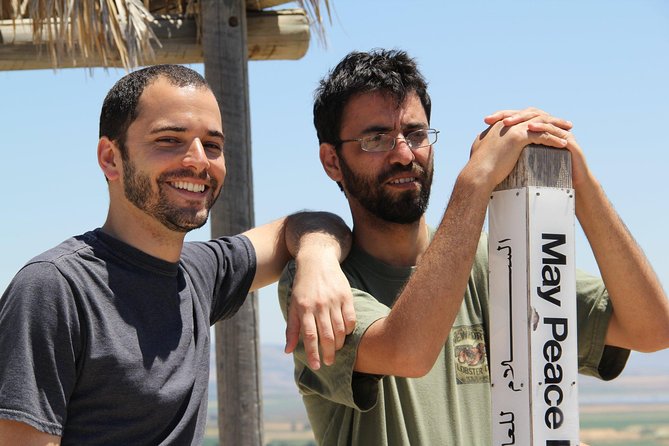
Jerusalem’s Old City can feel like several cities packed into one. This dual narrative tour makes that tension the main subject, pairing a Jewish guide with a Palestinian guide as you walk from Jaffa Gate through the Armenian, Jewish, Christian, and Muslim quarters. You hear how the same stones can carry different memories, claims, and hopes.
I especially like two things here. First, the guides do not treat the city as a simple sightseeing checklist. They explain how power, religion, archaeology, and modern borders overlap. Second, the route includes the Church of the Holy Sepulchre, Western Wall, and Al Aqsa Mosque, giving you a useful framework for the city’s three major religious traditions.
The tradeoff is pace. Four and a half hours is a long, hot walk with no food or drinks included, and the route can move quickly. If you want quiet time inside each shrine, plan to return on your own.
In This Review
- Key points to know before you book
- Why two guides change the Old City walk
- Jaffa Gate sets the terms
- Armenian Quarter and the meaning of identity
- The Roman Cardo and the Jewish Quarter
- A rooftop view toward East Jerusalem
- The Church of the Holy Sepulchre
- Through the Muslim Quarter and along the Via Dolorosa
- The Western Wall and Al Buraq Square
- Al Aqsa and the Temple Mount or Noble Sanctuary
- What the $65 price delivers
- How to prepare for four and a half hours on foot
- Who will get the most from this tour
- Should you book the Jerusalem Dual Narrative Tour?
- FAQ
- How long does the Jerusalem Dual Narrative Tour last?
- Where does the tour start?
- Where does the tour end?
- What does the $65 price include?
- Which major sites are included?
- What should I wear?
- How large is the group?
- Can I cancel for a refund?
Key points to know before you book
- Two guides, two lived perspectives: A Jewish Israeli guide and a Palestinian guide discuss the Old City side by side.
- Major sacred sites included: The route reaches the Holy Sepulchre, Western Wall, and Temple Mount or Noble Sanctuary complex.
- A walking tour with political context: You will discuss present-day tensions, borders, control of space, and competing national stories.
- Small maximum group: The tour is limited to 20 people, though crowds can still make listening difficult.
- Plan for heat and modest clothing: Bring water and a hat, and cover your shoulders and knees.
- Best for curious first-time visitors: You get a broad orientation to Jerusalem rather than a leisurely, detailed visit to every interior.
Why two guides change the Old City walk
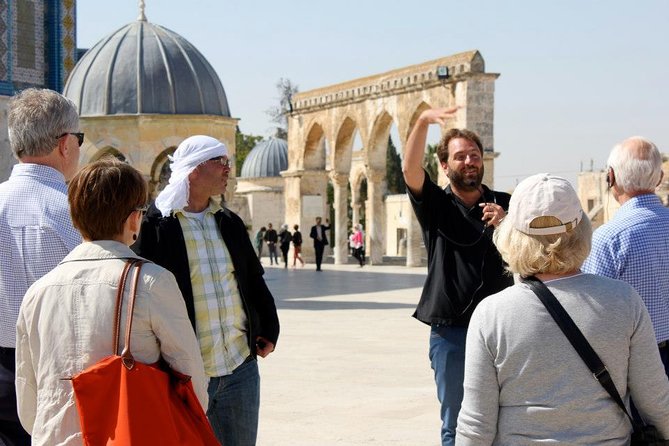
Many Jerusalem tours explain what a place means to one tradition, then move on. This experience takes a different route. The Jewish guide and Palestinian guide share the same walk, but they are not expected to flatten their views into one official story.
That matters most at places where language itself carries political weight. The Old City is not only a collection of religious buildings. It is also a place where governments, communities, archaeologists, and pilgrims have asserted belonging for centuries. The guides help you notice how signs, excavations, entrances, maps, and public squares communicate those claims.
The tone is intended to be direct but respectful. Guide teams have included people such as Betty and Ameer, Morgi and Amir, Beni and Yousef, and Nour and Alex, though your guides may be different. The important feature is the pairing, not any one named guide.
You should come ready to listen and ask questions. This is not a tour that promises a tidy answer to the Israeli-Palestinian conflict. It gives you competing explanations and the background needed to understand why Jerusalem remains so difficult to describe in a single voice.
Other Jerusalem days worth putting on the list:
- From Jerusalem: Masada & Dead Sea Full Day Tour with Pick Up
★ 4.5 · 815 reviews - Masada and the Dead Sea Day Trip from Jerusalem
★ 4.5 · 757 reviews - From Jerusalem: Nazareth and Sea of Galilee Tour
★ 4.5 · 588 reviews
Jaffa Gate sets the terms
The tour begins at 9:30 a.m. in the plaza just outside Jaffa Gate. Look for the representative holding a Jerusalem: Dual Narrative Tour sign. Jaffa Gate is a practical starting point because it is one of the Old City’s main entrances, but the first discussion quickly moves beyond orientation.
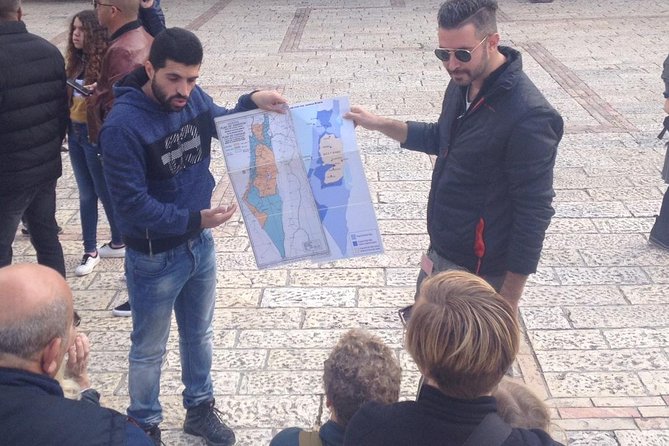
You begin with the geography of Jerusalem, Israel, and Palestine. From there, the guides ask what an entrance sign can reveal about the people who control a place. That is a sharp opening question. It prepares you to notice that names and official displays are not neutral decoration in a city with overlapping claims.
The opening lasts about 20 minutes. Use it to get comfortable with the format, since two guides may offer a steady exchange rather than one person delivering a long speech. Stay close enough to hear both voices.
Armenian Quarter and the meaning of identity
The short stop in the Armenian Quarter introduces a community that can be easy to miss if you focus only on the best-known shrines. You will see signage commemorating the Armenian genocide and discuss Armenian identity in Jerusalem.
This stop adds another layer to the usual Jewish-Christian-Muslim framework. The Armenian community has its own history, institutions, and sense of place inside the Old City. The guides connect that story to the broader question of how a small community preserves its identity amid larger religious and political forces.
The visit is only about 10 minutes, so do not expect a full account of Armenian history. Its value is as a reminder that Jerusalem’s story contains more communities than the headline landmarks suggest.
The Roman Cardo and the Jewish Quarter
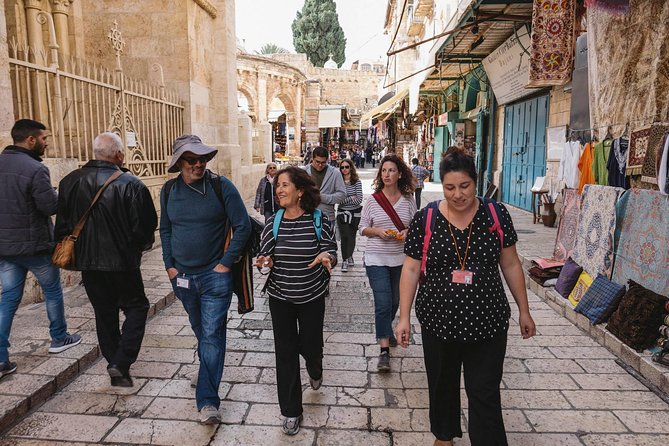
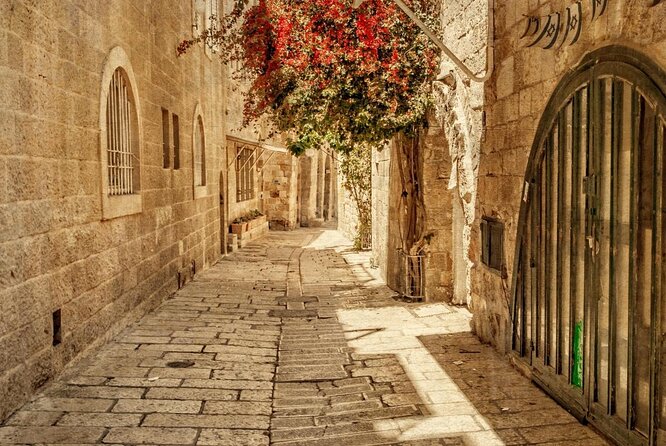
In the Jewish Quarter, the walk reaches the Roman Cardo, an excavated street that helps connect present-day Jewish life with earlier periods of Jerusalem’s past. You will discuss the Israeli narrative that links modern Jewish life to previous Jewish eras in the city.
The interesting part is not just the visible columns or paving. The guides also ask what lies below the current excavation and which layers were removed to create what you see today. Archaeology here is not simply about uncovering the past. Choosing which period to expose can shape the story a city tells about itself.
Allow about 20 minutes at this stop. The explanation is likely to be more useful than a quick photograph, especially if this is your first introduction to Jerusalem’s archaeological politics. If you want to examine the Cardo closely, you may need to return later.
Same coast, a completely different kind of day:
- Nazareth and the Sea of Galilee Day Trip from Jerusalem
★ 4.5 · 446 reviews - From Jerusalem: Masada&Dead Sea Tour INCLUDING ENTRANCE FEES
★ 4.3 · 392 reviews - Jerusalem: Guided Walking Tour of the Old City
★ 4.7 · 386 reviews - Full Day City Tour of Jerusalem
★ 4.1 · 367 reviews
A rooftop view toward East Jerusalem
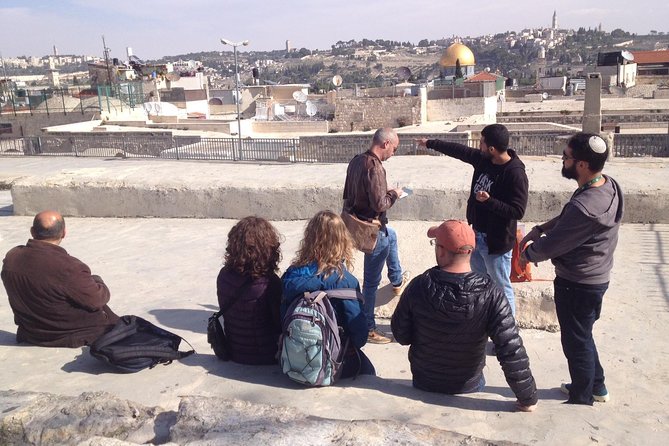
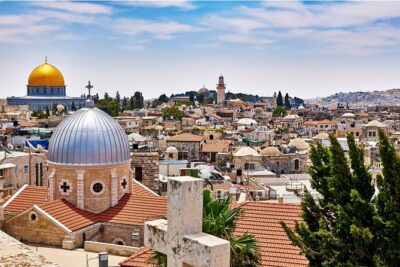
A stop near St. Mark’s Syriac Church takes you to a rooftop looking toward East Jerusalem. From above, the guides review borders and major landmarks.
This is one of the places where a map becomes easier to understand. Jerusalem’s divisions are often discussed in abstract terms, but a raised viewpoint helps connect political boundaries with the city spread below. You will also begin to see how religious quarters and modern political divisions overlap without perfectly matching.
The stop is brief, around 10 minutes. Treat it as a visual pause and orientation point, not a long rooftop visit. Keep your hat and water handy, since shade may be limited during a morning walk.
The Church of the Holy Sepulchre
The Church of the Holy Sepulchre is one of the tour’s central stops. For Christians, it is tied to the crucifixion and burial of Jesus. For the Jewish and Palestinian narratives presented on this walk, it also raises questions about Jerusalem’s control, identity, and the way sacred places function within the modern city.
You will visit major parts of the church itself and hear why the site matters in Christian tradition. The guides also place it within Israeli and Palestinian accounts of Jerusalem. That wider framing is useful because the church can otherwise seem like an isolated religious destination rather than part of a contested urban center.
The planned time is about 30 minutes. That gives you an introduction, but it may not allow a slow visit to every chapel or a long wait for specific devotional sites. If you want to stand in line for the tomb of Jesus or study the church in detail, make a separate visit.
The interior can also be crowded and hard to hear in. Stay attentive to where the guides gather the group, and do not expect the calm of a private church visit.
Through the Muslim Quarter and along the Via Dolorosa
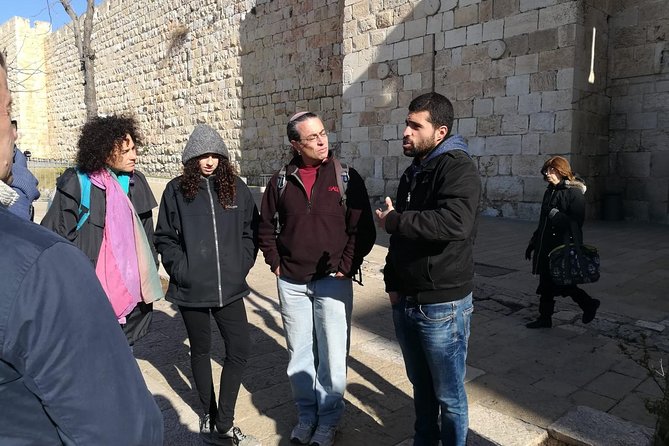
The route then enters the Muslim Quarter. You will hear about the Old City’s different communities, the Muslim world’s links to Jerusalem, and current tensions in the area.
This section is valuable because it keeps the Muslim Quarter from becoming a corridor between better-known monuments. The streets connect local life, religious tradition, and political pressure. The guides explain how the quarter fits into the city’s wider story rather than presenting it only as a route to another shrine.
The itinerary includes the Via Dolorosa and concludes near the Fifth Station of the Cross and the Austrian Hospice. At the end, the guides offer reflections and time for questions. The schedule allows about 20 minutes for this closing portion.
One caution is worth taking seriously: the route can move fast. A published stop on the Via Dolorosa does not necessarily mean you will walk every station at length. If tracing the full Way of the Cross is important to you, set aside another visit.
The Western Wall and Al Buraq Square
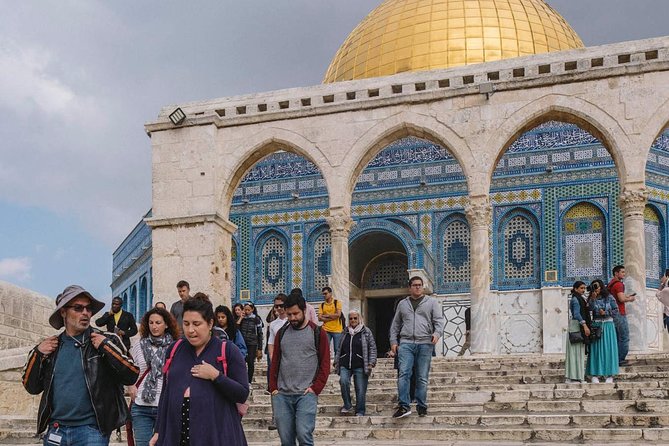
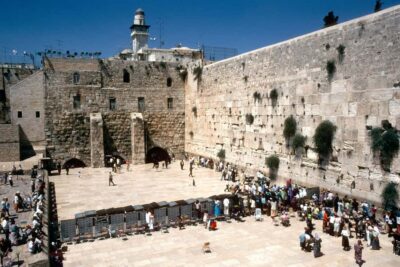
After passing through Wadi Road, the group enters the Western Wall and Al Buraq square. Here, the discussion turns to the Second Temple and the long Jewish tradition of pilgrimage and prayer beside its remaining wall.
The guides also explain the Islamic story of Al Buraq, connected with Muhammad’s night journey to Jerusalem. Hearing both names for the space is not a minor detail. It shows how a shared site can carry distinct religious memories and why terminology matters.
The tour asks what the open complex looked like before and after Israel captured the area more than 50 years ago. That historical comparison helps connect the physical plaza to the modern political story. You are not simply looking at a wall. You are examining how access, demolition, rebuilding, and public space changed the meaning of the site.
Plan on about 25 minutes here. Dress modestly, follow instructions at the prayer area, and remember that this is an active religious site rather than a museum display.
Al Aqsa and the Temple Mount or Noble Sanctuary
The final major stop is the Temple Mount or Noble Sanctuary complex, reached by ascending to the platform. The planned visit lasts about an hour, making it the longest stop of the day.
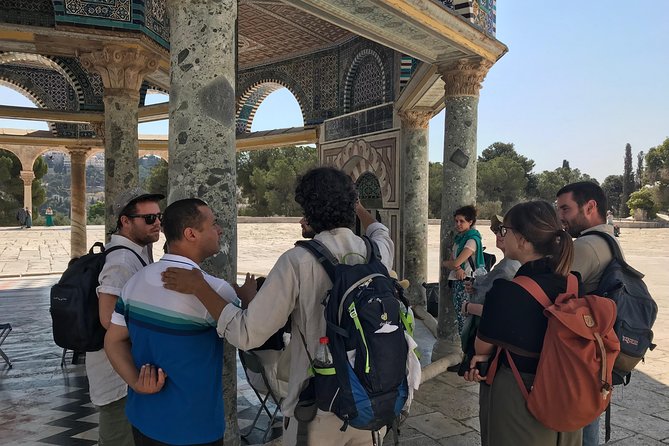
You will view the tiled Dome of the Rock and Al Aqsa Mosque and learn why the platform matters to Judaism, Christianity, and Islam. The guides explain its religious importance and why it is such a flash point in the conflict between Israelis and Palestinians.
This is where the dual format earns its price. The site’s meaning cannot be separated from questions of sovereignty, access, security, worship, and historical claim. A single guide may explain one tradition clearly, but two guides can show you why the same place is described in different ways by different communities.
Keep your expectations realistic. The itinerary says you will ascend to the complex and view the major buildings, but it does not promise entry into every interior. Access arrangements at sacred compounds can change, and an hour can pass quickly when the group is listening, moving, and managing crowds.
What the $65 price delivers
At $65 per person, this is priced as a focused half-day walking experience rather than a simple Old City orientation. The fee includes two professional guides and a tour host. There is no separate admission charge listed for the stops, but food, drinks, and transportation to or from the meeting point are not included.
I consider the value strongest if you want context about the conflict as well as the monuments. The two-guide structure gives you something a standard historical walk may not: a planned exchange between Jewish and Palestinian perspectives. That is especially useful early in a Jerusalem visit, when you are still trying to understand how the city’s quarters and sacred sites fit together.
The value is weaker if your priority is unhurried sightseeing. You may have to choose between listening to a careful explanation and spending extra time inside the Holy Sepulchre, Cardo, Via Dolorosa, or Al Aqsa complex. In that case, use this tour for orientation, then revisit your highest-priority sites independently.
The maximum group size is 20. That is manageable on paper, but the narrow streets and crowds can still make hearing difficult. A compact group does not guarantee a quiet experience.
How to prepare for four and a half hours on foot
Wear comfortable shoes and expect a moderate physical workout. The route includes walking through several quarters, changes in elevation, and an ascent to the Temple Mount or Noble Sanctuary.
Bring a hat and plenty of water. One person specifically found the experience hot, tiring, and too fast, with no food break. That is a fair warning, not a reason to dismiss the tour. Eat before the 9:30 a.m. start, and do not count on a meal being built into the schedule.
Modest clothing is required for places of worship and selected museums. Men and women must cover shoulders and knees, so shorts and sleeveless tops are not suitable. A light layer or long trousers can help you meet the rule without making the walk unbearable.
Large electronics should not be brought. Service animals are allowed, and the meeting point is near public transportation. The tour ends at the Austrian Hospice on Via Dolorosa Street, not back at Jaffa Gate, so plan your onward route from there.
Free cancellation is available if you cancel at least 24 hours before the local start time. Changes or cancellations inside that window are not accepted for a refund, and the experience requires a minimum number of participants.
Who will get the most from this tour
I would choose this for a first or early visit to Jerusalem if you want the city explained through history, religion, and present-day politics at the same time. It suits adults and older teenagers who can handle a serious discussion and a brisk walk.
It is also a strong choice for anyone who wants to ask questions. The guide teams are described as candid, polite, and willing to discuss difficult subjects without turning the tour into a shouting match. That makes the experience more useful than a polished speech that avoids disagreement.
I would be cautious about booking it for young children, anyone who needs frequent rest stops, or anyone hoping for a quiet devotional visit. The subject matter is weighty, the route is long, and the schedule leaves little room for lingering.
The tour has a 4.9 rating from 100 reviews, with 99 percent recommending it. Those numbers fit the experience’s strongest feature: the guides and the two-sided format. They do not erase the practical drawbacks of heat, crowds, limited breaks, or a fast pace.
Should you book the Jerusalem Dual Narrative Tour?
Book it if you want to understand why Jerusalem cannot be explained by monuments alone. The pairing of a Jewish guide and a Palestinian guide, along with stops at the Holy Sepulchre, Western Wall, and Al Aqsa, gives you a serious introduction in one morning.
Skip it if you want a slow, deeply detailed visit to each shrine or if a four-and-a-half-hour walk without a meal break sounds miserable. For most curious first-time visitors, I would book this early in the trip, bring water, dress properly, and save extra time on another day for the sites that speak to you most.
FAQ
How long does the Jerusalem Dual Narrative Tour last?
The tour lasts approximately 4 hours and 30 minutes. It begins at 9:30 a.m.
Where does the tour start?
It starts at Jaffa Gate in Jerusalem’s Old City. Look for a representative holding a Jerusalem: Dual Narrative Tour sign in the plaza just outside the gate.
Where does the tour end?
The tour ends at the Austrian Hospice, Via Dolorosa Street 37, Jerusalem.
What does the $65 price include?
The price includes two professional guides and a tour escort or host. Food, drinks, and transportation to or from the attractions are not included.
Which major sites are included?
The route includes the Church of the Holy Sepulchre, Western Wall, Al Buraq square, and the Temple Mount or Noble Sanctuary complex, where you view the Dome of the Rock and Al Aqsa Mosque.
What should I wear?
You must cover your shoulders and knees. Shorts and sleeveless tops are not allowed at places of worship and selected museums, for both men and women.
How large is the group?
The activity has a maximum of 20 participants.
Can I cancel for a refund?
Yes. You can cancel at least 24 hours before the local start time for a full refund. Cancellations or changes made less than 24 hours before the start are not accepted for a refund.
Just added around Jerusalem
- Tour of Jerusalem & Dead sea private tour★ 5.0 · 4 reviews
- full day tour Jerusalem price per van up to 6 people★ 5.0 · 8 reviews
- West Bank Tour from Jerusalem and Tel-Aviv – Bethlehem & Jericho★ 5.0 · 6 reviews
- jerusalem classic tour★ 5.0 · 3 reviews
- Privet Tour – FROM JERUSALEM TO JERICHO & THE DEAD SEA★ 5.0 · 8 reviews
- Experience Shabbat With Dinner In Jerusalem★ 5.0 · 5 reviews
- Private Tour: Old City of Jerusalem Christianity Tour★ 5.0 · 5 reviews
- Private Silk Painting Workshop in Jerusalem – Create a scarf –★ 5.0 · 4 reviews
Jerusalem Tours, compared.
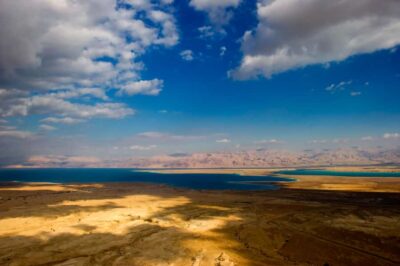
From Jerusalem: Masada & Dead Sea Full Day Tour with Pick Up
Read our review →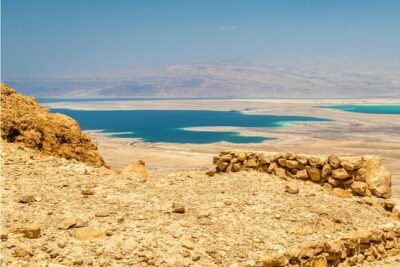
Masada and the Dead Sea Day Trip from Jerusalem
Read our review →
From Jerusalem: Nazareth and Sea of Galilee Tour
Read our review →
Nazareth and the Sea of Galilee Day Trip from Jerusalem
Read our review →
From Jerusalem: Masada&Dead Sea Tour INCLUDING ENTRANCE FEES
Read our review →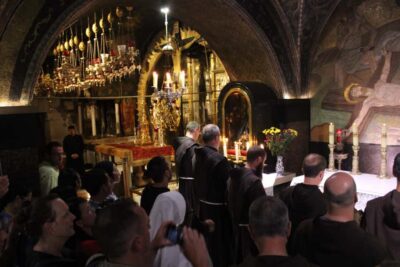
Browse the lists this tour appears in