
Reviewed · FULL-DAY
Hebron & Ramallah Full-Day Guided Tour from Jerusalem
The most important part of this tour is not simply seeing two Palestinian cities. It is watching the geography change as you pass checkpoints, the Separation Barrier, settlements, Palestinian villages, and roads with different travel rules. Ramallah and Hebron offer a direct look at daily life in the West Bank, far beyond Jerusalem’s familiar sights.
I like the small maximum group of 15, which should make questions and conversation easier. I also like the range of stops: Arafat’s Tomb gives Ramallah a political focus, while the Cave of the Patriarchs and Hebron market bring religion, local life, and conflict into the same day.
The main drawback is the pace. Eight hours must cover long drives, border checks, two major cities, and several serious subjects. At $230 per person, this is not a cheap sightseeing day, and lunch plus the 10 NIS admission fee for Arafat’s Tomb are extra.
In This Review
- Key points to know before booking
- Why this day from Jerusalem matters
- Ramallah and Arafat’s Tomb
- Through Ma’ale Adumim and the Judean Desert
- Entering Hebron and the Cave of the Patriarchs
- Walking Hebron’s market
- How the $230 price measures up
- Timing, documents, and what to wear
- Who will get the most from this experience
- Should you book the Hebron and Ramallah tour?
- FAQ
- Where does the tour start and end?
- How long does the tour last?
- What places do I visit?
- Is lunch included?
- Is there an entrance fee for Arafat’s Tomb?
- Do I need a passport?
- What should I wear?
- How many people can join the tour?
- Can I cancel for a refund?
Key points to know before booking
- Arafat’s Tomb anchors the Ramallah visit: Allow 10 NIS for admission, then walk through the city with time to observe its streets.
- Hebron combines sacred history and present-day restrictions: The Cave of the Patriarchs, Palestinian market, settlements, and movement rules all form part of the visit.
- The route crosses several political boundaries: You pass through a checkpoint, see the Separation Barrier, and use roads with different access rules.
- The Judean Desert adds a striking change of scenery: The drive through Ma’ale Adumim, Bethany, and Wadi al-Na’ar connects the two city visits.
- Modest clothing is essential: Wear trousers and a shirt covering the shoulders and chest, with only the face, lower arms, and hands showing.
- This is an involved day, not a casual excursion: Bring your passport, expect about eight hours, and be prepared for walking and difficult subject matter.
Why this day from Jerusalem matters
Jerusalem can make the political divide feel abstract. This journey puts it beside you on the road. After pickup at the YMCA Three Arches Hotel on King David Street at 8:30 a.m., the vehicle heads through Pisgat Ze’ev toward Ramallah.
You pass the checkpoint into Kufr Akab, a neighborhood divided from Jerusalem by the Separation Wall. That first section sets the tone. The tour is not presenting the West Bank as a collection of isolated monuments. It is showing how barriers, checkpoints, settlement roads, and administrative borders affect movement between nearby places.
I value that framing because it gives the rest of the day a clear purpose. You are not only looking at buildings. You are learning why a trip that appears short on a map can involve a checkpoint, a changed route, or a road with restricted access.
The air-conditioned vehicle matters here. You will spend substantial time driving, and the day includes the Judean Desert as well as southern West Bank roads. A comfortable vehicle makes the long transfers easier, though it does not change the fact that this is a full day with a lot of road time.
A few more Jerusalem trips to weigh up
- From Jerusalem: Masada & Dead Sea Full Day Tour with Pick Up
★ 4.5 · 815 reviews - Full Day City Tour of Jerusalem
★ 4.1 · 367 reviews - Old and New Jerusalem Full-Day Tour
★ 4.0 · 273 reviews
Ramallah and Arafat’s Tomb
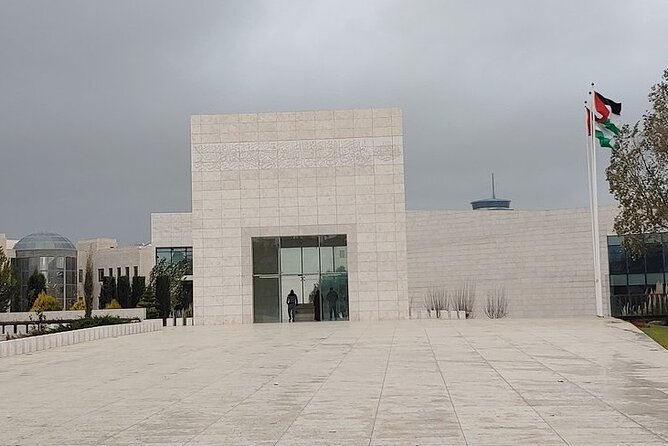
Ramallah is described as the de facto Palestinian capital in the West Bank, and it is the first major stop. The visit begins at Arafat’s Tomb, where the admission charge is 10 NIS and is not included in the tour price.
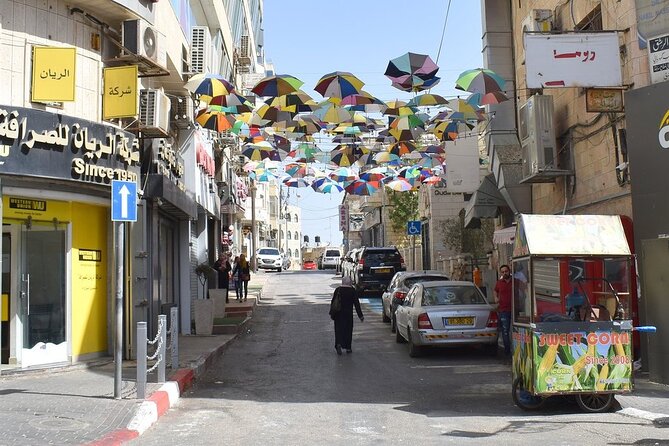
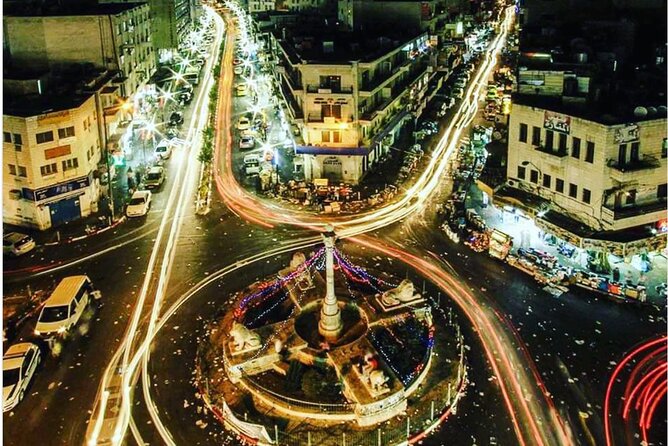
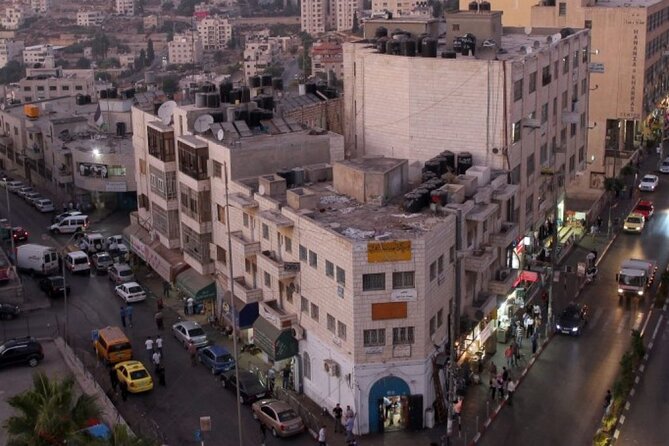
Plan on roughly two hours in Ramallah. The tomb provides a clear political entry point, but the better part of the visit may be the walk through the city itself. You will see ordinary streets and get a sense of Ramallah as a working urban center rather than only as a symbol.
A guide named Mohammed is associated with this experience. If he leads your group, the day may include direct conversation with local students in Ramallah, an especially useful addition because it brings Palestinian voices into a tour that could otherwise remain focused on monuments and political explanations.
Do not expect a relaxed café stop or an open-ended city exploration. Two hours has to cover the tomb, walking, and orientation. The city portion is intended to give you context, not let you wander every neighborhood.
The checkpoint and Kufr Akab approach also matter. You may notice how quickly the surroundings change, and the guide can explain the practical effect of the Separation Barrier. Keep your passport handy and follow instructions at crossing points. A current valid passport is required for the day.
Through Ma’ale Adumim and the Judean Desert
After Ramallah, the route turns toward the southern West Bank. The vehicle passes the settlement of Ma’ale Adumim and Bethany, associated with the Tomb of Lazarus, before continuing through the Judean Desert.
This is more than a transfer between stops. The road itself is part of the lesson. For part of the journey, Israelis and Palestinians share a highway. Later, the vehicle uses roads through Wadi al-Na’ar that are restricted to Palestinians and tourists.
Those changes help explain why movement in this area is complicated. The same region contains Israeli settlements, Palestinian towns, desert roads, and different access arrangements. From the vehicle, you can compare the open desert with the built-up areas and hear how road networks shape everyday travel.
The desert section also gives the day a needed change of rhythm. Ramallah is urban and crowded with political meaning. The Judean Desert is open and spare. You will not stop for a separate admission attraction here, so the value comes from the views and the guide’s explanation during the drive.
This is a good point to have questions ready. Ask about the roads, settlements, and how the different routes connect. With no admission fee for this part, the quality of the experience depends heavily on the guide’s ability to connect what you see outside the window with the political geography of the West Bank.
Entering Hebron and the Cave of the Patriarchs
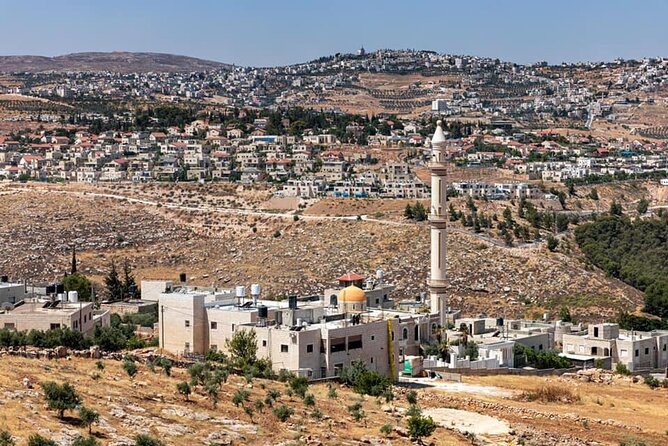
The final major stop is Hebron, one of the most sensitive places on the route. The approach passes Palestinian farms and villages, Israeli settlements, and areas affected by home demolitions and restrictions on movement.
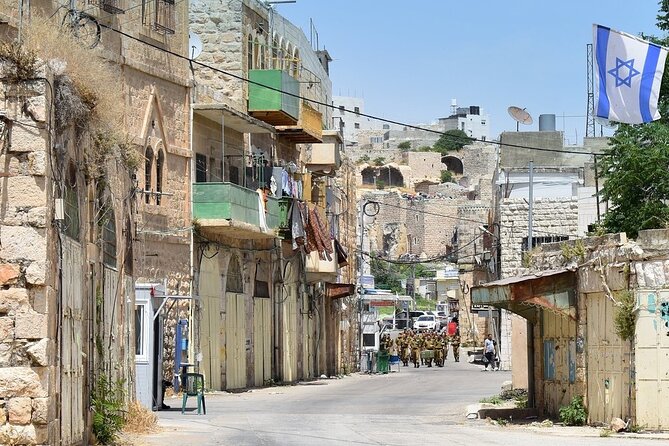
This is not a light sightseeing visit. You will hear about the conditions faced by Palestinians living in the area, and the city itself carries layers of religious importance and political tension. Go in ready to listen, ask fair questions, and accept that the tour may challenge simple explanations.
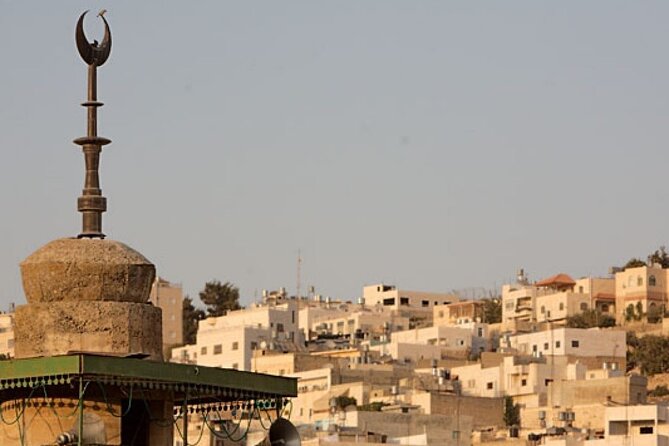
The Cave of the Patriarchs, also called the Ibrahimi Mosque, is the main religious site. It is important to understand that this is not just another old building to check off. It is a sacred place connected with major religious traditions, and its use and access are tied to the wider division of Hebron.
The visit lasts about two hours, including time in the city and the market. Dress carefully. Hebron is religious and socially conservative, and the requested standard is strict: trousers for men and women, a shirt closed to the neck and covering the shoulders, and no shorts. In hot weather, choose loose, light clothing rather than short clothing.
You should also expect security procedures and walking. The tour requires a moderate level of physical fitness, so comfortable shoes are sensible. The data does not specify how much time you will spend standing or the exact route inside the site, so anyone with mobility concerns should ask the provider before booking.
Same coast, a completely different kind of day:
- Masada and the Dead Sea Day Trip from Jerusalem
★ 4.5 · 757 reviews - From Jerusalem: Nazareth and Sea of Galilee Tour
★ 4.5 · 588 reviews - Nazareth and the Sea of Galilee Day Trip from Jerusalem
★ 4.5 · 446 reviews - From Jerusalem: Masada&Dead Sea Tour INCLUDING ENTRANCE FEES
★ 4.3 · 392 reviews
Walking Hebron’s market
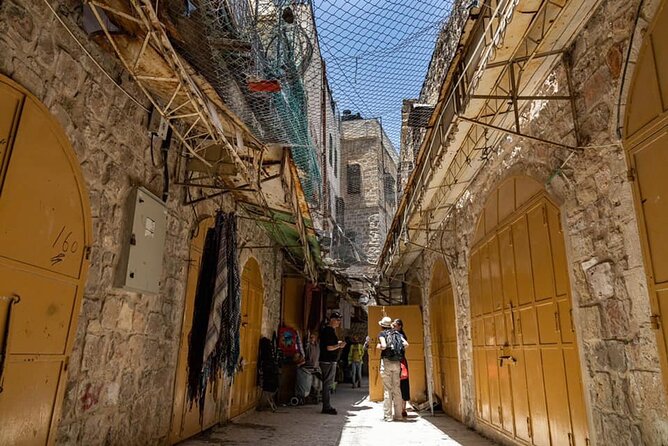
The market gives the Hebron visit a more personal scale. After the serious political and religious material, you will walk through a commercial part of the city and have time for shopping.
That market time is valuable because it lets you see the city as a place where people work, sell, buy, and carry on with daily routines. It also offers a chance to support local businesses if you choose to purchase something.
Still, keep your expectations realistic. This is not a long shopping tour, and the two-hour Hebron block must also include the Cave of the Patriarchs and the surrounding city. You may have enough time for a few purchases, but not for a slow, unplanned market wander.
The market is also where respectful behavior matters most. Follow the guide’s lead, ask before photographing people or shops, and remember that this is a living neighborhood, not a staged attraction. A little courtesy goes a long way.
How the $230 price measures up
At $230 per person, this tour sits firmly in the premium day-trip range. The price includes an air-conditioned vehicle and guided transportation for about eight hours, but it does not include lunch or the 10 NIS entrance fee for Arafat’s Tomb.
The value depends on what you want from the day. If your goal is simply to reach Ramallah or Hebron as cheaply as possible, the price may feel high. If you want a structured route from Jerusalem, a guide to explain checkpoints and settlement geography, transport through several complicated areas, and visits to both cities in one day, the cost is easier to justify.
A group limit of 15 helps. You are not booking a private tour, but you are also not committing to a large coach group. A smaller party gives you a better chance to ask questions and hear the guide during walks and road explanations.
Lunch is not provided, so plan for that. The supplied details do not specify a meal stop or whether food can be purchased during the day. Bring money and ask the provider what is practical before departure, rather than assuming lunch is built into the schedule.
Timing, documents, and what to wear
The meeting point is the YMCA Three Arches Hotel, King David Street 26, Jerusalem. The activity starts at 8:30 a.m. and returns to the same meeting point.
This is an approximately eight-hour outing, so start with water, comfortable shoes, and a passport that is valid on the day. A mobile ticket is provided, and booking confirmation is issued at the time of booking.
Your clothing deserves special attention. For this tour, modest dress is not a vague suggestion. Wear long trousers and a shirt that covers your shoulders and closes near the neck. In hot weather, light, loose fabric will keep you more comfortable while meeting the local standard.
Service animals are allowed, and the meeting point is near public transportation. The experience requires moderate physical fitness, with walking in Ramallah and Hebron plus time getting in and out of the vehicle.
The cancellation terms are fairly practical: you can cancel for a full refund up to 24 hours before the start time. Changes or cancellations made inside that window are not accepted or refunded. The tour also needs a minimum number of participants. If that minimum is not reached, you are offered another date or experience, or a full refund.
Who will get the most from this experience
I would choose this tour if you want to understand how geography, religion, and political control meet on the ground. It suits you if you are willing to spend a full day listening, asking questions, and seeing places that may be uncomfortable as well as fascinating.
It is also a good match if you prefer an organized route. Crossing into the West Bank and reaching both Ramallah and Hebron independently can involve more planning than a standard Jerusalem day trip. Here, transport and a guide are arranged, and the route is built around the two cities.
I would hesitate if you want a carefree day of monuments, scenic viewpoints, and free time. The itinerary is serious, the road sections are long, and the subject matter includes barriers, home demolitions, settlements, and restrictions on movement.
Families should also consider the tone and walking demands. Nothing in the supplied information sets a minimum age, so you would need to judge your group yourself. The tour may work for older children who can engage with difficult history and politics, but it is not presented as a children’s activity.
Should you book the Hebron and Ramallah tour?
Book it if you want a guided, ground-level look at Palestinian life and the political divisions around Jerusalem. The combination of Arafat’s Tomb, Ramallah streets, the Judean Desert, the Cave of the Patriarchs, and Hebron’s market gives you a fuller day than a single-site excursion.
The strongest reasons to go are the small group size, the range of places covered, and the chance to ask a guide such as Mohammed direct questions. The main reasons to pause are the high price, extra lunch and entrance costs, long day, strict dress code, and serious subject matter.
Bring your passport, dress conservatively, and allow room in your expectations for delays or difficult conversations. If that sounds worthwhile, Green Olive Tours offers a focused way to see two important West Bank cities from Jerusalem.
FAQ
Where does the tour start and end?
The tour starts at the YMCA Three Arches Hotel, King David Street 26, Jerusalem, at 8:30 a.m. It ends back at the same meeting point.
How long does the tour last?
The experience lasts approximately eight hours.
What places do I visit?
You visit Ramallah, Arafat’s Tomb, the Judean Desert area near Ma’ale Adumim and Bethany, Hebron, the Cave of the Patriarchs or Ibrahimi Mosque, and Hebron’s market.
Is lunch included?
No. Lunch is not included in the tour price.
Is there an entrance fee for Arafat’s Tomb?
Yes. Admission costs 10 NIS, and that fee is not included.
Do I need a passport?
Yes. A current valid passport is required on the day of travel.
What should I wear?
Wear trousers and a shirt covering the shoulders and chest, preferably closed near the neck. Shorts are not appropriate for men or women. Light, loose clothing is recommended in hot weather.
How many people can join the tour?
The tour has a maximum of 15 participants.
Can I cancel for a refund?
You can cancel up to 24 hours before the experience starts for a full refund. Cancellations or changes made less than 24 hours before the start time are not accepted or refunded.
Just added around Jerusalem
- Tour of Jerusalem & Dead sea private tour★ 5.0 · 4 reviews
- full day tour Jerusalem price per van up to 6 people★ 5.0 · 8 reviews
- jerusalem classic tour★ 5.0 · 3 reviews
- West Bank Tour from Jerusalem and Tel-Aviv – Bethlehem & Jericho★ 5.0 · 6 reviews
- Privet Tour – FROM JERUSALEM TO JERICHO & THE DEAD SEA★ 5.0 · 8 reviews
- Experience Shabbat With Dinner In Jerusalem★ 5.0 · 5 reviews
- Private Tour: Old City of Jerusalem Christianity Tour★ 5.0 · 5 reviews
- Private Silk Painting Workshop in Jerusalem – Create a scarf –★ 5.0 · 4 reviews
Full-Day, compared.
From Tel Aviv: Masada & Dead Sea Full Day Tour with Pick Up
Read our review →
From Jerusalem: Masada & Dead Sea Full Day Tour with Pick Up
Read our review →
Jerusalem Full-Day Tour from Tel Aviv INCLUDING ENTRANCE FEES
Read our review →
Jerusalem and Bethlehem Full-Day Tour from Jerusalem
Read our review →Browse the lists this tour appears in