
Reviewed · TEL AVIV TOURS
From TLV- Jerusalem Old & New tour INCL. ENTRANCE FEES & P/U
Jerusalem gives you centuries of sacred places in a compact Old City, and this tour lets you see the major highlights in one demanding day. You begin with Ein Karem and the Mount of Olives, then move through Mount Zion and the Old City’s Armenian, Jewish, and Christian quarters.
I like the wide city view from the Mount of Olives and the chance to walk the Roman Cardo, the Kotel, Via Dolorosa, and the Church of the Holy Sepulchre with a guide. I also like that transport from Tel Aviv and entrance fees are included. The tradeoff is clear: ten hours is a lot of ground to cover, and the pace can feel rushed, especially inside the Old City.
In This Review
- Key points at a glance
- A full day from Tel Aviv to Jerusalem
- Ein Karem offers a calm opening
- The Mount of Olives puts Jerusalem in perspective
- Mount Zion brings three important sites together
- Walking through the Armenian and Jewish quarters
- The Roman Cardo shows Jerusalem below the modern streets
- The Kotel is a focused and powerful stop
- Via Dolorosa leads into the Christian quarter
- The Church of the Holy Sepulchre is the day’s major finish
- What the $93 price really covers
- Dress, pickup, and pace
- Who should book this Jerusalem day tour?
- Should you book it?
- FAQ
- How long does the tour last?
- Where does the tour start?
- Is transportation included?
- Are entrance fees included?
- Is food included?
- What language is the tour conducted in?
- What should I wear at the holy sites?
- Can I cancel the booking?
Key points at a glance
- Ein Karem starts the day quietly: Stone lanes, springs, and a hillside setting offer a gentle opening before the crowds and sacred sites.
- The Mount of Olives gives you Jerusalem’s essential view: This is the best orientation point on the route, with the Old City spread below.
- Mount Zion combines several important stops: You visit David’s Tomb, the Last Supper room, and Dormition Abbey.
- The Old City route covers three quarters: The Armenian and Jewish quarters lead to the Cardo, the Kotel, and the Christian quarter.
- The Church of the Holy Sepulchre is the emotional high point: It is one of Christianity’s most important places, but time inside may be limited.
- The $93 price includes the practical basics: Transport, a guide, and entrance fees are covered, while meals are extra.
A full day from Tel Aviv to Jerusalem
This is a sightseeing-heavy day, not a leisurely Jerusalem stroll. The tour lasts about ten hours, including transportation from Tel Aviv, so you get a useful first look at the city without arranging buses, parking, directions, and entry tickets yourself.
That convenience matters. Jerusalem can feel confusing on a first visit, especially when streets shift between modern roads, narrow lanes, religious sites, and archaeological remains. A guide gives you the basic setting as you move, which helps turn a string of old stones into places with meaning.
Still, you need to set the right expectation. This is an overview tour. You will see many major locations, but you will not have unlimited time at each one. If your main goal is a slow study of the Old City, several quiet hours in the Armenian quarter, or a long visit to one religious site, this route may feel too compressed.
The tour is conducted in English. Hotel pickup is offered only from centrally located hotels. If your hotel is outside the pickup area, you receive the address of the nearest meeting point instead, so check that detail before booking.
Other Tel Aviv days worth putting on the list:
- From Tel Aviv: Masada & Dead Sea Full Day Tour with Pick Up
★ 4.5 · 1,496 reviews - From Tel Aviv: Jerusalem and Bethlehem Guided Day Trip
★ 4.3 · 1,316 reviews - Masada and the Dead Sea Day Trip from Tel Aviv
★ 4.5 · 1,014 reviews
Ein Karem offers a calm opening
The first stop is Ein Karem, a picturesque neighborhood known for stone lanes, springs, and a serene hillside setting. Compared with the intense concentration of the Old City, this is a softer introduction to Jerusalem.
I like this stop because it gives the morning some breathing room. You are not pushed straight into a packed religious center. Instead, you get a short look at a quieter part of the city, where the setting matters as much as the individual sight.
The word short matters here. Ein Karem is an opening visit, not a long neighborhood walk. If you are especially interested in its religious or local history, you may wish you had more time. But as part of a one-day route, it adds variety and keeps the day from becoming one continuous march through stone alleys.
Comfortable shoes help from the start. The tour later includes uneven streets and walking through the Old City, so this is not a day for delicate footwear.
The Mount of Olives puts Jerusalem in perspective
From Ein Karem, the tour continues to the Mount of Olives for a panoramic view over Jerusalem. This is one of the most useful stops on the route because it helps you understand the city’s layout before you enter it.
From above, the Old City becomes easier to picture. You can see the dense cluster of historic buildings and begin to understand the relationship between Mount Zion, the Old City, and the surrounding hills. Even if you know little about Jerusalem before arriving, this viewpoint gives you a clear mental map.
The view is also one of the day’s strongest photographic moments. Bring your camera, but do not spend the whole stop looking through it. The value of this visit is not just the picture. It is the chance to pause and take in the city as a whole before spending the rest of the day at street level.
The stop is primarily about the view, so do not expect a long independent walk across the mountain. The schedule has several more locations ahead, and the guide will need to keep the group moving.
Mount Zion brings three important sites together
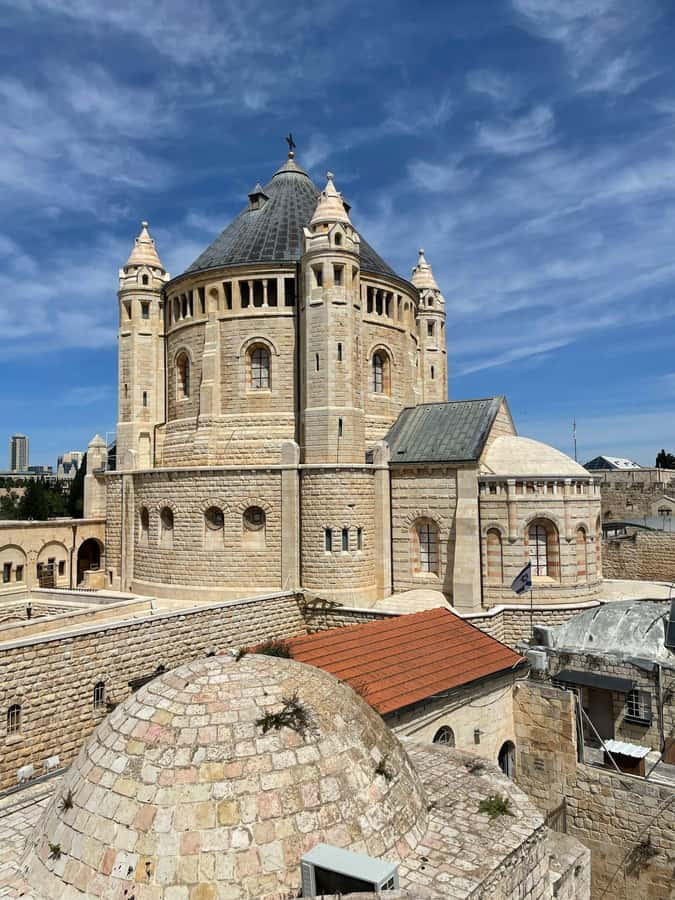
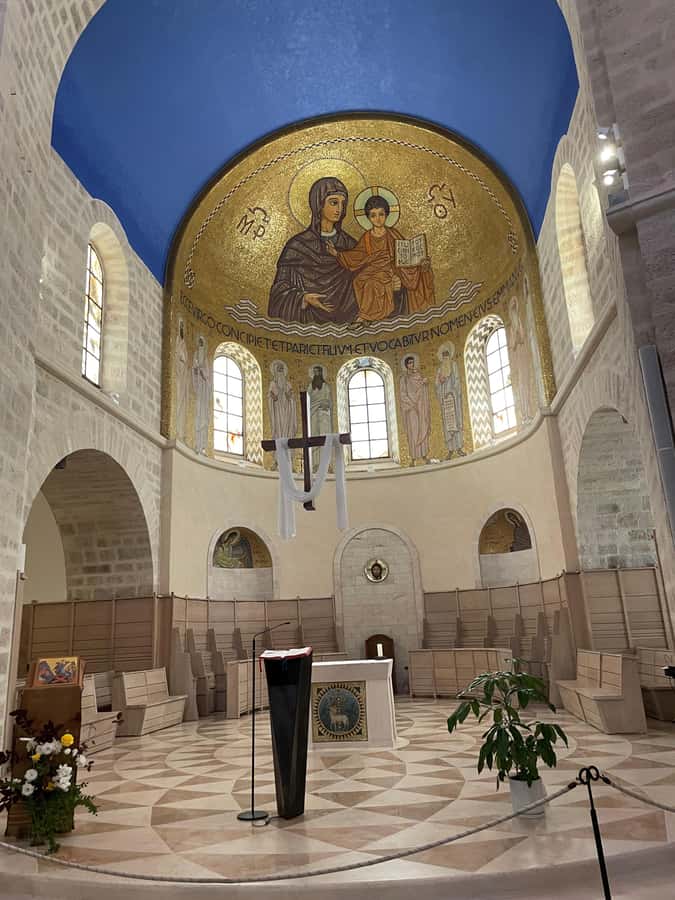
At Mount Zion, the itinerary includes Kings David’s Tomb, the room of the Last Supper, and Dormition Abbey. These sites are close enough to fit into one section of the day, but they represent different layers of Jerusalem’s religious importance.
Kings David’s Tomb is a revered site connected with the biblical King David. The Last Supper room is traditionally associated with the final meal of Jesus and his disciples. Dormition Abbey is an imposing Christian church nearby.
The strength of this stop is the range. You are not looking at one monument in isolation. In a short walk, you move between Jewish and Christian traditions and see how much religious meaning is concentrated on one hill.
The limitation is time. You will receive an introduction to each place, but you should not expect a long period for quiet reflection or detailed architectural study. The guide’s commentary is especially useful here because the sites can be easy to confuse if you visit without context.
Same coast, a completely different kind of day:
- Tel Aviv: Jerusalem, Bethlehem & Dead Sea
★ 4.0 · 881 reviews - From Tel Aviv: Guided Day Trip to Nazareth & Sea of Galilee
★ 4.4 · 824 reviews - From Tel Aviv: Jerusalem Old & New City Bus Tour
★ 4.2 · 824 reviews - From Tel Aviv: Caesarea, Haifa and Akko Day Trip
★ 4.4 · 744 reviews
Walking through the Armenian and Jewish quarters
The Old City portion begins with the Armenian and Jewish quarters. This is where the tour shifts from viewpoints and individual monuments to a walking route through Jerusalem’s narrow streets.
The Armenian quarter is often the quieter part of the Old City route. It has a distinct identity and a more restrained feel than some of the busier streets. The Jewish quarter includes important religious and historical locations, and the walk gives you a sense of how close together the city’s communities live and worship.
I like that the route does not reduce Jerusalem to one faith or one landmark. The Armenian and Jewish quarters make the tour broader and more honest. You see different parts of the Old City before reaching the Christian quarter and the sites most familiar from photographs.
The main drawback is pace. If you want to linger in the Armenian quarter, browse every side lane, or stop for shopping, you may find the schedule too tight. One account of the tour described having to ask for even a few minutes to buy food, so plan to be proactive about breaks rather than waiting for a long free period.
The Roman Cardo shows Jerusalem below the modern streets
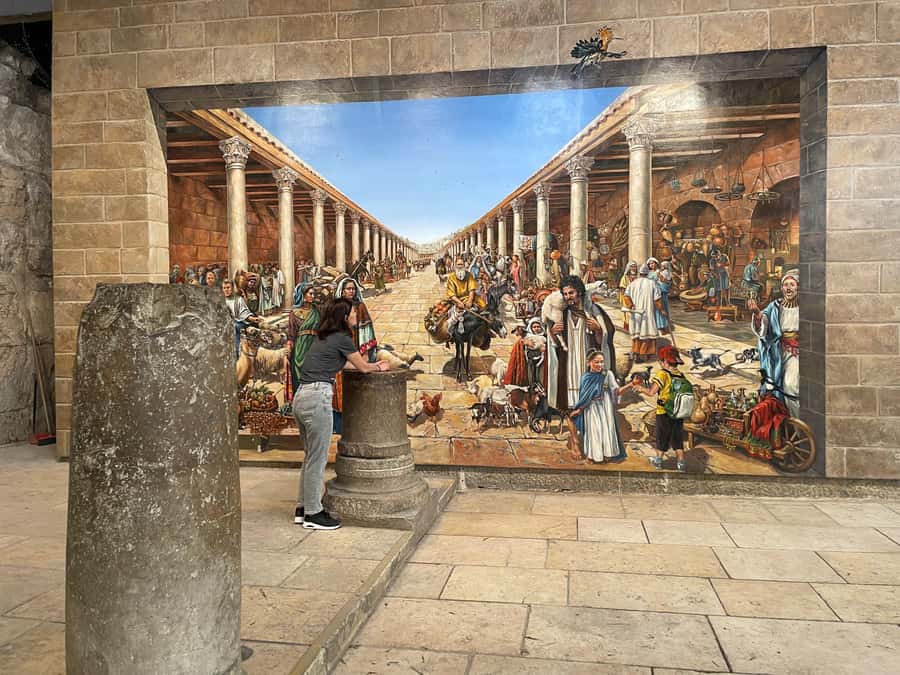
The Cardo is a restored ancient Roman road in the Old City. Walking here gives you a physical link to Jerusalem’s Roman period, with the old street plan visible beneath and among the later buildings.
This is one of the route’s most rewarding history stops because you are not simply looking at a freestanding monument. You are walking along a road that once formed part of the city’s commercial and civic center. The restored section helps you picture the Old City as a working Roman town rather than only a collection of holy places.
The Cardo is also a good point for the guide to explain how Jerusalem changed over time. Roman, Jewish, Christian, and later periods overlap in the same small area. You do not need a specialist background to appreciate it, but a guide’s explanation adds much more than a quick photograph would.
Again, the schedule controls the visit. You will get the main idea and see the restored section, but you may not have time to examine every detail.
The Kotel is a focused and powerful stop
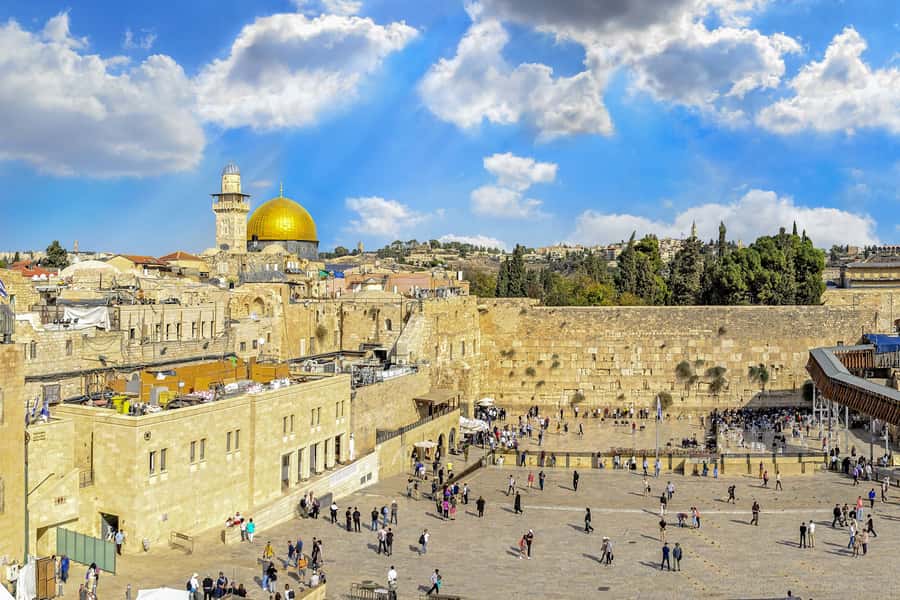
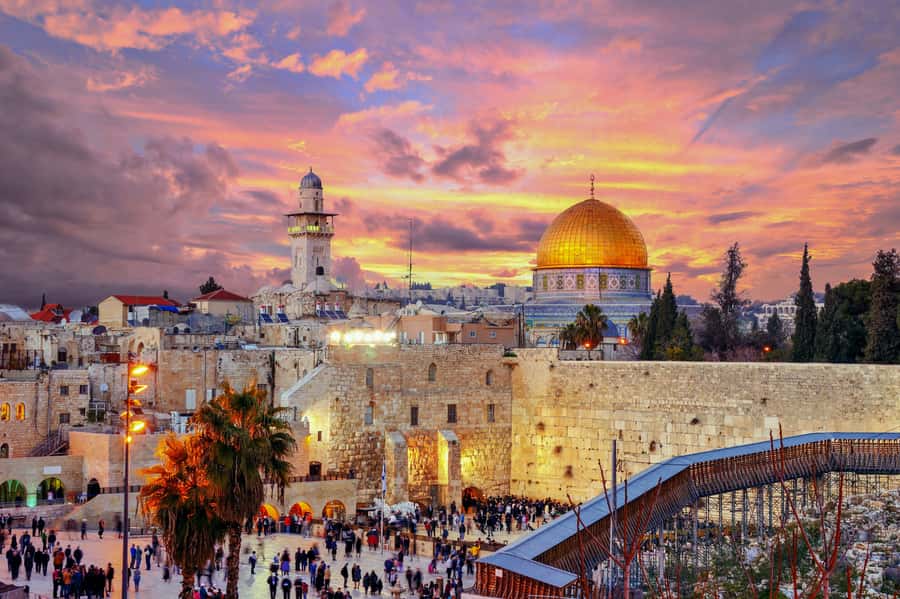
The route continues to the Jewish Wailing Wall, commonly called the Kotel. This is one of the most significant Jewish prayer sites in the world, and the visit gives you a direct encounter with a place that remains active rather than merely preserved.
The Kotel is best approached with respect and attention. Dress rules apply at holy sites, and modest clothing is required. Head covering is also required, so bring one or be ready to use what is provided at the site.
This is not just another stop to check off. People come here to pray, reflect, and place written prayers between the stones. Your guide can explain the setting, but you should also allow room for the solemn nature of the place.
The visit may feel brief because the tour has several Christian sites still ahead. If the Kotel is your main reason for coming to Jerusalem, you may prefer a tour built around the Jewish quarter rather than a route that covers the entire city in one day.
Via Dolorosa leads into the Christian quarter
The Christian quarter brings the tour to the Via Dolorosa, the traditional route associated with the final path of Jesus before his crucifixion. Walking it is a different experience from viewing Jerusalem from above. The route is narrow, active, and closely tied to religious tradition.
You move through the streets toward the Church of the Holy Sepulchre. The Via Dolorosa is not a quiet ceremonial walkway. It is part of a living neighborhood, and the atmosphere can shift quickly from prayerful to crowded and commercial.
That contrast is part of what makes the walk worthwhile. You are seeing a religious route within an ordinary city, not an isolated museum display. At the same time, the tight schedule can make it hard to stop at every station or absorb the setting at your own speed.
Keep your group in sight. Jerusalem’s Old City lanes can turn quickly, and the tour’s pace may increase when the guide is trying to keep the full itinerary on track.
The Church of the Holy Sepulchre is the day’s major finish
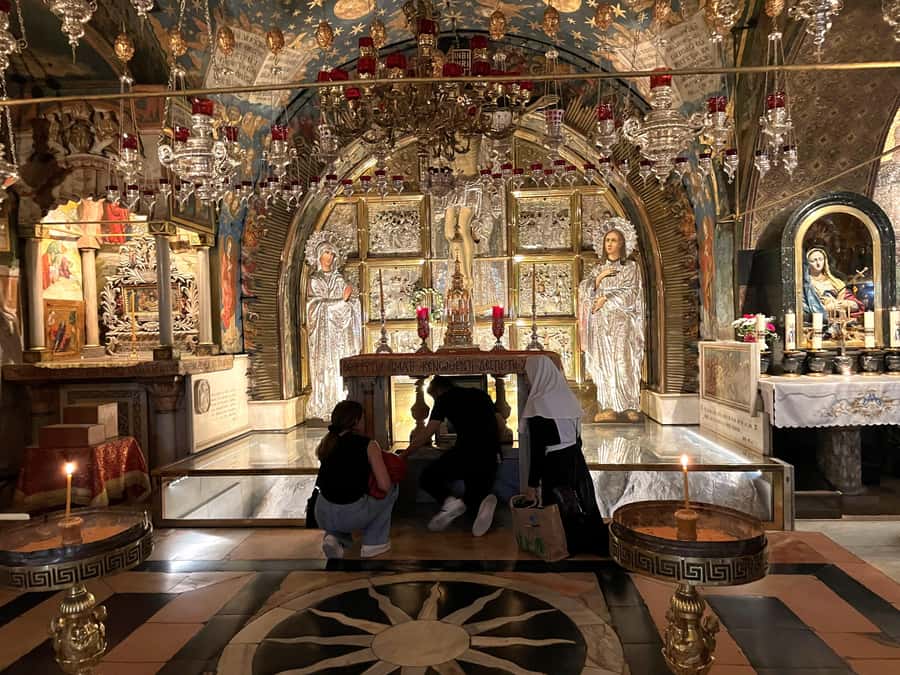
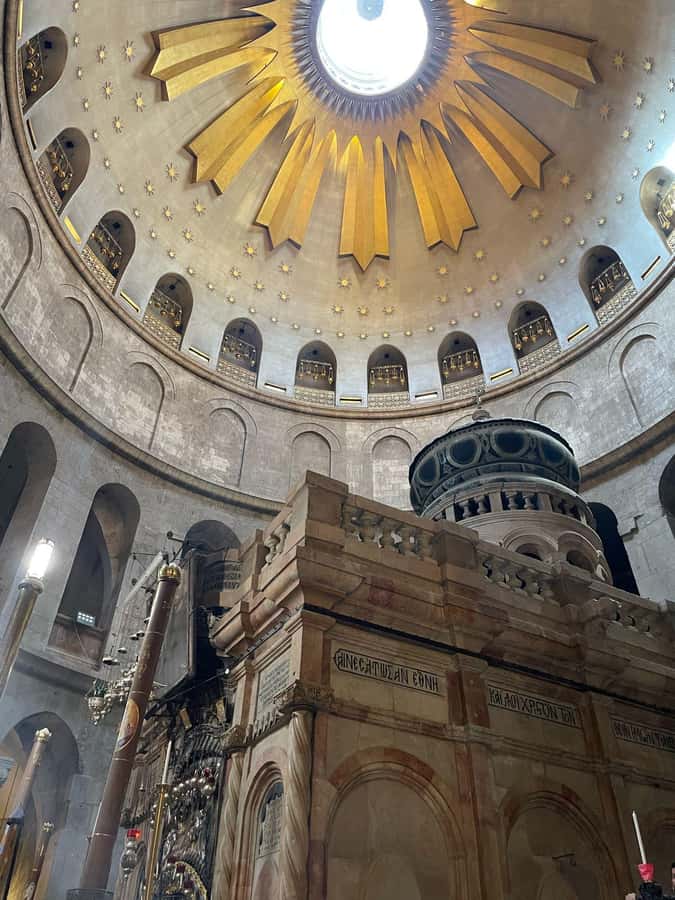
The Church of the Holy Sepulchre is one of the world’s most important Christian sites. It is traditionally associated with the crucifixion, burial, and resurrection of Jesus, making it the spiritual center of the Christian quarter.
For many people, this is the most meaningful stop of the day. The church contains several sacred spaces within one complex, and its importance reaches far beyond its architecture. A guide helps explain why the building matters and how the different sections fit into Christian tradition.
You should prepare for a busy visit and limited time. The tour has already covered Ein Karem, two viewpoints and historic areas, Mount Zion, and several Old City quarters. That makes the church a powerful final stop, but not a relaxed private visit.
If you want to pray or spend time inside the church, tell the guide early that this matters to you. The schedule may not allow every personal request, but speaking up gives you the best chance of using your time well.
What the $93 price really covers
At $93 per person, the price is reasonable for a long guided day from Tel Aviv because it includes transportation, an English-speaking guide, and entrance fees. Those inclusions remove several costs and planning tasks that can add up quickly.
The value is strongest if you want a broad first visit. You can see the city’s main religious and historic areas without booking separate transport from Tel Aviv or working out how to connect distant stops.
The price does not include meals. Food is an important practical issue because the day is long, and the schedule may not give you a generous independent lunch break. One account described being taken to a restaurant without being offered much choice, so I would bring a snack and ask early about the lunch plan. Do not assume you can stop wherever you like.
A shopping stop can also affect your sense of value. One account found a shop near a church expensive, with simpler stores nearby. You are not required to treat every stop as a buying opportunity, so compare prices and wait if you want a small religious souvenir.
Dress, pickup, and pace
Wear modest clothing. Shorts and sleeveless shirts are not suitable for the holy sites, and a head covering is required at the Kotel. Dressing properly from the beginning saves time and avoids awkwardness at the entrances.
Expect substantial walking. The day includes hillside stops, Old City lanes, the Roman Cardo, the Via Dolorosa, and visits to several religious sites. The information provided does not specify accessibility arrangements, so ask the operator before booking if you need particular support.
Pickup is available from centrally located Tel Aviv hotels. If you stay elsewhere, you will be directed to a nearby meeting point. The supplier confirms the exact pickup time and address, so watch for that information and do not rely on a generic departure time.
The tour may be canceled up to two days in advance if the minimum number of participants is not reached. Flexible booking is available, with cancellation up to 24 hours before departure for a full refund and a reserve now, pay later option.
Who should book this Jerusalem day tour?
I would choose this tour if you are staying in Tel Aviv and want to see the major Jerusalem sights in one day with transportation arranged. It suits first-time visitors who value context, want an English-speaking guide, and prefer a broad route over independent wandering.
It also works well if you want to compare Jerusalem’s religious quarters and see how Jewish, Christian, Armenian, Roman, and biblical landmarks fit together. The guide-led format is especially useful at the Cardo, Mount Zion, the Kotel, and the Church of the Holy Sepulchre.
I would hesitate if you want a slow, personal visit to the Old City. The Armenian quarter, the Christian sites, and the Kotel each deserve more time than a single packed route can provide. I would also think twice if you dislike fixed meal arrangements or have limited walking stamina.
Should you book it?
Book this tour if your time is limited and you want the major Jerusalem sights covered from Tel Aviv for $93, with transport and entrance fees included. The Mount of Olives view, Mount Zion sites, Cardo, Kotel, Via Dolorosa, and Church of the Holy Sepulchre make a strong first-day route.
Skip it if your priority is slow exploration, flexible meals, or long visits inside individual holy sites. This is a fast introduction to Jerusalem, not a relaxed Old City study. Bring water and a snack, dress modestly, wear good shoes, and treat the day as an overview that helps you decide what deserves a return visit.
FAQ
How long does the tour last?
The tour lasts 10 hours, including transportation from Tel Aviv and the Jerusalem sightseeing program.
Where does the tour start?
Hotel pickup is provided from centrally located hotels in Tel Aviv. If your hotel is outside the central pickup area, you receive the address of the closest meeting point.
Is transportation included?
Yes. Transportation and a guide are included in the price.
Are entrance fees included?
Yes. Entrance fees for the included visits are covered.
Is food included?
No. Meals are not included, so you should plan for your own food during the day.
What language is the tour conducted in?
The live tour guide provides the tour in English.
What should I wear at the holy sites?
You should wear modest clothing, including no shorts or sleeveless shirts. A head covering is required when visiting the Kotel and other applicable holy sites.
Can I cancel the booking?
You can cancel up to 24 hours in advance for a full refund. The reserve now, pay later option lets you book without paying immediately.
Just added around Tel Aviv
- private Full-day Tour to Jericho + the Dead Sea★ 5.0 · 3 reviews
- VIP Tel Aviv airport Terminal 3 Fast Track Skip Line From plane★ 4.5 · 9 reviews
- Jerusalem and Dead Sea Trip from Tel Aviv★ 4.0 · 6 reviews
- Package VIP Skip Line Services in BGN Airport with Transfer to Tel aviv Hotels★ 5.0 · 3 reviews
- Food & Drink Private Guided Tour in Tel Aviv★ 5.0 · 3 reviews
- The Golan heights★ 5.0 · 4 reviews
- Haifa Acre and Rosh Ha-Nikra Private Tour from Tel Aviv★ 5.0 · 5 reviews
- Urban Walking & Food Tour in Tel Aviv★ 5.0 · 7 reviews
Tel Aviv Tours, compared.
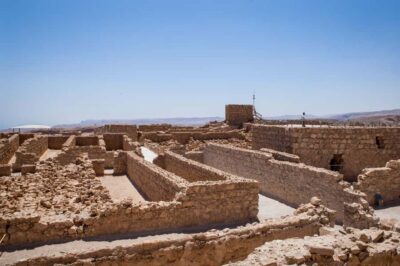
From Tel Aviv: Masada & Dead Sea Full Day Tour with Pick Up
Read our review →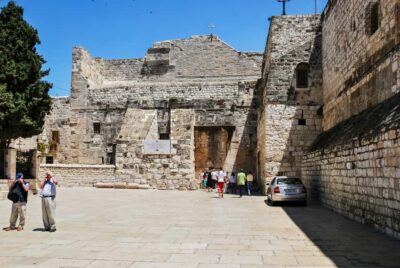
From Tel Aviv: Jerusalem and Bethlehem Guided Day Trip
Read our review →
Masada and the Dead Sea Day Trip from Tel Aviv
Read our review →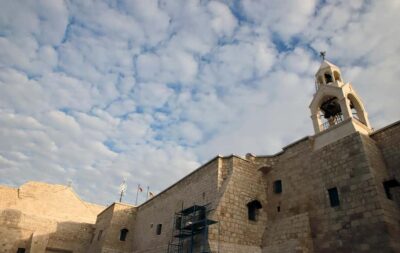

From Tel Aviv: Guided Day Trip to Nazareth & Sea of Galilee
Read our review →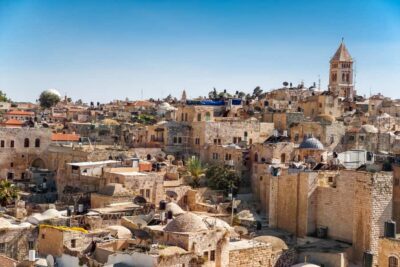
From Tel Aviv: Jerusalem Old & New City Bus Tour
Read our review →
From Tel Aviv: Caesarea, Haifa and Akko Day Trip
Read our review →
Day Tour to Jerusalem and Bethlehem from Tel Aviv
Read our review →Browse the lists this tour appears in